 listicle
5 Best Ways to Sell a Rental Property With Problem Tenants
Table of Contents
- 1. Sell for Cash to an Investor or Cash Buyer
- 2. Use a Cash-for-Keys Agreement to Incentivize Tenant Departure
- 3. Understand Tenant Rights During Property Sale
- 4. Market Your Property Specifically to Investors
- 5. Evict Problem Tenants Before Listing (When Legal)
- Pros and Cons of Each Selling Method
- Conclusion
Last Updated: August 10, 2026
Selling a rental property with problem tenants is one of the most challenging real estate decisions a landlord can face. The combination of difficult tenant situations, legal complications, and market timing pressures creates a perfect storm that leaves many owners stuck between holding an unprofitable asset or accepting below-market offers. At OneRoof Real Estate, we've helped hundreds of sellers navigate exactly this scenario, and we've identified five distinct pathways that actually work.
The key insight most guides miss: you don't have to choose between speed and fair value. The right strategy depends on your tenant's behavior, your timeline, your local laws, and whether you're willing to invest time in negotiation. Below, we'll walk you through each approach with the specific steps, tradeoffs, and real-world outcomes you need to make an informed decision.
1. Sell for Cash to an Investor or Cash Buyer
The fastest path forward is selling directly to a cash buyer who specializes in tenant-occupied properties. These investors purchase homes as-is, meaning you don't have to evict anyone, make repairs, or wait for traditional financing to close.
OneRoof Real Estate buys rental properties in any condition, including those with problem tenants in place. The process eliminates showings, inspections, and the months-long uncertainty of conventional sales. You get a fair cash offer within 24 hours and close in as little as 7 days. The buyer assumes responsibility for the tenant relationship, the lease, and any ongoing disputes.
The advantage here is straightforward: certainty and speed. You're not gambling on whether a buyer will accept the property with tenants still living there, or whether you'll need to carry the mortgage while marketing drags on for months. Cash buyers understand tenant situations and price accordingly, they're not surprised by occupancy status the way traditional buyers often are.
The tradeoff is price. Cash offers typically run 15-25% below market value because the buyer is absorbing the tenant management risk, potential lease disputes, and the cost of future eviction if needed. For landlords with problem tenants, this discount is often worth the certainty and speed.
Best for: Landlords who prioritize a fast, guaranteed closing over maximum sale price. Ideal if your tenant situation is severe enough that traditional buyers will balk, or if you need to liquidate quickly.
Timeline: 7-14 days from offer to closing.
2. Use a Cash-for-Keys Agreement to Incentivize Tenant Departure
A cash-for-keys agreement is a legally binding contract where you pay the tenant a lump sum to vacate the property voluntarily. Instead of pursuing eviction, which can take 2-4 months and cost thousands in legal fees, you negotiate a buyout.
The mechanics are simple: you offer the tenant a set amount (typically $1,500-$5,000, depending on your market and the severity of the situation) in exchange for them vacating within 30 days and leaving the property in acceptable condition. The agreement must be documented in writing and specify the exact move-out date, the payment amount, and the condition standards for the property.
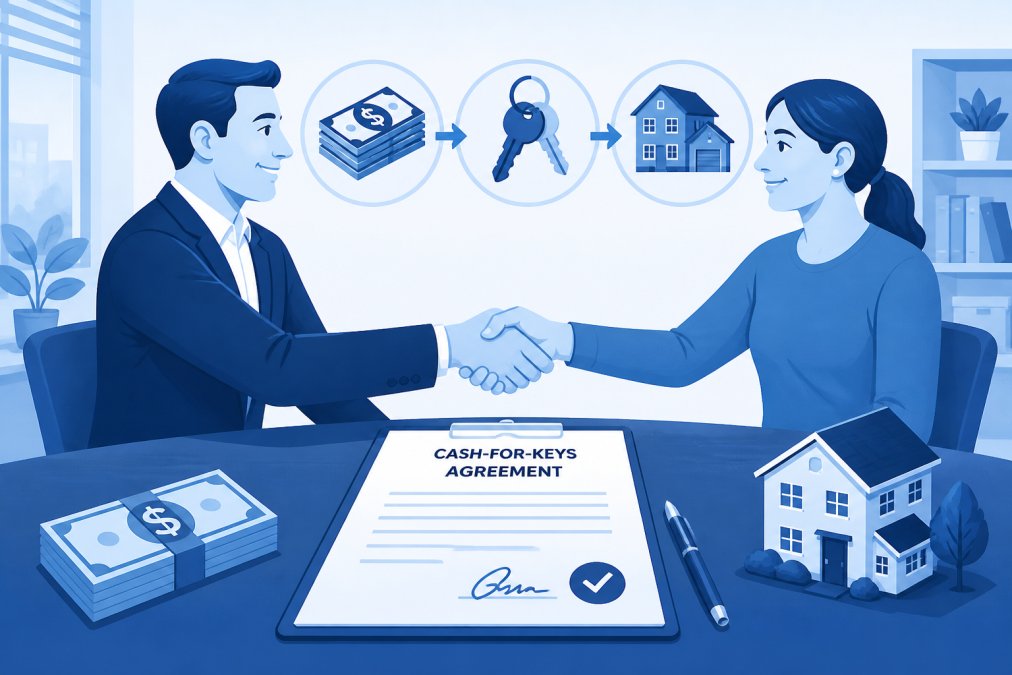
This approach works because it reframes the relationship from adversarial (eviction) to transactional (mutual agreement). Many problem tenants will accept a cash payment rather than face eviction, which carries social stigma and makes it harder to rent elsewhere. You avoid court costs, legal delays, and the emotional toll of formal eviction proceedings.
The cash-for-keys strategy is particularly effective when your tenant is behind on rent or violating lease terms but hasn't yet reached the point of formal eviction filing. Once you've initiated legal action, tenants become more defensive and less likely to negotiate.
Negotiation tips: Start with a lower offer and be prepared to increase it. Frame the conversation around their benefit: "I can offer you $3,000 to relocate within 30 days, which gives you moving funds and a clean break. The alternative is a 90-day eviction process that damages your rental history." Document everything in writing, have both parties sign, and consider having a neutral third party (attorney or mediator) witness the agreement.
Best for: Landlords with tenants who are problematic but not completely unreasonable. Works well when the tenant is behind on rent or in violation of lease terms. Less effective with tenants who are current on payments and have legal use.
Timeline: 30-60 days from agreement to vacant property.
3. Understand Tenant Rights During Property Sale
Before you list or negotiate, you need to understand what rights your tenant actually has. Tenant rights vary significantly by state, and mishandling them can expose you to legal liability or derail a sale.
In most states, a tenant's lease agreement continues through a property sale unless the new owner intends to occupy the property as their primary residence. This means a buyer cannot simply evict an existing tenant, they must honor the remaining lease term or follow state-specific procedures to terminate it. Some states allow lease termination only with proper notice and just cause; others are more landlord-friendly.
The buyer disclosure requirement is critical here. In every state, you must disclose the existence of tenants and the terms of their lease to potential buyers. Failing to do so can void the sale or expose you to fraud claims. Many traditional buyers walk away once they learn about problem tenants, which is why this issue often derails conventional sales.
However, investors and cash buyers understand tenant situations and factor them into their offers. They know the legal framework and often have experience managing difficult tenant transitions. This is a core reason why selling to an investor-focused buyer is often the most practical path when tenants are problematic.
State-specific consideration: Kansas landlord-tenant law (Kansas Statutes Chapter 58) allows landlords to terminate tenancies with proper notice, but the rules depend on whether you're terminating for cause or without cause. Consult a Kansas attorney or reference Nolo's Kansas landlord-tenant law guide to understand your specific rights and obligations before taking action.
Best for: Understanding your legal position before choosing a selling strategy. This knowledge informs whether cash-for-keys, eviction, or selling to an investor is the most practical option.
4. Market Your Property Specifically to Investors
If you want to sell through traditional channels but acknowledge that owner-occupant buyers will hesitate, market directly to investors who buy rental properties. This narrows your buyer pool but dramatically increases the likelihood of a successful sale.
Investor-focused marketing emphasizes rental income, cash flow, and property condition rather than aesthetic appeal or owner-occupant features. You highlight the lease terms, tenant payment history (if positive), rental income, and property management requirements. You're selling the investment fundamentals, not the dream of living there.

List on investor-specific platforms like BiggerPockets, real estate investment groups, and local investor networks. Work with a real estate agent who specializes in investment properties, they have direct relationships with investor buyers and understand how to position tenant-occupied properties competitively.
The key messaging shift: instead of "problem tenant," you frame it as "established rental income" or "lease with X months remaining." If the tenant is paying rent on time, this becomes a selling point, the property is already generating income. If the tenant is problematic, be transparent about the situation and price accordingly. Investors expect some tenant friction; they're prepared to manage it.
Best for: Landlords who want to use traditional listing channels but accept that their buyer pool will be investors rather than owner-occupants. Works well if your tenant is current on rent and the property generates positive cash flow.
Timeline: 30-90 days (faster than traditional sales because you're targeting a specific buyer type).
5. Evict Problem Tenants Before Listing (When Legal)
The most aggressive approach is formal eviction before listing the property. This clears the tenant entirely, removes the occupancy disclosure requirement, and opens the property to owner-occupant buyers, which typically expands your buyer pool and increases sale price.
However, eviction is slow, expensive, and legally complex. In Kansas, the eviction process (called "forcible detainer" under Kansas law) typically takes 30-60 days minimum if the tenant doesn't contest. If they do contest, it can stretch to 90-120 days. You'll incur attorney fees, court filing fees, and potentially sheriff's fees. During this time, the tenant may stop paying rent, damage the property, or become hostile.
Eviction is justified only when the tenant is in material breach of the lease, nonpayment of rent, property damage, or violation of lease terms. You cannot evict simply because you want to sell. Kansas law requires proper notice (typically 3-5 days depending on the violation) and a court judgment before the tenant can be forcibly removed.
The cost-benefit calculation is critical here. If eviction will cost $3,000-$5,000 in legal and court fees, plus 90 days of holding costs, and it might increase your sale price by $15,000-$20,000, it's worth considering. But if you're already struggling with the tenant, adding 3 months of legal conflict before you can even list is emotionally and financially draining.
When eviction makes sense: The tenant is significantly behind on rent, the property is being damaged, and you have 6+ months before you need to sell. The extra time and cost are offset by a cleaner property and broader buyer appeal.
When it doesn't: The tenant is current on rent, you need to sell quickly, or the legal process is likely to be contested.
Best for: Landlords with clear lease violations, significant time before needing to close, and properties in strong markets where clearing the tenant will substantially increase sale price.
Timeline: 60-120 days for eviction completion, then 30-60 days for traditional sale.
Pros and Cons of Each Selling Method
| Method | Speed | Price | Effort | Legal Risk | Best Scenario |
|---|---|---|---|---|---|
| Sell to cash buyer | 7-14 days | 75-85% of market | Minimal | Minimal | Need fast closing, severe tenant issues |
| Cash-for-keys agreement | 30-60 days | 90-95% of market | Moderate | Low | Tenant is negotiable, you have time |
| Understand tenant rights | N/A | N/A | Minimal | Prevents risk | Before choosing any strategy |
| Market to investors | 30-90 days | 85-95% of market | Moderate | Minimal | Tenant is current on rent |
| Evict before listing | 60-120 days | 95-100% of market | High | High if contested | Clear violations, strong market, time available |
Conclusion
Selling a rental property with problem tenants requires choosing between speed, price, and effort. There's no single best method, the right choice depends on your tenant's behavior, your timeline, your local market, and how much legal and emotional friction you're willing to tolerate.
If you need certainty and speed, selling to a cash buyer like OneRoof Real Estate eliminates the tenant variable entirely. We buy rental properties in any condition with tenants in place, close in 7 days, and handle all the lease and tenant complications. You get a fair all-cash offer, skip the months of traditional marketing, and move forward with your life.
For landlords who have time and want to maximize price, cash-for-keys or investor marketing can work, but only if your tenant is somewhat cooperative or your property generates positive cash flow. Formal eviction is the slowest, most expensive path and should be reserved for situations where lease violations are clear and you have the runway to see it through.
Whatever path you choose, understand your state's tenant rights first. Missteps here can derail a sale or expose you to legal liability. Get started with OneRoof Real Estate and get a fair offer within 24 hours, no repairs, no commissions, no tenant drama to manage.
Frequently Asked Questions
Can I evict a tenant just to sell my rental property?
State and local landlord-tenant laws determine whether you can evict a tenant solely for a sale. In most jurisdictions, you cannot evict a tenant simply because you're selling the property if they're paying rent and complying with the lease. However, some states allow 'no-fault' evictions with proper notice. Kansas law generally requires 'just cause' for eviction. Consult a local attorney to understand your specific rights and obligations before pursuing eviction.
What is a cash-for-keys agreement?
A cash-for-keys agreement is a voluntary arrangement where you offer the tenant money in exchange for vacating the property by a set date. This avoids a lengthy eviction process and can be faster and less adversarial. The tenant receives payment, you get the keys and vacant possession, and both parties move forward. The amount offered is negotiable but typically ranges based on local market conditions and the tenant's cooperation. Always document the agreement in writing with clear terms, move-out dates, and payment schedules.
What are tenant rights when a rental property is being sold?
Tenants have the right to remain in the property under the terms of their lease, even after a sale. The new owner must honor existing lease agreements. Tenants must be given proper notice before showings (typically 24-48 hours in most states). They can refuse unreasonable access or showings that violate lease terms. Kansas requires landlords to provide notice before entering for non-emergency purposes. Tenants also have the right to know who the new owner is and to receive proper disclosure of any changes to lease terms or management.
Is selling a rental property with tenants to an investor better than evicting first?
Selling to an investor who will keep tenants in place avoids eviction costs, legal fees, and the time required for the eviction process. Investors often purchase properties with tenants already generating rental income. This approach is faster, less stressful, and eliminates the risk of a lengthy vacancy. However, you may receive a lower offer than if the property were vacant, since the investor assumes the tenant relationship and any associated risks. Compare the time saved and costs avoided against the potential price difference to determine the best approach for your situation.
How do I handle property showings with uncooperative tenants?
Provide tenants with written notice (typically 24-48 hours) before each showing, as required by law. Be respectful of their privacy and lease rights. If a tenant refuses reasonable access, document the refusal in writing. Consider offering a small incentive (like a rent reduction or gift card) for cooperation with showings. If the tenant is severely uncooperative, a cash-for-keys agreement may be more efficient than forcing showings. Alternatively, work with a property manager or real estate agent experienced in handling tenant-occupied properties to manage the showing process professionally.
This article was written using GrandRanker