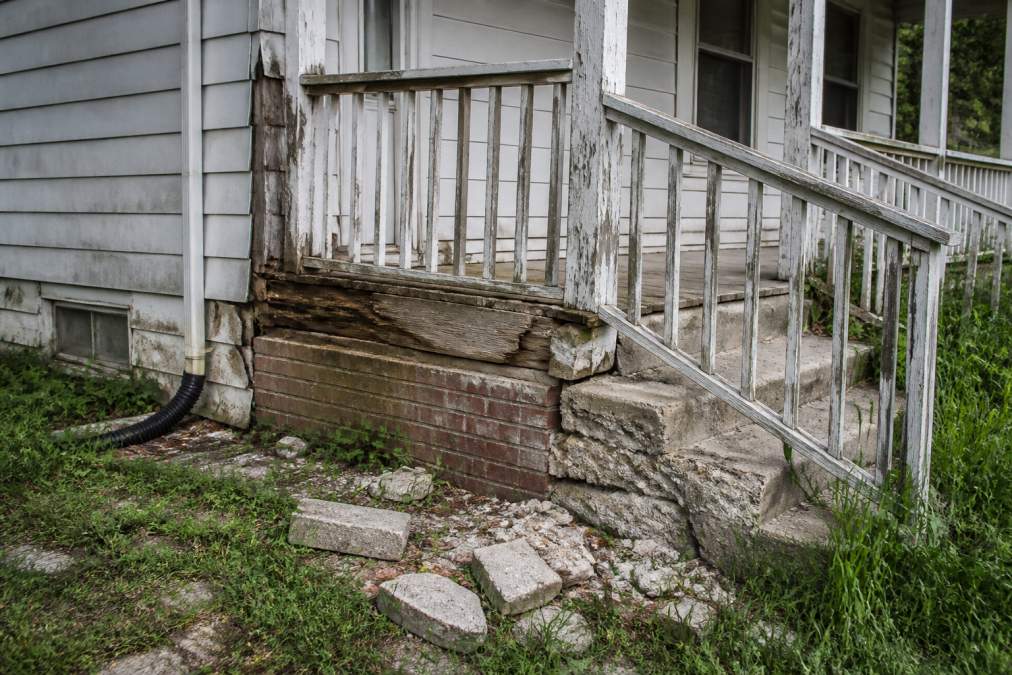
 listicle
7 Ways to Sell a House With Code Violations
Table of Contents
- 1. Sell to Cash Home Buyers for Distressed Properties
- 2. Disclose Defects and Negotiate Repair Credits
- 3. Address Code Violations Before Listing
- 4. Resolve Municipal Code Enforcement Liens
- 5. Sell Your House As-Is to Investors
- 6. Use FHA 203(k) Financing for Buyer Appeal
- 7. Work With Legal Counsel on Code Disputes
- Conclusion
Last Updated: August 14, 2026
7 Ways to Sell a House With Code Violations
Code violations don't have to trap you in a property you can't sell. At OneRoof Real Estate, we've helped hundreds of homeowners in the Wichita area navigate selling a house with code violations. Multiple strategies exist to move a property quickly, from cash buyers who specialize in as-is sales to financing programs that let buyers handle repairs themselves.
The challenge isn't that code violations make a property unsellable. It's that traditional markets penalize distressed properties heavily, and disclosure requirements create friction with conventional buyers. The key is understanding which approach matches your timeline, financial situation, and violation severity.
This guide covers seven proven methods to sell a house with code violations, each with specific steps, tradeoffs, and honest assessments of when each option works best.
1. Sell to Cash Home Buyers for Distressed Properties
Cash home buyers are the fastest route for properties with code violations. These companies purchase homes in any condition, foundation issues, unpermitted additions, failed inspections, without requiring repairs, inspections, or cleaning. You get a fair all-cash offer within 24 hours, close in as little as 7 days, and walk away without handling contractors or disclosure complications.

OneRoof Real Estate operates this model across Wichita and 27 other states. The company buys properties in any condition without repairs, covers all commissions and closing costs, and lets sellers choose the closing date.
How it works:
- Contact the cash buyer and describe your property's condition
- Receive a no-obligation offer within 24 hours
- Review the offer with no pressure to accept
- If you accept, schedule closing on your preferred date
- Receive cash at closing; the buyer handles all repairs and code remediation
Pros:
- Fastest closing timeline (often 7 days or less)
- No repairs, cleaning, or staging required
- No real estate commissions or agent fees
- Certainty of closing; no contingencies
- Seller chooses the closing date
Cons:
- Cash offers are typically 15-25% below market value
- Limited to local or regional cash buyers
Best for: Homeowners who prioritize speed and certainty over maximum sale price. Ideal if you're facing pre-foreclosure, need to liquidate quickly due to divorce or inheritance, or want to avoid managing repairs.
2. Disclose Defects and Negotiate Repair Credits
If you're willing to work with traditional buyers, full disclosure of code violations is legally required in most states. Rather than hiding violations and risking legal liability, many sellers proactively disclose defects and negotiate repair credits at closing.
In Kansas, sellers must disclose all known material defects, including code violations. The disclosure happens early in the transaction, and buyers have the right to request inspections and negotiate repairs or price reductions based on findings.
How it works:
- List the property with full disclosure of all known code violations
- Provide a detailed disclosure document to interested buyers
- When you receive an offer, the buyer typically orders an inspection
- If the inspection confirms violations, negotiate repair credits instead of price reductions
- Close with the understanding that the buyer will handle remediation post-closing
Pros:
- Potential for higher sale price than cash buyer offers
- Maintains legitimacy and avoids legal liability
- Allows buyers with financing to purchase the property
- Repair credits reduce the buyer's out-of-pocket cost
Cons:
- Longer time on market (typically 30-60 days or more)
- Buyers often demand steep discounts once violations are disclosed
- Multiple inspections and renegotiations can delay closing
Best for: Sellers with time flexibility who own properties with manageable code violations. Works well if you have equity and can absorb a discount while achieving your financial goal.
3. Address Code Violations Before Listing
Fixing violations before listing eliminates the largest friction point in traditional sales. A property that passes inspection commands full market value and attracts conventional buyers with financing. The tradeoff is upfront cost and time.
This approach makes sense if violations are relatively minor and repair costs are significantly less than the price discount you'd accept from a cash buyer. For example, if a cash buyer offers 25% below market value but repairs cost 10% of the home's value, you come out ahead by fixing issues first.
How it works:
- Hire a home inspector or code enforcement officer to identify all violations
- Get repair estimates from licensed contractors
- Calculate repair costs versus the discount you'd accept from a cash buyer
- If repair costs are lower, proceed with remediation
- List the property once violations are resolved and permits are closed
Pros:
- Property sells at or near market value
- Attracts qualified buyers with conventional financing
- No disclosure complications
- Builds buyer confidence in the property
Cons:
- Upfront capital required for repairs
- Timeline extends by weeks or months during repairs
- Contractor delays and cost overruns are common
Best for: Sellers with sufficient capital and time, or those whose violations are cosmetic or straightforward to fix.
4. Resolve Municipal Code Enforcement Liens
When a city or county issues code violations and the property owner doesn't comply, municipalities can place liens on the property. These liens must be resolved before sale and create a barrier to traditional financing. Resolving liens early can unlock financing options and reduce buyer hesitation.
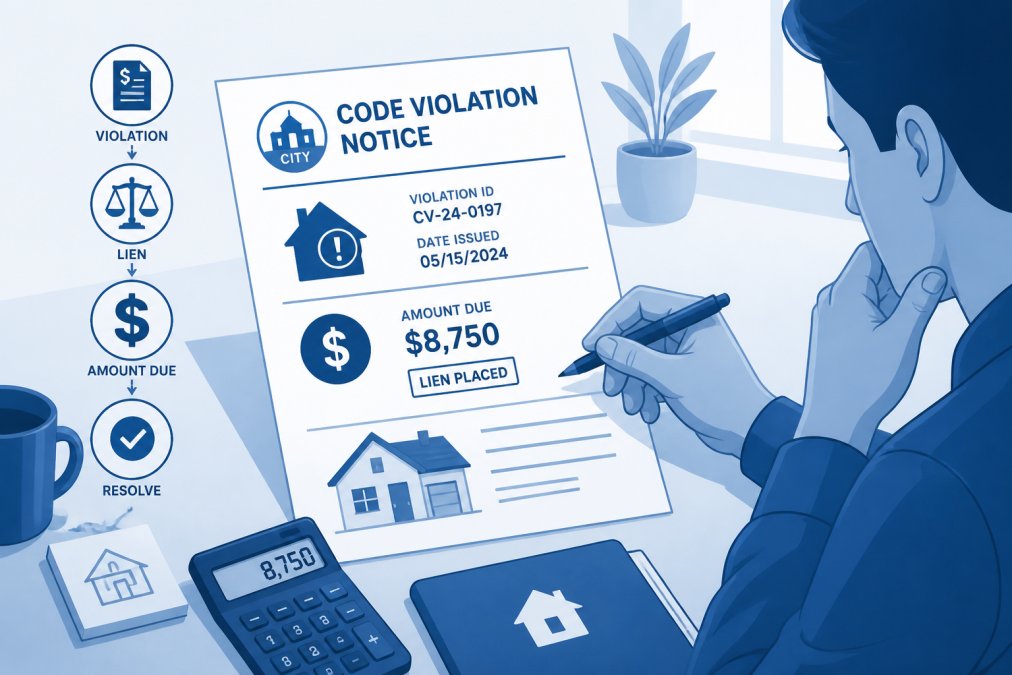
Municipal code enforcement liens give the municipality a claim against the property and must be paid before closing. Some municipalities allow liens to be satisfied through a payment plan, while others require full payment upfront.
How it works:
- Contact your city or county code enforcement department
- Request a full list of outstanding violations and any liens
- Determine the cost to resolve violations or satisfy liens
- Negotiate a payment plan or lump-sum settlement with the municipality
- Once resolved, obtain a lien release document
- List the property with proof of lien resolution
Pros:
- Removes legal barriers to sale
- Allows access to buyer financing (FHA, conventional loans)
- Demonstrates good faith effort to resolve violations
- Can reduce buyer hesitation and inspection contingencies
Cons:
- Requires direct engagement with municipal bureaucracy
- May require significant upfront payment
- Process can take weeks or months
Best for: Sellers whose primary barrier is a municipal lien. Especially useful if you plan to list traditionally or attract a buyer with FHA financing.
5. Sell Your House As-Is to Investors
Real estate investors actively purchase properties with code violations because they have the capital and expertise to remediate issues. Selling to an investor is similar to selling to a cash buyer, but investors often specialize in specific property types or violations. The investor market is competitive, which means you can often get multiple offers and choose the best one.
How it works:
- Contact local real estate investors or investment groups
- Provide details about the code violations and property condition
- Receive multiple offers from investors
- Compare offers on price, closing timeline, and contingencies
- Accept the offer that best fits your needs
- Close quickly, typically within 7-14 days
Pros:
- Multiple offers to choose from
- Investors understand violation remediation costs
- Fast closing (7-14 days typical)
- No repairs or cleaning required
- Investor buyers are less likely to back out
Cons:
- Offers are typically 15-30% below market value
- Limited to investors with capital available
Best for: Sellers who want speed and certainty but prefer to shop multiple offers. Works well if you're comfortable with a discount in exchange for a guaranteed closing.
6. Use FHA 203(k) Financing for Buyer Appeal
FHA 203(k) loans are government-backed mortgages that allow buyers to finance both the home purchase and the cost of repairs into a single loan. This program expands the pool of potential buyers to include those who don't have cash for repairs but can qualify for a mortgage.
Properties with code violations can be attractive to 203(k) borrowers because the program covers remediation costs. A buyer can purchase your home at a lower price and finance the repairs through the loan, unlocking a segment of buyers who otherwise couldn't compete with cash offers.
How it works:
- List the property and explicitly mention 203(k) eligibility
- Have an FHA-approved inspector evaluate the property
- Work with the buyer's lender to structure the 203(k) loan
- The lender places funds in escrow for repairs
- Repairs are completed after closing, and funds are released to contractors
- Close on the property at the agreed price
Pros:
- Expands buyer pool significantly
- Buyers can afford to pay closer to market value
- Repairs are financed, not paid out-of-pocket by the buyer
- Removes buyer hesitation about taking on repair risk
Cons:
- Closing timeline is longer (45-60 days typical)
- Lender scrutiny is intensive; property must meet specific FHA standards
- Some violations may disqualify the property from 203(k) financing
Best for: Sellers whose properties have manageable violations but significant equity. Works well if you can wait 6-8 weeks for closing in exchange for a higher sale price.
7. Work With Legal Counsel on Code Disputes
When code violations are contested, ambiguous, or the result of municipal overreach, legal counsel can challenge the violations and potentially have them removed or modified. An attorney specializing in real estate and zoning can review the violations, research applicable codes, and file appeals with the municipality.
How it works:
- Consult with a real estate attorney about the specific violations
- The attorney reviews municipal code and prior approvals
- If a strong case exists, file a formal appeal with the code enforcement board
- Attend a hearing to present your case
- If successful, obtain a violation dismissal or modification
- List the property with proof of dismissal
Pros:
- Can eliminate violations entirely if the case is strong
- Restores full market value if violations are removed
- Protects you from future liability
Cons:
- Legal fees can be substantial ($1,000-5,000+)
- Appeals process takes time (weeks to months)
- No guarantee of success
Best for: Sellers with strong evidence that violations were misapplied or based on outdated codes. Best used when the cost of legal action is less than the discount you'd accept from a cash buyer.
Comparison Table: Methods to Sell a House With Code Violations
| Method | Timeline | Upfront Cost | Sale Price | Best For |
|---|---|---|---|---|
| Cash home buyers | 7 days | None | 15-25% below market | Speed and certainty |
| Disclose and negotiate | 30-60 days | None | 10-20% below market | Sellers with time and equity |
| Fix violations first | 60-120 days | 5-15% of home value | Market value | Minor violations, sufficient capital |
| Resolve municipal liens | 30-90 days | Varies by municipality | 10-20% below market | Lien-blocked properties |
| Sell to investors | 7-14 days | None | 15-30% below market | Multiple offers, quick close |
| FHA 203(k) financing | 45-60 days | None | 5-15% below market | Moderate violations, buyer financing |
| Legal dispute resolution | 30-120 days | $1,000-5,000+ | Market value if successful | Contested or misapplied violations |
Key Takeaways
Selling a house with code violations is not a dead end. You have seven concrete pathways, each with specific tradeoffs between speed, sale price, and effort. Cash buyers like OneRoof Real Estate offer the fastest exit if you prioritize closing in days rather than months. Traditional approaches, disclosure, repair, or legal challenge, take longer but can preserve more of your home's market value if you have the time and resources.
The decision hinges on three factors: your timeline, the severity of violations, and your financial flexibility. If you need cash in a week, a cash buyer is your answer. If you have equity and can wait 60 days, FHA financing or a traditional sale with repair credits may yield higher net proceeds. If violations are technical or misapplied, legal counsel can be a worthwhile investment.
Frequently Asked Questions
Do I have to fix code violations before selling my house?
No. You can sell a house with code violations as-is without making repairs. However, you must disclose all known defects to potential buyers. Cash home buyers and investors often purchase properties with code violations without requiring repairs. Traditional buyers may negotiate repair credits or price reductions. The choice depends on your timeline and financial situation, some sellers find it faster to sell as-is to cash buyers rather than invest in remediation.
What are the disclosure requirements for property defects in a real estate sale?
Kansas law requires sellers to disclose all known material defects, including code violations, to buyers in writing before closing. Failure to disclose can expose you to legal liability and contract rescission. Defects must be documented on the property disclosure form and provided early in the transaction. This transparency protects both parties and prevents closing delays. When selling to cash home buyers, disclosure is still required, though these buyers typically accept properties in any condition.
How do I resolve municipal code enforcement liens on my property?
Contact your local code enforcement department to determine what violations exist and what remediation is required. You can either complete repairs yourself, hire a contractor, or request an extension if financial hardship exists. Once violations are corrected and inspected, the city will clear the notice. If a lien has been filed, paying the fine or completing repairs removes it from your title. Some sellers choose to sell to cash buyers to avoid the remediation process entirely, as these buyers handle code issues post-purchase.
Can I sell a house with active code violations to a cash buyer?
Yes. Cash home buyers specialize in purchasing properties with code violations, unpermitted work, failed inspections, and other defects. They buy as-is without requiring repairs or cleaning, and they handle code issues after closing. This option is ideal if you need to sell quickly or lack funds for repairs. Cash buyers typically close in 7 days and cover all closing costs and commissions, making the process seamless for sellers facing code enforcement challenges.
This article was written using GrandRanker