 ultimate-guide
Foundation Settling in Wichita Soil: Causes & Solutions
Table of Contents
- What Causes Foundation Settling in Wichita Soil
- Signs of Foundation Settlement You Shouldn't Ignore
- How Seasonal Weather Changes Accelerate Foundation Damage
- Cost of Foundation Repair and Your Options
- Foundation Repair vs. Selling As-Is: Which Path Makes Sense
- When to Call a Professional Structural Assessment
- Frequently Asked Questions
Last Updated: September 25, 2026
What Causes Foundation Settling in Wichita Soil
Foundation settling is the gradual sinking or shifting of a home's foundation as the soil beneath it loses stability or compacts unevenly. In Wichita, this problem is particularly acute due to the region's unique soil composition and climate patterns. The local geology creates a perfect storm for foundation movement, and understanding these specific causes is the first step toward protecting your property investment.
Wichita sits atop some of the most problematic soil in the country for residential construction. Unlike stable bedrock regions, the area's subsurface consists primarily of layers that respond dramatically to moisture changes. When you understand what's happening beneath your home, you can recognize warning signs early and take action before minor settling becomes a costly structural failure.
At OneRoof Real Estate, we've helped hundreds of sellers in the Wichita area with foundation issues, and the causes cluster around a handful of predictable culprits. Each one is addressable, but the approach depends on identifying which specific mechanism is at work under your foundation.
Expansive Clay and the Shrink-Swell Cycle
Expansive clay soil is the primary reason foundation settling occurs in Wichita. This soil type contains minerals that absorb water, causing the soil to expand. When moisture evaporates, the clay shrinks, leaving voids beneath the foundation. The foundation then settles into these gaps, creating the uneven movement that cracks walls and warps door frames.
The shrink-swell cycle repeats seasonally in Wichita. Summer heat dries the clay, creating subsurface erosion and settlement. Winter precipitation and spring snowmelt saturate the soil, causing heave, the upward pressure that forces the foundation to shift. A single year's moisture fluctuation can move a foundation several inches vertically.
The load-bearing capacity of the soil decreases as the clay loses structural integrity through repeated wetting and drying. What was stable in year one becomes unstable by year five. This active zone is precisely where residential foundations sit.
Poor Drainage and Hydrostatic Pressure
Poor drainage around the foundation allows water to pool against the perimeter, increasing soil saturation and hydrostatic pressure. When soil becomes saturated, it loses load-bearing capacity. The weight of the house pushes down into weakened soil, accelerating foundation settling.
Grading that slopes toward the house instead of away from it is a common culprit. Even a subtle grade can channel water directly against the foundation. Clogged gutters and downspouts that discharge water at the foundation line compound the problem. Within a few years, the combination of poor drainage and seasonal moisture swings creates measurable foundation movement.
Subsurface erosion occurs when water moves through soil layers beneath the foundation, washing away fine particles and creating voids. These underground cavities eventually collapse, and the foundation settles into the space. This process often goes unnoticed until cracks appear or floors become noticeably sloped.
Under-Slab Plumbing Leaks and Subsurface Erosion
A slow leak in under-slab plumbing can saturate the soil beneath your foundation for months or years without obvious signs. The water erodes soil particles, creating voids that compromise the foundation's support. Foundation settling accelerates dramatically once these subsurface cavities form.
Older homes in Wichita are particularly vulnerable. Cast iron drain lines corrode over decades, developing pinhole leaks that seep into the soil undetected. By the time the homeowner notices higher water bills or a damp basement, significant soil erosion may have already occurred.
Repairing under-slab leaks requires either rerouting the plumbing or excavating the foundation perimeter, both expensive interventions.
Tree Root Dehydration and Soil Compaction
Large trees planted near the house extract moisture from the soil as they grow. Roots seek water, drawing it from the clay layers beneath the foundation. As the soil dries, it shrinks, and the foundation settles. Oak, elm, and cottonwood trees are common in Wichita and are particularly aggressive in seeking subsurface moisture.
The problem intensifies during drought years. A single dry summer can lower the water table significantly, and tree roots respond by going deeper and drawing harder. Foundation movement accelerates in proportion to the tree's size and proximity to the house.
Soil compaction from construction equipment, heavy vehicles, or repeated foot traffic also reduces soil porosity and increases settlement risk. Compacted soil doesn't absorb water evenly, creating zones of high and low moisture content. This uneven saturation leads to differential settlement, where one section of the foundation drops more than another, causing structural stress and cracking. Managing the drainage around these moisture-prone areas remains essential for structural stability, as effective crawl space moisture control prevents the localized soil expansion that often exacerbates foundation movement.
Signs of Foundation Settlement You Shouldn't Ignore
Foundation settling produces visible and structural indicators that worsen over time if left unaddressed. Early detection gives you options; late detection leaves you with expensive emergency repairs or, in severe cases, a property that becomes difficult to sell or insure.
Interior Indicators
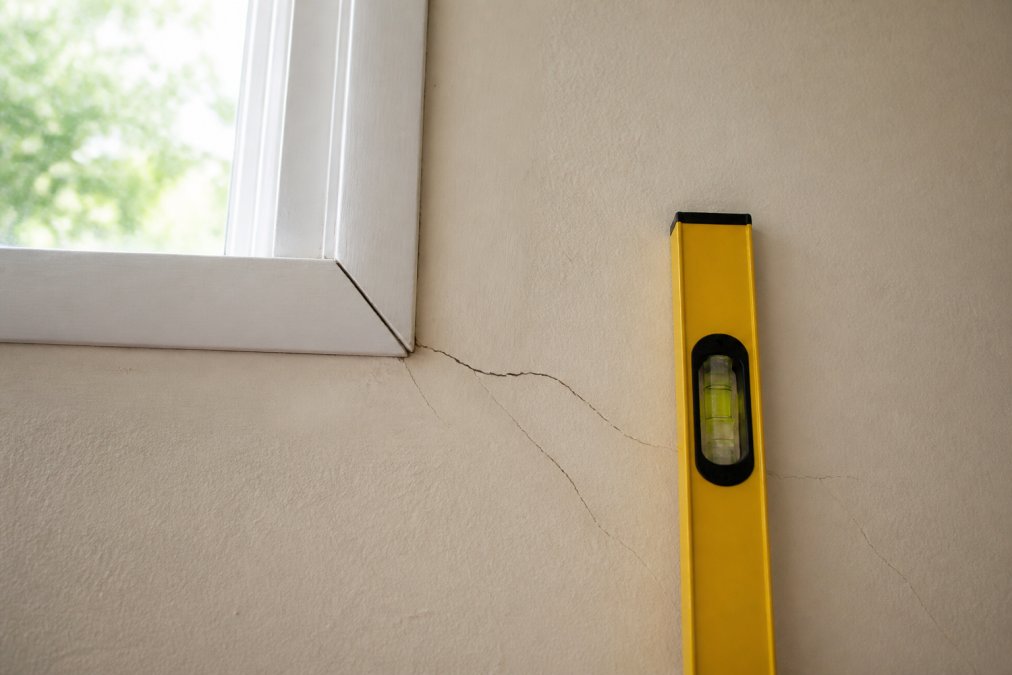
Interior cracks in drywall, plaster, or brick often appear first. Hairline cracks near door and window frames suggest foundation movement. These cracks typically run diagonally from corners of openings, following the path of structural stress as the foundation shifts unevenly.
Doors and windows that stick or won't close properly indicate foundation settling. As the foundation moves, the frame of the house shifts with it, throwing door and window openings out of square. What opened smoothly last year now binds against the frame.
Sloping or uneven floors are a clear sign of differential settlement. Walk across the room and notice if you feel the floor tilting. Place a marble on the floor, if it rolls without being pushed, the floor is sloped. Significant sloping indicates that one section of the foundation has settled more than another.
Cracks in interior walls, especially in corners or running the length of a wall, suggest structural movement.
Exterior Red Flags
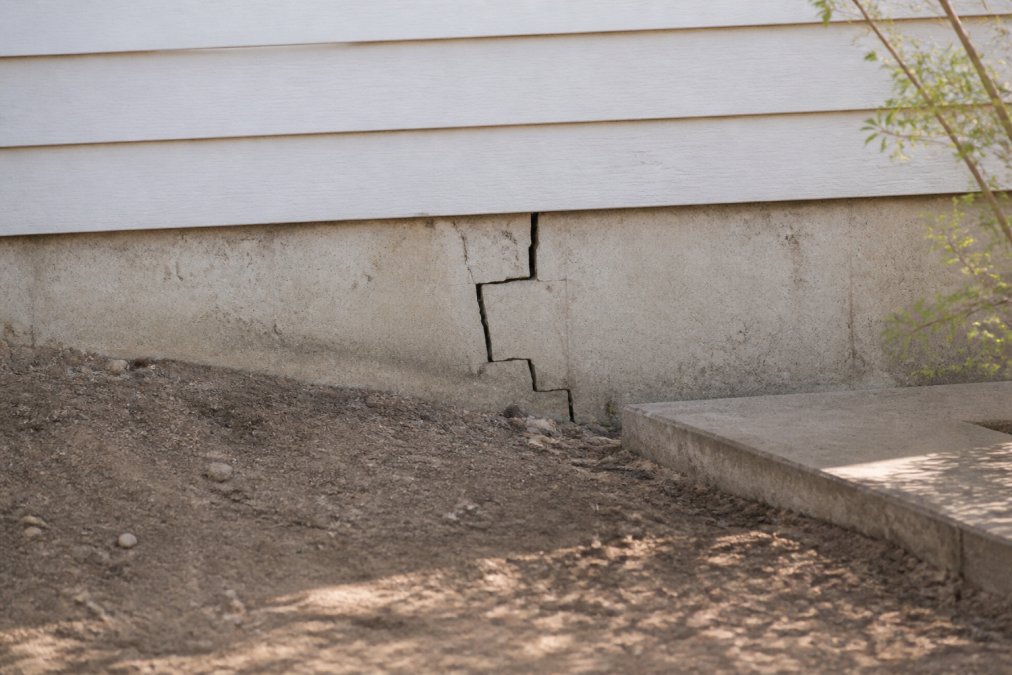
Bowing walls are a severe sign of foundation settling and structural failure. Exterior walls that curve outward or inward indicate that the foundation is no longer supporting the wall evenly. Bowing walls require immediate professional assessment and typically signal the need for structural repair.
How Seasonal Weather Changes Accelerate Foundation Damage
Wichita's climate is particularly harsh on foundations. The region experiences significant temperature swings and precipitation variability that amplify the shrink-swell cycle.
Cost of Foundation Repair and Your Options
Foundation repair costs vary dramatically depending on the cause and severity of settling. A minor repair addressing a single crack might cost a few hundred dollars. Comprehensive foundation stabilization through piering or underpinning can exceed tens of thousands of dollars.
The most common repair methods include:
- Concrete patching: For minor cracks, epoxy injection or concrete patching seals the crack and prevents water infiltration. This is a temporary solution for cosmetic or hairline cracks but doesn't address the underlying settling.
- Drainage correction: Regrading the soil around the foundation, installing or repairing gutters and downspouts, and adding drainage systems to divert water away from the foundation. This prevents future settling but doesn't repair existing damage.
- Piering or underpinning: Installing steel or concrete piers beneath the foundation to stabilize it and lift it back to its original level. This is the most expensive option but is necessary when settling is severe or ongoing.
- Plumbing repair: If under-slab leaks are the cause, rerouting the plumbing or repairing the leak stops the soil erosion and allows the foundation to stabilize.
Foundation Repair vs. Selling As-Is: Which Path Makes Sense
If your home has foundation settling, you face a choice: invest in repairs or sell the property as-is to a buyer willing to accept the condition.
When to Call a Professional Structural Assessment
You should contact a licensed structural engineer if you notice any of the warning signs described above. A professional assessment provides clarity about whether the settling is active, how severe it is, and what repairs are necessary.
Signs that professional assessment is urgent:
- Visible bowing in exterior walls
- Cracks wider than 1/4 inch
- Doors or windows that won't close
- Noticeably sloped floors
- Gaps between the foundation and the house frame
- Evidence of water intrusion in the basement or crawlspace
| Cause | Primary Indicator | Typical Repair Approach |
|---|---|---|
| Expansive clay soil | Diagonal cracks, sloping floors | Moisture stabilization, piering |
| Poor drainage | Water pooling, basement dampness | Grading correction, drainage systems |
| Under-slab plumbing leaks | Higher water bills, soft spots | Plumbing repair or rerouting |
| Tree root dehydration | Settling near large trees | Tree removal or root barriers |
| Seasonal weather cycles | Progressive annual movement | Foundation stabilization, monitoring |
Frequently Asked Questions
What are the early warning signs of foundation settling?
Early signs include hairline cracks in drywall or brick, doors and windows that stick or won't close properly, sloping or uneven floors, and gaps forming between walls and trim. Interior cracks often appear in corners of doorways and windows. Exterior indicators include bowing walls, cracks in the foundation itself, and separation between the house and any attached structures. These symptoms suggest soil movement is already underway and warrant a professional structural assessment.
How does expansive clay soil cause foundation settlement?
Expansive clay undergoes a shrink-swell cycle as soil moisture content changes with seasonal weather. When clay absorbs water, it expands; when it dries, it shrinks. This repetitive movement creates uneven pressure on the foundation, causing differential settlement where different sections of the foundation shift at different rates. Over time, this cycle weakens the load-bearing capacity of the soil and causes the structural integrity of the foundation to deteriorate, leading to visible cracks and misalignment.
Can you sell a house with foundation settlement issues?
Yes, you can sell a property with foundation settlement issues, though traditional buyers and lenders typically require repairs before closing. However, cash home buyers like OneRoof Real Estate purchase properties in any condition as-is, including those with active foundation problems. This approach eliminates the need for costly repairs or inspections, allowing you to close quickly without the burden of foundation repair expenses. It's an option worth considering if foundation damage is extensive or if you need to sell fast.
How much does foundation repair typically cost?
Foundation repair costs vary widely depending on the extent of damage, the repair method needed, and soil conditions. Minor crack repairs might cost a few hundred dollars, while piering or leveling can run into thousands. A professional structural assessment is the first step to understanding your specific repair needs. If repair expenses seem prohibitive, selling as-is to a cash buyer can eliminate these costs entirely and provide a faster path to closing.