 how-to
How to Sell a House With a Buried Oil Tank
Table of Contents
- Do You Have to Remove a Buried Oil Tank Before Selling?
- Step 1: Verify the Tank and Check for Leaks
- Step 2: Understand Your Legal Disclosure Obligations
- How to Disclose a Buried Oil Tank to Buyers
- Step 3: Navigate the Removal or Abandonment Process
- Underground Storage Tank Removal Cost and Timeline
- Selling a Home As-Is With Environmental Issues
- How Buried Tanks Affect Mortgages and Closing
- Frequently Asked Questions
Last Updated: September 9, 2026
Selling a property with an underground heating oil tank is stressful, largely because discovery often happens late in the transaction. Whether you just uncovered the tank or have known for years, the path forward requires careful planning around regulations and buyer expectations. This guide walks you through the legal steps, financial considerations, and practical strategies, with a buried oil tank often being the single biggest obstacle between you and the closing table.
Do You Have to Remove a Buried Oil Tank Before Selling?
The short answer is no, you do not always have to remove a buried oil tank before selling, but you almost always have to address it. State and local laws vary widely, and there is no universal federal mandate forcing removal prior to a property transfer. However, the real estate market itself creates immense pressure to act, because most lenders and buyers will walk away from a property with an unresolved underground storage tank.
A buried oil tank is a liability that follows the property, not the seller. If the tank leaks after you move, the new owner can often pursue legal action against you for failing to disclose a known defect. This is why the decision to remove or abandon the tank is rarely just about the law; it is about protecting yourself from future claims and keeping the deal alive.
Step 1: Verify the Tank and Check for Leaks
Your first move is to confirm whether a tank exists and determine its condition. Many sellers operate on hearsay or old records, so a professional assessment is essential. Before spending money on a contractor, perform a preliminary investigation to prepare for that visit and gain leverage in early buyer conversations.
DIY Preliminary Verification: What to Look For
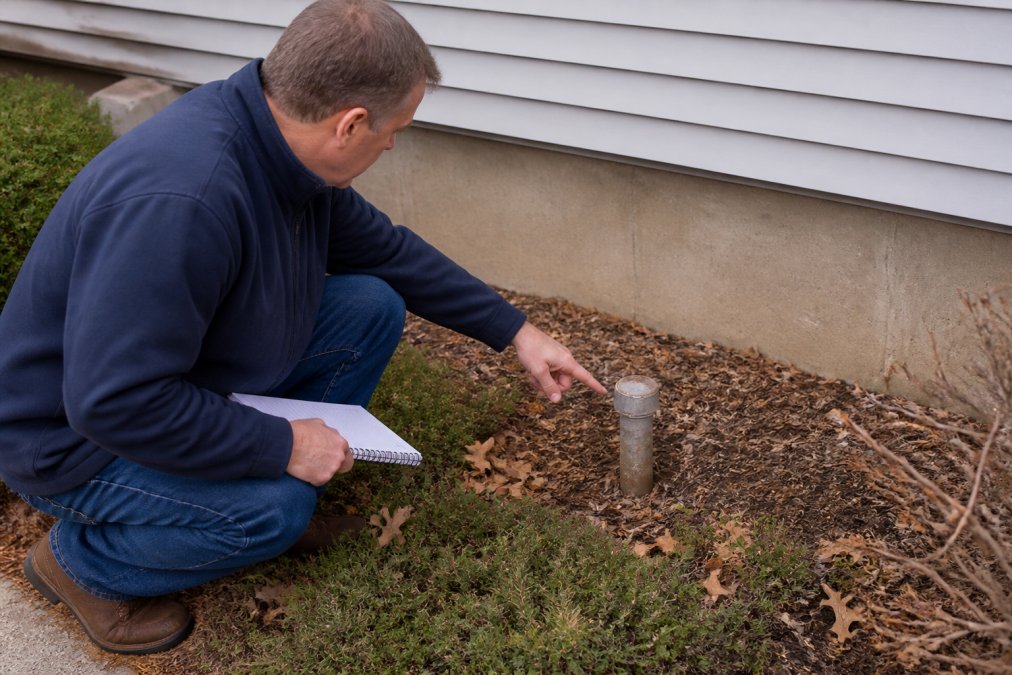
A buried oil tank leaves physical traces above ground. Walk the perimeter of your home and look for these signs:
- Fill pipes: A metal pipe, usually 2-3 inches in diameter, protruding from the ground near the foundation or in the yard. It often has a cap that may be painted or rusted.
- Vent pipes: A smaller pipe, typically 1-2 inches, that runs up the exterior wall of the house. It may have a U-shaped or gooseneck top to keep rain out.
- Patching or discoloration in the yard: Areas where grass grows differently, or where the ground appears sunken, can indicate a previous excavation.
- Old oil stains on the basement floor or foundation wall: These can mark where the supply line entered the house.
- A legacy oil tank in the basement: If you have an old, disconnected tank in the basement, there is a strong chance it was once connected to an underground tank outside.
You should also check your home's historical records. Previous inspection reports, old permits, or a seller disclosure from when you bought the property may reference the tank. Local fire departments and environmental agencies sometimes keep records of tank registrations or removals, though access varies by jurisdiction.
What DIY Verification Cannot Tell You
A visual inspection can tell you a tank likely exists, but not whether it is leaking, its exact size, depth, or structural condition. Attempting to dig around a suspected tank yourself is dangerous, you risk hitting utility lines, and disturbing the soil can worsen a leak if one is present.
The Professional Assessment: What to Expect
A licensed environmental contractor or underground storage tank specialist will typically do the following:
- Magnetic and ground-penetrating radar (GPR) surveys to locate the tank's position, depth, and dimensions without digging.
- A visual inspection of accessible piping to trace the supply line from the house to the tank.
- Soil sampling through small boreholes around the tank's perimeter. Samples are sent to a certified laboratory and tested for petroleum hydrocarbons, specifically total petroleum hydrocarbons (TPH) and volatile organic compounds (VOCs).
- A written report documenting the tank's location, condition, and the soil test results.
Interpreting Soil Test Results
Soil test results return numeric values for contaminant concentrations. If levels are below your state's cleanup standards, the soil is clean and the tank can be removed or abandoned without remediation. If levels exceed those standards, contamination must be addressed before the property can be sold to a financed buyer.
State standards vary, but a common benchmark is the residential soil cleanup level for TPH, which many states set in the range of 100 to 500 parts per million (ppm), depending on the specific petroleum fraction (the EPA). Your contractor will know the applicable standard for your location and will interpret the lab results for you.
The Cost of Professional Verification
A professional tank location survey typically costs $300 to $800 (homeadvisor.com). Soil testing adds $300 to $1,000 per sample. Compared to removal costs or a failed sale, this verification expense is modest and money well spent.
Step 2: Understand Your Legal Disclosure Obligations
Disclosure laws put the burden squarely on the seller. In most states, you must legally disclose a buried oil tank on a property disclosure form, even if it was decommissioned before you bought the house. Failing to disclose can void the sale or lead to lawsuits years later.
The legal framework here is serious. The Environmental Protection Agency's underground storage tank regulations establish federal standards for tank management, though many states have their own stricter rules. Sellers who hide a known tank expose themselves to claims of fraud or misrepresentation, which can result in the buyer recovering damages, including remediation costs and legal fees.
How to Disclose a Buried Oil Tank to Buyers
When disclosing a buried oil tank, honesty paired with documentation is your best strategy. State the tank's location, size, and current status, active, abandoned in place, or removed. Attach every piece of paperwork you have, including inspection reports, soil sampling results, and prior permits.
Transparency works in your favor. Buyers are more willing to proceed when they see a seller who has handled the issue properly. A clean soil test and professional removal record turn a scary unknown into manageable history.
Step 3: Navigate the Removal or Abandonment Process
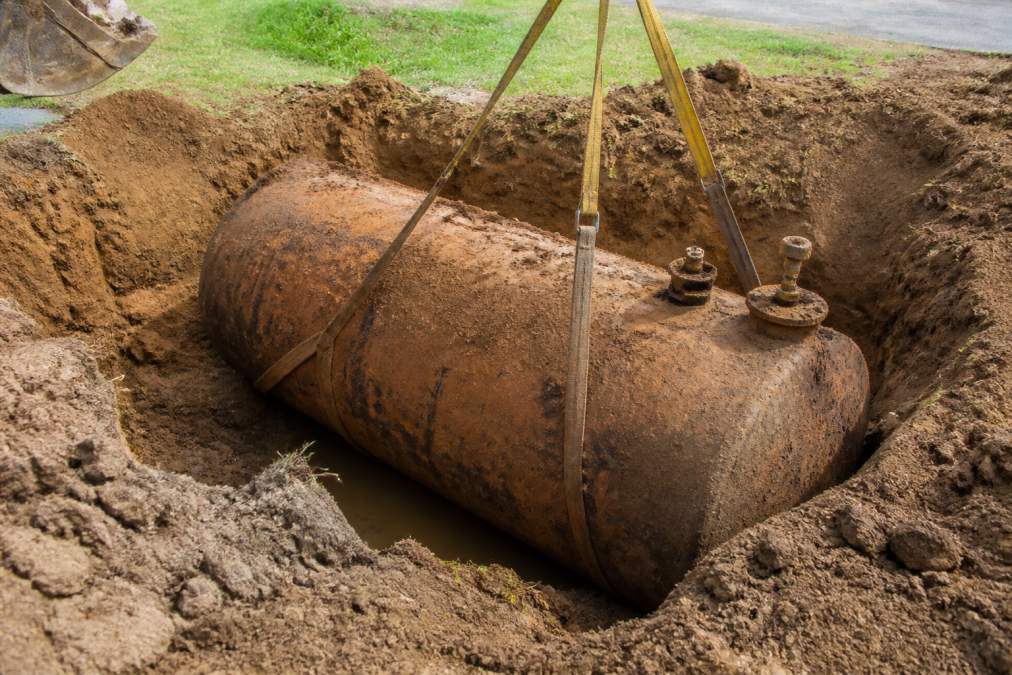
Once you know the tank's condition, you have two paths: removal or abandonment. Removal means digging up and properly disposing of the tank. Abandonment, or "abandoned in place," involves cleaning the tank, filling it with sand or foam, and leaving it underground. Both require permits and must follow state regulations.
Removal is preferred for most sellers because it eliminates liability entirely and is what most buyers want to see. Abandonment is cheaper and faster but leaves the tank in the ground, raising concerns for buyers and lenders. Consult a licensed professional before deciding.
Underground Storage Tank Removal Cost and Timeline
Underground storage tank removal costs vary significantly based on tank size, accessibility, and contamination. A straightforward removal costs less than a complex excavation involving concrete slabs or contaminated soil. Obtain multiple quotes from licensed contractors in your area.
The timeline is more predictable than the cost. A clean removal takes a few days from excavation to backfill, but scheduling, permits, soil test results, and final documentation add time. Plan for several weeks from start to finish, so start early in your home sale.
Selling a Home As-Is With Environmental Issues
Selling as-is with environmental issues is possible but requires the right buyer. Traditional mortgage buyers will struggle with a buried tank because lenders often refuse to finance unresolved environmental concerns. Your buyer pool shrinks dramatically, and offers will reflect the risk the buyer assumes.
Cash buyers are the realistic market for these properties. A direct buyer can take the tank issue off your hands entirely, handling removal or abandonment after closing. This trades a lower price for certainty and speed, often the right trade for sellers who cannot afford remediation or need to close quickly.
How Buried Tanks Affect Mortgages and Closing
A buried oil tank does not affect all mortgage applications equally. The distinction comes down to loan type, tank status, and lender overlay requirements. Understanding these mechanics helps you predict which buyers can actually close.
Conventional Loans (Fannie Mae and Freddie Mac)
Conventional loans follow Fannie Mae's Selling Guide and Freddie Mac's Seller/Servicer Guide. Neither explicitly prohibits a buried oil tank, but both require the property be safe, sound, and marketable. In practice, the appraiser must note the tank if visible or disclosed, and the underwriter typically requires one of the following before clear-to-close:
- A professional inspection confirming the tank is leak-free and properly decommissioned
- Soil testing showing no contamination
- A signed agreement where the seller escrows funds for removal and remediation post-closing (rare, and lender-dependent)
Most conventional lenders will not fund a purchase with an active, in-use underground tank. A properly abandoned-in-place tank with documentation may pass underwriting, but expect the appraiser to flag it and the underwriter to request the full paper trail.
FHA Loans
FHA loans are governed by HUD Handbook 4000.1. It does not contain a blanket ban on underground storage tanks, but requires the property have no hazards affecting occupant health and safety. An active buried oil tank, or one with evidence of leakage, is treated as such a hazard.
In practice, FHA appraisers must report any underground tank they observe or that is disclosed. If active, the appraisal will likely require the tank be removed or properly abandoned by a licensed professional and soil contamination ruled out. FHA buyers cannot close with an unresolved active tank.
VA Loans
The VA's Lender's Handbook (Chapter 12) takes a stricter stance. VA appraisers are trained to look for environmental hazards, and buried oil tanks fall into this category. The VA requires any underground storage tank be evaluated; if leaking or leaked, the property is unsuitable until remediation is complete.
A key difference: the VA often requires removal rather than abandonment-in-place for tanks showing any deterioration. Even a clean, properly abandoned tank can trigger additional scrutiny. VA buyers are the most constrained, so expect the tank to become a central issue.
The Underwriting Mechanism: Why Lenders Care
Lenders care because the property is the loan's collateral. If a buried tank leaks after closing, cleanup costs can exceed the property's value, leaving the lender with an asset worth less than the mortgage. Underwriters treat an unresolved tank as a title and valuation risk, not just an environmental one.
The practical consequence: a financed buyer's loan approval is contingent on resolving the tank to the lender's satisfaction, usually via removal or professional abandonment with soil testing before closing. If you cannot fund that work, your buyer pool narrows to cash buyers or those with more flexible lenders.
Closing Timeline Realities
Even with a cooperative lender, the closing timeline stretches. You must schedule the contractor, pull permits, complete excavation or abandonment, wait for soil test results (often 7-14 days), and submit documentation to the lender. This rarely takes less than three weeks.
If the tank is discovered after appraisal, expect a loan contingency amendment giving the buyer the right to walk if the issue is unresolved. Missing the resolution deadline can void the contract. Sellers discovering a tank mid-transaction should immediately notify their agent and the buyer's lender to understand requirements before spending money on removal.
The Cash Buyer Alternative
Cash buyers are not bound by lender underwriting requirements. A cash transaction can close with an active buried tank on the property, provided the buyer accepts the risk and the agreement reflects that. This is why cash offers are often the only viable path for sellers who cannot afford removal or need to close quickly.
If considering a cash offer, verify the buyer has seen the tank disclosure and acknowledged it in writing. A buyer who later claims ignorance can pursue legal action even in a cash sale. A signed acknowledgment protects you from that exposure.
Frequently Asked Questions
Do I have to remove a buried oil tank before selling my house?
No, removal is not always legally required. Many states allow proper abandonment in place, which means the tank is cleaned, filled with an inert material, and documented. However, most buyers and lenders prefer removal because it eliminates future liability. Check your state's environmental protection agency rules and your local property disclosure form to determine what is mandatory before you list.
How does a buried oil tank affect property value?
A disclosed, leak-free buried oil tank typically reduces offers because buyers factor in removal costs and future risk. An undisclosed tank or one that caused soil contamination can reduce value more sharply and may make financing difficult. Sellers who complete removal and provide post-remediation documentation generally recover most of the property's value and attract more buyers.
Will a buried oil tank prevent a buyer from getting a mortgage?
Often, yes. FHA and VA loans generally require the tank to be removed and the soil tested before closing. Conventional lenders may allow a properly abandoned tank if it passes a tank integrity test and is documented, but many underwriters still add conditions. Your best path is to disclose early and provide removal or abandonment records so the appraisal and loan process moves without delays.
Can I sell a house as-is if it has a buried oil tank?
Yes, you can sell as-is with a buried oil tank, but you must still complete the required disclosure forms. An as-is sale does not waive your legal obligation to disclose known environmental defects. Cash buyers, including professional home buyers, are often the most practical option since they can close quickly without requiring a lender's environmental review, and they accept the property in its current condition.