 how-to guide
How to Sell an Inherited House in Wichita: 2026 Guide
Table of Contents
- What You Need Before You Can Sell an Inherited House in Wichita
- Understanding the Probate Process in Wichita, Kansas
- Inherited House Taxes in Kansas Every Heir Should Know
- Kansas Inheritance Laws: What Heirs and Beneficiaries Must Understand
- Checklist for Out-of-State Heirs Selling a Wichita Property
- Your Selling Options: Traditional Market vs. Cash Buyer
- How to Sell an Inherited House in Wichita Fast: Step-by-Step
- Conclusion
Last Updated: August 1, 2026
Figuring out how to sell inherited house in Wichita is more complicated than most people expect, and the stakes are high enough that getting it wrong costs real money. This guide from OneRoof Real Estate walks through every step, from confirming legal authority to choosing the right selling method, with specific attention to Kansas probate statutes, Sedgwick County processes, and the tax rules that apply to heirs in 2026. The selling process starts the moment you confirm whether you legally have the authority to sell at all, not when you decide to list the property.
What You Need Before You Can Sell an Inherited House in Wichita
Before any sale can proceed, you must establish legal authority over the estate. Without this, no title company in Sedgwick County will issue title insurance, and no buyer will close.
Confirming Legal Authority: Executor, Letters Testamentary, and Letters of Administration
Letters testamentary are court-issued documents that authorize an executor named in a will to act on behalf of the estate. Letters of administration serve the same function when someone dies intestate, meaning without a will, and the probate court appoints an administrator instead.
The Sedgwick County District Court handles probate filings for Wichita properties. You'll file a petition, present the will if one exists, and wait for the court to issue the letters. Until those letters are in your hand, you cannot legally sign a purchase contract or deed on behalf of the estate. If the deceased owned the property in joint tenancy with right of survivorship, probate may not be required at all, the surviving joint tenant takes title automatically.
Key Documents: Title Search, Deed Transfer, and Affidavit of Heirship
Once authority is confirmed, gather these before approaching any buyer or agent:
- Title search: Reveals any lien, encumbrance, or cloud on title that must be resolved before closing
- Current deed: Confirms how the property was titled and who must sign the new deed transfer
- Affidavit of heirship: Used in some Kansas cases where formal probate is bypassed for small estates; must be signed by disinterested witnesses and recorded with the Sedgwick County Register of Deeds
- Property tax records: Confirm whether delinquent property taxes exist, which become a lien on the property
- Death certificate: Required by title companies and lenders
A real estate attorney familiar with Kansas probate law is worth the cost at this stage. Errors in deed transfers or missing liens discovered at closing can delay or kill a sale.
Understanding the Probate Process in Wichita, Kansas
The Kansas probate process is governed by state statute, and two sections directly affect how quickly you can sell an inherited property.
How K.S.A. 59-2303 and 59-2305 Affect Your Timeline
According to Kansas Legislature's official statutes database, K.S.A. 59-2303 establishes the general procedures for opening a probate estate in Kansas, while K.S.A. 59-2305 governs supervised and unsupervised administration. Unsupervised administration allows the executor to sell real property without seeking court approval for each transaction, which can cut months off your timeline.
Kansas also allows a simplified small estate procedure when the total estate value falls below a statutory threshold. If the inherited Wichita property qualifies, heirs can use an affidavit of heirship to transfer title without full probate, potentially closing in weeks rather than months. For standard probate, expect four to six months at minimum, though contested estates or title issues can extend that past a year.
Utility and Maintenance Management During Probate
The estate is responsible for maintaining the property during probate. Keep utilities active to prevent pipe freezes, mold, and code violations. Maintain homeowner's insurance on a vacant property (standard policies often exclude vacant homes after 30-60 days; you may need a vacant property rider). Mow the lawn and maintain the exterior to avoid City of Wichita code violations, which can result in fines assessed against the estate. Assign one person, typically the executor, to manage these tasks. If you're an out-of-state heir, hiring a local property manager for the duration of probate is often cheaper than the alternative.
Inherited House Taxes in Kansas Every Heir Should Know
Tax implications are where heirs most often leave money on the table, or get surprised by a bill they didn't see coming.
Stepped-Up Basis and Capital Gains Tax on Inherited Property
The stepped-up basis rule is the single most valuable tax provision available to heirs. When you inherit property, your cost basis for federal capital gains tax purposes is stepped up to the fair market value of the property on the date of the decedent's death, not what the original owner paid for it decades ago. If your parent bought a home in 1978 for a fraction of its current value and you inherit it and sell it immediately at current market value, your capital gains tax liability may be minimal or zero. The gain is measured from the stepped-up basis, not the original purchase price.
If you hold the property for a period before selling, any appreciation above the stepped-up basis becomes a taxable gain. The IRS guidance on inherited property and basis covers the stepped-up basis rules in detail.
Kansas-Specific Tax Exemptions and What They Mean for Net Proceeds
Kansas does not impose a state inheritance tax or a state estate tax as of 2026. Federal estate tax applies only to estates above the federal exemption threshold. Kansas also does not have a separate state capital gains tax rate; capital gains are taxed as ordinary income at the state level. For heirs who sell quickly after inheriting, the stepped-up basis typically minimizes the state income tax exposure as well.
Net proceeds from the sale are what remains after paying off any mortgage balance, delinquent property taxes, closing costs, real estate commissions if applicable, and any estate debts that must be settled before distribution to beneficiaries.
Kansas Inheritance Laws: What Heirs and Beneficiaries Must Understand
Kansas intestate succession laws determine who inherits when there is no valid will. The state follows a priority hierarchy: spouse first, then children, then parents, then siblings. If the deceased left a valid will, the will controls distribution, subject to the surviving spouse's statutory elective share rights under Kansas law.
Heirs and beneficiaries are distinct categories. A beneficiary is named in the will. An heir is someone who would inherit under intestate law regardless of whether a will exists. Understanding which category you fall into determines your rights and your standing in the probate proceeding.
Multi-Heir Disputes: Mediation Resources in Sedgwick County
When multiple heirs inherit a Wichita property jointly, disagreements about whether to sell, rent, or hold are common. These disputes can stall probate and block a sale indefinitely. Sedgwick County District Court can appoint a mediator, and Kansas has a network of trained mediators available through the Kansas Judicial Branch's dispute resolution resources. Mediation is significantly faster and cheaper than litigation.
If mediation fails and heirs cannot agree, any heir can petition the court for a partition action, which forces the sale of the property and division of proceeds. Courts generally prefer partition by sale over physical partition of real property.
Checklist for Out-of-State Heirs Selling a Wichita Property
Managing the sale of a Wichita property from another state adds logistical complexity that local heirs don't face. This checklist covers the tasks that most often fall through the cracks.
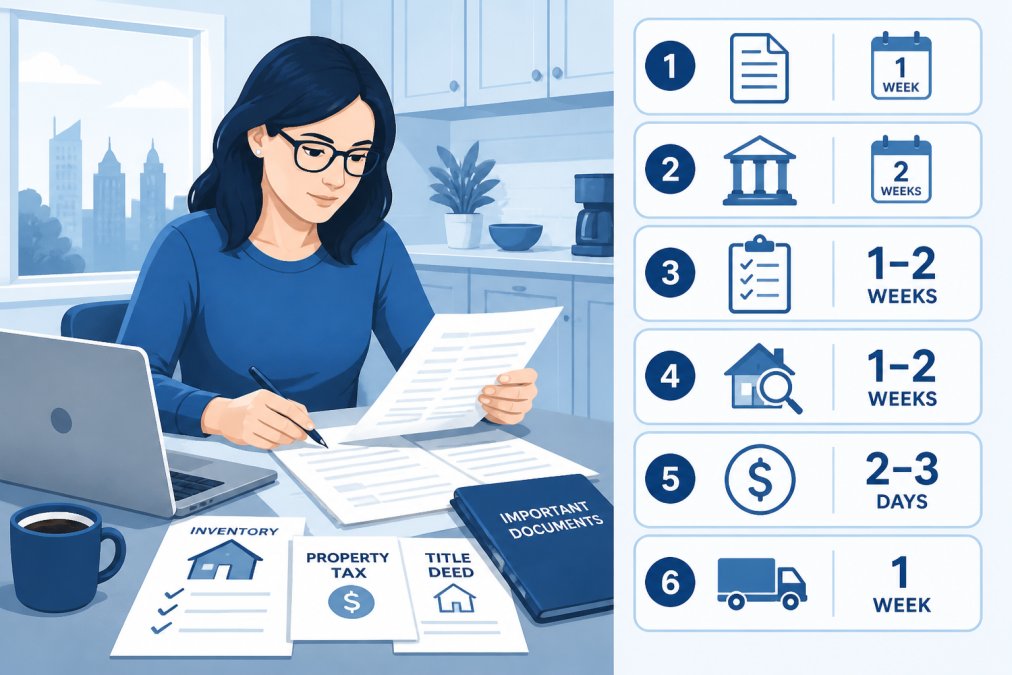
- Obtain certified copies of the death certificate (you'll need multiple)
- File for probate in Sedgwick County District Court or confirm small estate exemption applies
- Obtain letters testamentary or letters of administration
- Order a title search on the Wichita property
- Confirm vacant property insurance is in place
- Arrange local property management or a trusted contact for maintenance
- Set up utility auto-pay or transfer utilities to the estate account
- Check for delinquent property taxes with the Sedgwick County Treasurer
- Obtain a professional property appraisal to establish fair market value and stepped-up basis
- Consult a Kansas real estate attorney and a CPA familiar with inherited property tax rules
- Decide on selling method: traditional listing, as-is sale, or cash buyer
- Coordinate signing logistics (remote notarization is available in Kansas)
- Confirm wire transfer instructions for net proceeds distribution
Kansas allows remote online notarization, which means out-of-state heirs can execute most documents without traveling to Wichita for every signature.
Your Selling Options: Traditional Market vs. Cash Buyer
The right selling method depends on the property's condition, how quickly you need to close, and how much time and money the estate can absorb during the process.
| Factor | Traditional Listing | Cash Buyer / As-Is Sale |
|---|---|---|
| Timeline to close | 60-120 days typical | 7-30 days typical |
| Repairs required | Often yes, to attract financing | No |
| Commissions | Typically 5-6% of sale price | None |
| Closing costs | Negotiated; often split | Often covered by buyer |
| Condition flexibility | Low (lender appraisal standards) | High (any condition) |
| Price achieved | Closer to market value | Below market value |
| Best for | Move-in ready, no time pressure | Damaged, complex, or urgent estates |
Pros and Cons of Listing with a Real Estate Agent
A traditional listing through a licensed Wichita real estate agent gets the property in front of the broadest pool of buyers and generally produces the highest sale price, assuming the property is in marketable condition. Maximum exposure through MLS and online platforms can generate competitive offers that drive price above initial listing. However, properties must typically pass lender appraisal and inspection standards, repairs and staging costs fall on the estate, and closing timelines of 60-120 days extend estate administration. Agent commissions also reduce net proceeds. For a well-maintained property with no deferred maintenance, a traditional listing often makes financial sense despite the longer timeline.
Pros and Cons of Selling As-Is to a Cash Buyer
An as-is sale to a cash buyer skips the repair, appraisal, and lender approval steps entirely. The trade-off is a lower sale price, typically below appraised market value. Fast closing often occurs within 7-14 days with no repairs, cleaning, or showings required. No financing contingency means fewer deals fall through, and the process simplifies estate administration significantly. The downside is that sale price is below what a retail buyer would pay.
OneRoof Real Estate buys inherited properties throughout Sedgwick, Harvey, Butler, and Sumner counties, in any condition, with no commissions, no closing costs, and no repairs required. For out-of-state heirs managing a complicated estate, closing in 7 days with a single cash transaction often produces better net proceeds than a traditional listing once you account for holding costs, repairs, and commissions.
How to Sell an Inherited House in Wichita Fast: Step-by-Step
For heirs who need to sell inherited house assets quickly and cleanly, here is the fastest path from probate to closing:
Step 1: Open probate and obtain legal authority [Time: 2-6 weeks] File with Sedgwick County District Court and obtain letters testamentary or letters of administration.
Step 2: Secure and maintain the property [Ongoing during probate] Activate utilities, confirm insurance, arrange local maintenance.
Step 3: Order a title search and property appraisal [Time: 1-2 weeks] Identify liens, encumbrances, and establish the stepped-up basis value.
Step 4: Resolve title issues and estate debts [Time: varies] Pay off any lien, delinquent taxes, or encumbrance that would block transfer.
Step 5: Choose your selling method [Time: 1-3 days to decide] Evaluate the property condition, your timeline, and net proceeds under each option.
Step 6: Accept an offer and open escrow [Time: 1-7 days] For cash buyers, this can happen within 24-48 hours of contact.
Step 7: Close and distribute proceeds [Time: 7-30 days after offer acceptance] Sign the deed transfer, receive proceeds, and distribute to beneficiaries per the will or court order.
Common Mistakes That Delay Closing
The most common delays in selling inherited Wichita properties are predictable and avoidable: skipping the title search allows undiscovered liens to kill deals at closing; failing to probate the estate before marketing prevents any buyer from closing without clear title; accepting an offer before legal authority is confirmed means you cannot sign a binding contract as executor; ignoring delinquent property taxes allows Sedgwick County tax liens to become senior claims; and underestimating holding costs lets every month of delay drain the estate through taxes, insurance, utilities, and maintenance.
Frequently Asked Questions
Do I have to pay taxes on an inherited house in Wichita, Kansas?
Kansas does not impose a state inheritance tax, and the federal estate tax only applies to very large estates. The main tax concern when you sell inherited house property is federal capital gains tax. Because inherited property receives a stepped-up basis to fair market value at the date of death, you typically owe capital gains only on appreciation that occurred after you inherited it, not on the full original purchase price. Consult a tax professional for your specific situation.
How long does probate take in Wichita, Kansas?
A straightforward probate case in Sedgwick County probate court commonly takes four to six months, though contested estates or those with title complications can run twelve months or longer. Kansas statutes K.S.A. 59-2303 and 59-2305 govern the opening of an estate and appointment of an executor. Small estates may qualify for simplified procedures that bypass full probate. Starting the process quickly after the death reduces delays and keeps property maintenance costs from eroding net proceeds.
Can you sell a house in probate in Kansas?
Yes. Kansas law allows the executor or administrator to sell real property during probate, provided the probate court approves the sale when required. The executor must hold valid letters testamentary or letters of administration before signing any purchase agreement. Cash buyers familiar with the Wichita probate process can often structure a sale that closes as soon as court approval is granted, which keeps the timeline predictable and avoids the uncertainty of a traditional listing during an open estate.
What documents do I need to sell an inherited house in Wichita?
At minimum you will need: the original or certified death certificate, letters testamentary or letters of administration from Sedgwick County probate court, a current title search confirming no outstanding liens or encumbrances, and a valid deed transferring ownership. If the estate skips formal probate, an affidavit of heirship recorded with the Sedgwick County Register of Deeds may establish title. A real estate attorney familiar with Kansas probate can confirm which documents apply to your specific estate.
Should I use a real estate agent or sell to a cash buyer for an inherited house in Wichita?
It depends on the property's condition and how quickly you need to close. A traditional listing through an agent may produce a higher gross sale price on a move-in-ready home, but it comes with commissions, closing costs, inspection contingencies, and a timeline of sixty to ninety days or more. Selling as-is to a cash buyer eliminates repairs, showings, and financing risk, and can close in as few as seven days. For inherited homes with deferred maintenance, code violations, or out-of-state heirs, a cash offer often nets more after expenses.
What are the typical costs associated with selling an inherited house in Wichita?
On a traditional sale, expect agent commissions of five to six percent of the sale price, plus closing costs that often run two to four percent. If the home needs repairs to pass inspection or meet lender requirements, those costs come off the top as well. Probate attorney fees and court filing fees add to the total. A cash buyer who covers closing costs and requires no repairs removes several of those line items, which can make the net proceeds comparable even if the gross offer is lower.
Selling an inherited property while managing an estate is genuinely difficult, especially from out of state. OneRoof Real Estate has completed over 500 closings in Wichita and across 27 states, buying properties in any condition, cash, closing in as few as 7 days, with no commissions, no repairs, and no fees. For heirs who want to close the estate quickly and move on, visit ict.cash to get a cash offer on the inherited property.
This article was written using GrandRanker