 how-to
Preparing an Inherited House for Sale: A Step-by-Step Guide
Table of Contents
- Understand Your Legal Authority to Sell
- Assess the Property's Financial Standing
- Selling a House as-Is in Wichita
- How Long Does It Take to Sell an Inherited House
- Clearing Out an Inherited House: Checklist
- Prepare the Property for Showing or Sale
- Complete the Title Transfer and Close the Sale
- Conclusion
Last Updated: August 28, 2026
Understand Your Legal Authority to Sell
Before listing an inherited house, you need legal proof of your right to sell it. Without proper documentation, title companies won't transfer ownership and buyers won't close. The process varies depending on whether the deceased left a will.
Letters Testamentary vs. Letters of Administration
Letters testamentary are court documents proving you're the executor of an estate with a valid will. The probate court issues them after validating the will and confirming your appointment, giving you legal authority to manage and sell the property.
Letters of administration serve the same purpose when someone dies without a will (intestate). The court appoints an administrator, usually the closest relative, and issues these letters to authorize property sales and debt settlement.
Both documents are required by title companies and closing attorneys. You'll need certified copies for the sale transaction. In Kansas, probate typically takes 4-6 months, though uncontested estates move faster (kansas.gov).
Determining Descent and Heirship
When there's no will, Kansas probate law determines who inherits through determination of descent. The court identifies all legal heirs based on a priority system: spouse first, then children, then parents, then siblings.
Multiple heirs may have a claim on the property. If you're selling, all heirs with ownership interest typically need to agree and sign closing documents. If heirs are scattered or difficult to locate, this can delay the process. OneRoof Real Estate works with heirs in this situation, a direct cash sale eliminates traditional financing contingencies and reduces complications.
Small-Estate Affidavits in Kansas
For smaller estates, Kansas offers a faster alternative: the small-estate affidavit. If the total estate value (excluding the home) is under a certain threshold, heirs can bypass formal probate and use an affidavit to transfer property directly.
This process completes in weeks rather than months. However, it only works if the estate qualifies and all heirs agree. Consult a Kansas probate attorney to determine which path applies to your situation.
Assess the Property's Financial Standing
Before deciding how to sell, understand what you're inheriting. A property can have hidden liabilities, liens, back taxes, code violations, or structural damage that affect its value and your options.
Title Search and Encumbrances
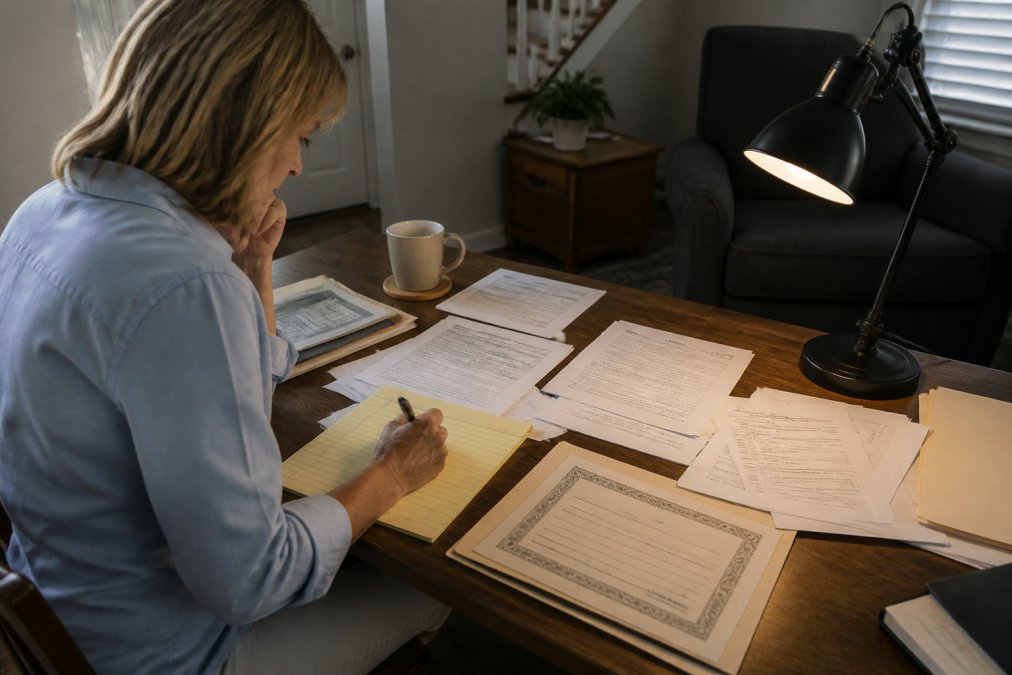
Order a title search immediately. This report reveals whether the property has clear title or is burdened by encumbrances, legal claims against it. Common encumbrances include mortgage liens, property tax liens, HOA liens, or judgment liens from creditors.
If the deceased had outstanding debts, creditors may have filed liens against the property. These must be paid from estate proceeds before heirs receive anything. A title search costs $200-400 and is essential before listing, it answers whether you can sell the property free and clear.
Tax Basis and Capital Gains Implications
Here's a critical advantage of inheriting property: the stepped-up basis. When you inherit, the property's tax value resets to its fair market value on the date of death, not the original purchase price (irs.gov). This can save you thousands in capital gains taxes.
Example: If your parent bought a house for $150,000 and it's now worth $350,000, the $200,000 gain is normally taxable if you sell. With the stepped-up basis, your new cost basis is $350,000. If you sell immediately after inheriting, you owe no capital gains tax on that appreciation.
This advantage disappears if you wait too long to sell. Any appreciation after the date of death is taxable gain. Consult a tax professional before deciding when to sell, timing can significantly affect your tax liability.
Selling a House As-Is in Wichita
Not every inherited house needs repairs before sale. For many properties, selling as-is is the smarter financial choice.
When As-Is Sales Make Sense
Selling a house as-is means listing it in its current condition without repairs or cosmetic updates. This approach makes sense when:
- The property needs significant repairs that would cost more than the value they add
- You live out of state and managing renovations remotely is impractical
- The property has code violations or structural issues requiring professional remediation
- You need to sell quickly to settle the estate or distribute proceeds to heirs
- Multiple heirs can't agree on how to prepare the property
As-is sales typically attract cash buyers and investors willing to handle repairs themselves. These buyers price the property lower to account for the work required, but they close faster and eliminate your liability for disclosed defects.
Repair vs. Sell As-Is: Weighing Your Options
This decision hinges on cost, time, and market conditions. Cosmetic repairs like paint, landscaping, and minor fixes often pay for themselves in higher sale price. A $5,000 renovation might net you $8,000 more at closing.
But if the house needs foundation work, roof replacement, electrical rewiring, or HVAC overhaul, the math changes. These repairs cost $10,000-50,000+ and may only add 50-70% of that cost back to the sale price. Time is another factor, repairs take weeks or months. If heirs are waiting to settle the estate or you need liquidity quickly, an as-is sale closes faster. OneRoof Real Estate makes offers within 24 hours and closes in as little as 7 days, no repairs needed.
How Long Does It Take to Sell an Inherited House
Timeline anxiety is real, especially if multiple heirs are waiting for their share or if you're managing the property remotely.
Timeline for Traditional Listing
A traditional MLS listing follows this rough timeline:
- Probate and legal authority: 4-6 months (or weeks with a small-estate affidavit)
- Preparing the property: 2-4 weeks
- Marketing and showing period: 30-60 days
- Offer and inspection period: 7-14 days
- Appraisal and underwriting: 7-14 days
- Closing: 30-45 days
Total: 5-9 months from inheritance to cash in hand. Reality often stretches this timeline when inspections reveal issues, buyers request repairs, appraisals come in low, or title issues surface.
Expedited Sale Options
If you need to sell faster, two main paths exist:
Cash buyers close in 7-14 days. They make offers within 24 hours, don't require inspections or appraisals, and handle their own financing. Their offers are typically 20-30% below market value because they're pricing in their costs and risk. For properties in poor condition or with urgent timelines, this gap often narrows because traditional buyers would demand repairs anyway.
iBuyers (online platforms that buy homes directly) offer speed and certainty but typically only operate in specific markets and require properties in decent condition. Their offers are usually closer to market value than cash buyers but still discounted for speed and convenience.
For an inherited house where probate is complete, OneRoof Real Estate provides a fair cash offer, closing in 7 days, and the ability to choose your closing date, critical when coordinating with out-of-state heirs.
Clearing Out an Inherited House: Checklist
An inherited house often comes with decades of accumulated possessions. Clearing it out is physically and emotionally demanding, especially if you're doing it remotely.
Sorting and Organizing Estate Items
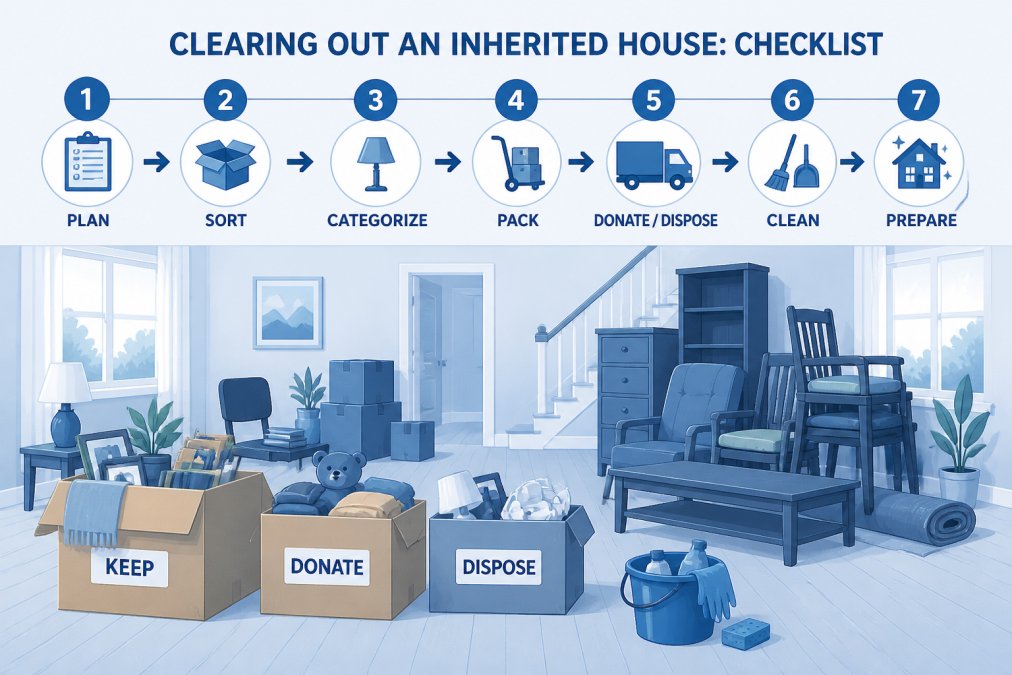
Start by categorizing everything into: Keep (sentimental or financial value), Sell (furniture, collectibles, jewelry, antiques), Donate (clothing, books, household goods in good condition), and Discard (broken items, trash, hazardous materials).
Create a staging area in the house or garage where you can sort items as you go. For out-of-state heirs, consider hiring an estate liquidation company to handle sorting, pricing, and sale of valuable items. They typically take 30-40% commission but save you travel, time, and emotional labor.
Donation vs. Disposal: Making the Right Call
Donating items is faster than selling individually and provides a tax deduction for the estate. However, high-value items like antique furniture, jewelry, art, and collectibles should be appraised and sold if possible. A single piece might be worth thousands.
Disposal is necessary for items no one wants. Junk removal services charge by volume or weight, expect $500-2,000 for a full-house cleanout. Some items require special handling: hazardous materials, electronics, and appliances often have municipal restrictions.
Managing Utilities and Insurance During the Process
Keep utilities on during the clearing process. Once the house is empty and ready to sell, you can reduce utility usage to save money.
Insurance is critical. Contact the insurance company immediately to ensure coverage continues or transfer it to the estate. If the house will sit empty for weeks or months, consider vacant property insurance, standard homeowner policies often exclude coverage for vacant homes.
Prepare the Property for Showing or Sale
Even an as-is sale benefits from basic preparation. First impressions matter, and curb appeal can influence offers significantly.
Curb Appeal and Light Staging
Curb appeal is the easiest investment with the highest return. Spend a weekend on these tasks: mow the lawn, trim overgrown bushes, power wash the front entrance and driveway, paint the front door if faded, clean windows, remove clutter from the porch and yard, and add potted plants or flowers.
These tasks cost under $500 and take a weekend but make the house look cared-for. Light staging means arranging existing furniture to show how rooms can be used. Remove clutter, open curtains for natural light, and ensure main pathways are clear. For a property in poor condition, staging doesn't matter much, but for a house needing only cosmetic attention, these steps can increase offers by 5-10%.
Property Inspection and Appraisal
If you're listing traditionally, expect a professional inspection identifying every defect. An appraisal determines fair market value by comparing your house to similar recent sales. If comparable homes sold for less, your appraisal may come in lower than your asking price.
For cash sales, inspections and appraisals are optional. Cash buyers often skip formal inspections and make offers based on property condition they've personally observed, eliminating inspection contingencies and appraisal surprises.
Complete the Title Transfer and Close the Sale
The final stage involves legal paperwork and coordinating with the title company and closing attorney.
Fiduciary Duty and Executor Responsibilities
As executor or administrator, you have a fiduciary duty to the estate and heirs. This means acting in their best interest: obtain fair market value for the property, pay estate debts and taxes from proceeds before distributing to heirs, keep detailed records, and disclose conflicts of interest if you're also an heir.
Breaching fiduciary duty, for example, selling the property to yourself at a steep discount, can result in heirs suing you personally. At closing, you'll sign a deed transferring the property to the buyer. The title company handles the transfer, records it with the county, and distributes proceeds according to the sale agreement and estate instructions.
Closing Costs and Final Settlement
Closing costs typically include title insurance, recording fees, attorney fees, transfer taxes (if applicable in Kansas), and realtor commissions. These costs range from 2-5% of the sale price. For a $300,000 house, expect $6,000-15,000 in closing costs.
With OneRoof Real Estate, the company covers all closing costs and commissions. You receive the full offer amount at closing. After closing, the title company distributes proceeds to the estate. As executor, you use those funds to pay remaining debts, estate taxes, and then distribute the remainder to heirs.
Selling an inherited house requires navigating probate, understanding tax implications, and making strategic decisions about repairs and timeline. OneRoof Real Estate has helped hundreds of sellers in the Wichita area close inherited properties quickly, with fair cash offers, no repairs required, and closing dates you control. If you're managing an inherited property and want a straightforward path to closing, contact OneRoof Real Estate for a free offer today. We'll provide a no-obligation cash offer within 24 hours and handle all the paperwork, closing costs, and coordination so you can focus on settling the estate.
Frequently Asked Questions
Do I need to make repairs before selling an inherited house?
No, you have options. Selling a house as-is in Wichita allows you to avoid repair costs entirely, especially for properties with foundation issues, code violations, or extensive damage. Alternatively, you can make strategic repairs to increase market value if the home qualifies for traditional financing. The choice depends on the property's condition, your timeline, and whether you want to maximize proceeds or minimize effort and expense.
How long does it take to sell an inherited house?
Timeline varies significantly. A traditional MLS listing typically takes 30-90 days to sell, plus 30-45 days for closing. Probate and title transfer can add 2-6 months before you can even list. Cash buyers can close in as little as 7 days once you have legal authority. For out-of-state heirs, expedited options exist but require proper documentation of heirship and executor authority.
What are the tax implications of selling an inherited property?
Inherited properties receive a stepped-up basis, meaning the property's value is reset to its fair market value on the decedent's date of death. This can significantly reduce or eliminate capital gains tax when you sell. Consult a tax professional to understand your specific situation, as the stepped-up basis applies only to properties inherited, not gifted during the owner's lifetime.
What should I do with an inherited house if I live out of state?
You'll need to establish legal authority through letters testamentary or letters of administration, then address title transfer. Managing the property remotely is challenging, consider hiring a local property manager, real estate agent, or cash buyer to handle the sale. Out-of-state heirs often benefit from expedited sales options that don't require in-person involvement or extensive repairs.
This article was written using GrandRanker