 how-to
Can I Sell My House During Divorce in Kansas?
Table of Contents
- Can You Sell a House During Divorce in Kansas? The Short Answer
- Kansas Automatic Temporary Restraining Order and Your Home
- Marital Property vs. Separate Property: What Kansas Law Says
- How to Divide Home Equity in Divorce Without a Court Fight
- Sell House During Divorce in Kansas: Step-by-Step Process
- Lis Pendens, Property Liens, and Title Risks You Must Know
- Using a Divorce Home Sale Agreement Template to Protect Both Parties
- Selling Before vs. After the Divorce Is Finalized: Pros and Cons
Last Updated: August 4, 2026
Divorce is one of the most legally complex events a homeowner can face, and the question "can I sell house during divorce Kansas" comes up earlier than most people expect. The short answer is yes, but the path from listing to closing runs through legal requirements that catch many sellers off guard. This guide from OneRoof Real Estate breaks down every step, from Kansas automatic temporary restraining orders to lis pendens risks, so you know exactly what to expect before you sign anything.
Can You Sell a House During Divorce in Kansas? The Short Answer
Yes, you can sell a house during divorce in Kansas, but you cannot do it unilaterally once a divorce filing is active. Kansas courts impose automatic financial controls the moment a divorce petition is filed, and those controls directly affect your ability to list, negotiate, or close on marital property. Both spouses must either agree to the sale or obtain explicit court permission to proceed.
Kansas follows equitable distribution principles, meaning the court divides marital property in a manner it considers fair, which is not always a 50/50 split. The family home is almost always classified as marital property, even if only one spouse is on the title, as long as it was acquired during the marriage. If you want to sell quickly, both spouses need to be on the same page or a judge needs to authorize the sale. A stipulated agreement between both parties is usually faster and cheaper than litigation.
Kansas Automatic Temporary Restraining Order and Your Home
The Kansas Automatic Temporary Restraining Order is a set of financial restrictions that takes effect automatically when a divorce petition is filed in Kansas. No separate court hearing is required. The ATRO is designed to preserve the marital estate in its current state while the divorce proceeds.
What the ATRO Prohibits and What It Does Not
The ATRO prohibits either spouse from selling, transferring, encumbering, or otherwise disposing of marital property without the written consent of the other spouse or a court order. That means you cannot list the home, accept an offer, or sign a purchase agreement without satisfying one of those two conditions.
What the ATRO does NOT prohibit: paying ordinary household expenses including the mortgage, property taxes, and insurance; making routine repairs necessary to maintain the property's value; consulting with a real estate agent or getting an appraisal; and negotiating privately with your spouse about a potential sale.
How to Get Court Permission to Sell While the ATRO Is Active
If your spouse refuses to consent to the sale, you can file a motion with the court requesting authorization to sell the property. Courts generally grant these motions when the sale serves the financial interests of both parties, for example, when mortgage payments are delinquent or the property is depreciating. You will need to demonstrate that the sale price reflects fair market value and that the net proceeds will be held in escrow pending the divorce decree. Temporary orders from the court can address who manages the sale process, who selects the real estate agent, and how decisions about price reductions are made.
Marital Property vs. Separate Property: What Kansas Law Says
Marital property in Kansas is broadly defined as any asset acquired by either spouse during the marriage, regardless of whose name appears on the title or deed. The family home purchased during the marriage is marital property in virtually every case. Separate property includes assets owned before marriage, gifts, and inheritances, provided they were kept financially separate from marital funds.
If one spouse owned a home before the marriage but the other spouse contributed to mortgage payments or renovations using marital income, a Kansas court may treat a portion of the home's equity as marital property. This is called transmutation, and it is a common source of disputes during asset division. According to Kansas Judicial Council's family law resources, Kansas courts have broad discretion in classifying and dividing property, which means the outcome depends heavily on the specific facts of each case and the quality of financial disclosure both parties provide.
How to Divide Home Equity in Divorce Without a Court Fight
Dividing home equity is the financial core of most divorce-related property disputes. The goal is to establish a number both parties accept as fair, then decide whether to sell the home and split the net proceeds or allow one spouse to buy out the other.
Getting an Appraisal and Calculating Net Proceeds
A professional appraisal establishes the fair market value of the home. Both spouses can agree to use a single appraiser or each hire their own. When appraisals diverge significantly, courts often average the two figures or appoint a neutral third appraiser.
Net proceeds are calculated by subtracting the outstanding mortgage balance, closing costs, and any outstanding property liens from the appraised value.
| Item | Description |
|---|---|
| Fair Market Value | From professional appraisal |
| Less: Mortgage Payoff | Current outstanding balance |
| Less: Closing Costs | Typically 2%-3% of sale price for seller-side costs |
| Less: Outstanding Liens | Property tax arrears, HOA liens, judgment liens |
| Equals: Net Proceeds | Amount available for equitable distribution |
Buyout Option: Mortgage Qualification Is the Hidden Hurdle
A buyout allows one spouse to keep the home by paying the other spouse their share of the equity. The spouse keeping the home must refinance the mortgage in their name alone. That requires qualifying based on their individual income, credit score, and debt-to-income ratio. Many people discover they cannot qualify for the loan amount needed to buy out their spouse, even when they have enough equity on paper. Get a mortgage pre-qualification done before any buyout agreement is finalized in the divorce settlement.
Sell House During Divorce in Kansas: Step-by-Step Process
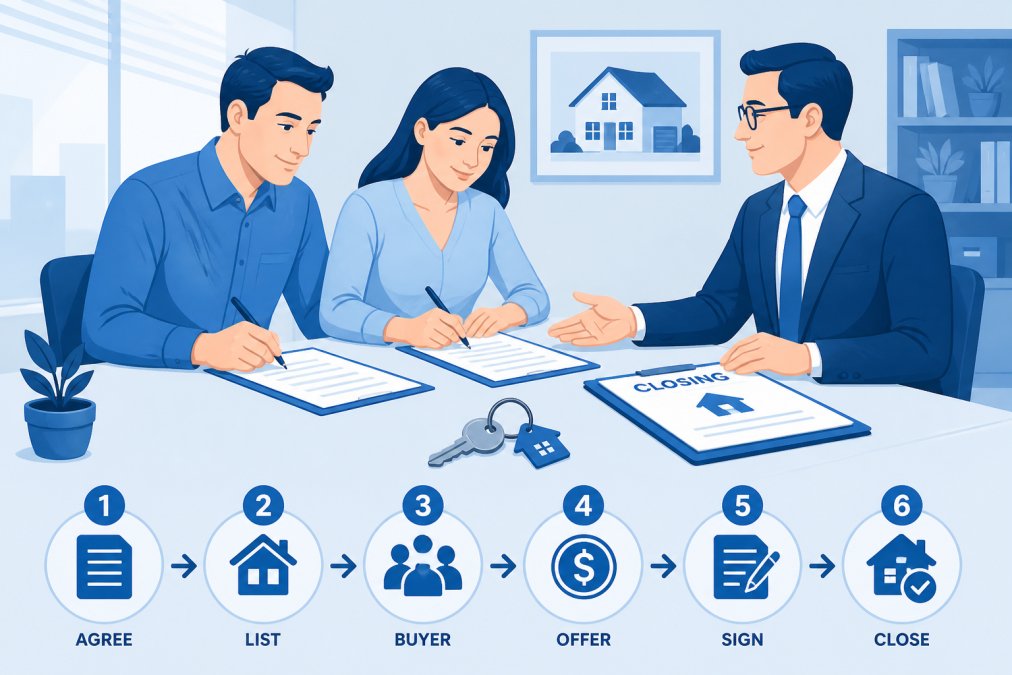
Selling during an active divorce follows a specific sequence. Skipping steps creates legal exposure and can delay closing by weeks.
Step 1: Confirm the property's legal status. Determine whether the home is marital or separate property and identify any existing liens.
Step 2: Reach a written agreement or obtain a court order. Both spouses must consent in writing or the court must authorize the sale.
Step 3: Get a professional appraisal. Establish fair market value before listing.
Step 4: Select a real estate agent experienced with divorce sales. Not every agent understands the legal constraints or knows how to manage communication between parties who are not speaking directly.
Step 5: List the property and manage the sale jointly. Both spouses must approve price reductions, counteroffers, and the final purchase agreement.
Step 6: Hold net proceeds in escrow. At closing, net proceeds should be held in a neutral escrow account until the divorce decree specifies the division.
Step 7: Distribute proceeds per the divorce decree. Once the court issues its final order, the escrow agent releases funds according to the specified division.
Common Mistakes That Delay Closing
The biggest mistakes that derail divorce home sales are predictable and avoidable: failing to disclose the divorce to the title company early; allowing one spouse to handle all agent communication; not addressing deferred maintenance before listing; skipping the escrow step and allowing proceeds to go directly to one party; and underestimating capital gains tax exposure.
On capital gains: the IRS allows married couples filing jointly to exclude a significant amount of gain from the sale of a primary residence. After divorce, each individual's exclusion is lower. Timing the sale to occur before the divorce is finalized can preserve the larger exclusion. Consult a tax advisor before making that decision.
Lis Pendens, Property Liens, and Title Risks You Must Know
A lis pendens is a formal legal notice recorded in the public land records indicating that a lawsuit involving the property is pending. In a divorce context, either spouse can file a lis pendens against the marital home to prevent the other from selling or encumbering the property without court involvement. A recorded lis pendens effectively clouds the title, and most buyers and lenders will not proceed with a purchase until it is resolved.
Beyond lis pendens, other title risks common in divorce sales include judgment liens from creditors of either spouse, unpaid property taxes creating a tax lien, HOA assessment liens for unpaid dues, and mechanic's liens from contractors who performed work and were not paid.

According to Consumer Financial Protection Bureau's guidance on title insurance, a title search conducted by a licensed title company will surface most recorded liens before closing. Order a title search the moment both spouses agree to sell. Surprises found at closing are far more expensive to resolve than surprises found at listing.
Using a Divorce Home Sale Agreement Template to Protect Both Parties
A divorce home sale agreement template is a written document that establishes the ground rules for selling the marital home before the divorce is finalized. It is not a substitute for legal counsel, but it prevents the ambiguity that turns routine sale decisions into contested disputes.
A well-drafted agreement should cover:
- Agreed listing price and the process for approving price reductions
- Which spouse is the primary point of contact for the real estate agent
- How repair requests from buyers will be handled and who pays for them
- Who covers staging costs and pre-listing preparation expenses
- Where net proceeds will be held (escrow account details)
- The agreed division of net proceeds, or a reference to the pending court order
- A timeline for vacating the property if one spouse is still living there
- What happens if one spouse refuses to sign closing documents
Selling Before vs. After the Divorce Is Finalized: Pros and Cons
The timing of the sale relative to the final divorce decree affects taxes, logistics, and the speed of the transaction.
Selling before the divorce is finalized:
Pros: Both spouses may qualify for the larger married filing jointly capital gains exclusion on the primary residence; proceeds are divided as part of the divorce settlement, simplifying asset division.
Cons: Requires active cooperation between spouses who may be in conflict; the ATRO and court oversight add procedural steps.
Selling after the divorce is finalized:
Pros: The divorce decree specifies exactly how proceeds are divided, removing ambiguity.
Cons: Co-ownership post-divorce creates ongoing financial obligations and potential conflict; the smaller individual capital gains exclusion may apply.
As documented in IRS Publication 523 on selling your home, the capital gains exclusion rules for divorced individuals depend on specific ownership and use tests, and the timing of the sale relative to the divorce decree can significantly affect the tax outcome. Selling before the divorce is finalized is usually faster and cleaner, provided both spouses can agree on the basics.
Selling a home while a divorce is active is manageable, but it requires coordination that many couples find genuinely difficult. If your situation involves an uncooperative spouse, a home in any condition, or a need to close quickly, OneRoof Real Estate offers all-cash offers within 24 hours and typically closes in 7 days, with no repairs, no commissions, and no fees. OneRoof Real Estate has helped hundreds of sellers in the Wichita area move through exactly this kind of situation with a clear, straightforward process. Get started with OneRoof Real Estate and convert a complicated asset into cash on your schedule.
Frequently Asked Questions
Do I need my spouse's permission to sell our house during a Kansas divorce?
Yes, in almost every case. Kansas treats most marital property as jointly owned, so both spouses must sign the deed to transfer title. If your spouse refuses to sign, you can ask the court to issue an order compelling the sale or authorizing you to sign on their behalf. A stipulated agreement reached through mediation is usually faster and cheaper than full litigation.
What is the Kansas automatic temporary restraining order and does it stop a home sale?
When a divorce petition is filed in Kansas, an automatic temporary restraining order (ATRO) takes effect immediately. It prohibits either spouse from selling, encumbering, or transferring marital assets, including the family home, without the other spouse's written consent or a court order. To sell during this period, both parties must agree in writing or one spouse must petition the court for permission to proceed with the sale.
Is it better to sell the house before or after the divorce is finalized in Kansas?
Selling before finalization keeps things clean: proceeds go into escrow, get divided per the divorce settlement, and neither party carries ongoing mortgage obligation. Selling after the decree gives more time to negotiate fair market value but creates risks like one spouse missing payments, credit damage, or a lis pendens clouding the title. For divorcing couples who need a fast resolution, selling before finalization is often the more practical path.
Can a judge force the sale of a house in a Kansas divorce?
Yes. Under Kansas equitable distribution law, a judge has broad authority over marital property. If the spouses cannot agree on a buyout or sale, the court can order the home sold and direct how the net proceeds are divided. The judge may also appoint a commissioner or special master to oversee the sale if one party is uncooperative. Court-ordered sales typically follow fair market value standards.
What happens to capital gains tax when we sell our home during a Kansas divorce?
Federal tax law allows a capital gains exclusion of up to $500,000 for married couples filing jointly on the sale of a primary residence, provided both ownership and use tests are met. If you sell after the divorce decree, each spouse may qualify for up to $250,000 individually. Timing the sale relative to your filing status can significantly affect your tax outcome, so consult a tax professional before closing.
What does a divorce home sale agreement template typically include?
A divorce home sale agreement template should cover: the agreed listing price or method for setting fair market value, how repair and staging costs are split, the timeline for vacating the property, how escrow and closing costs are allocated, the formula for dividing net proceeds, and a process for resolving disputes if an offer comes in below expectations. Both attorneys should review it before either party signs.
This article was written using GrandRanker