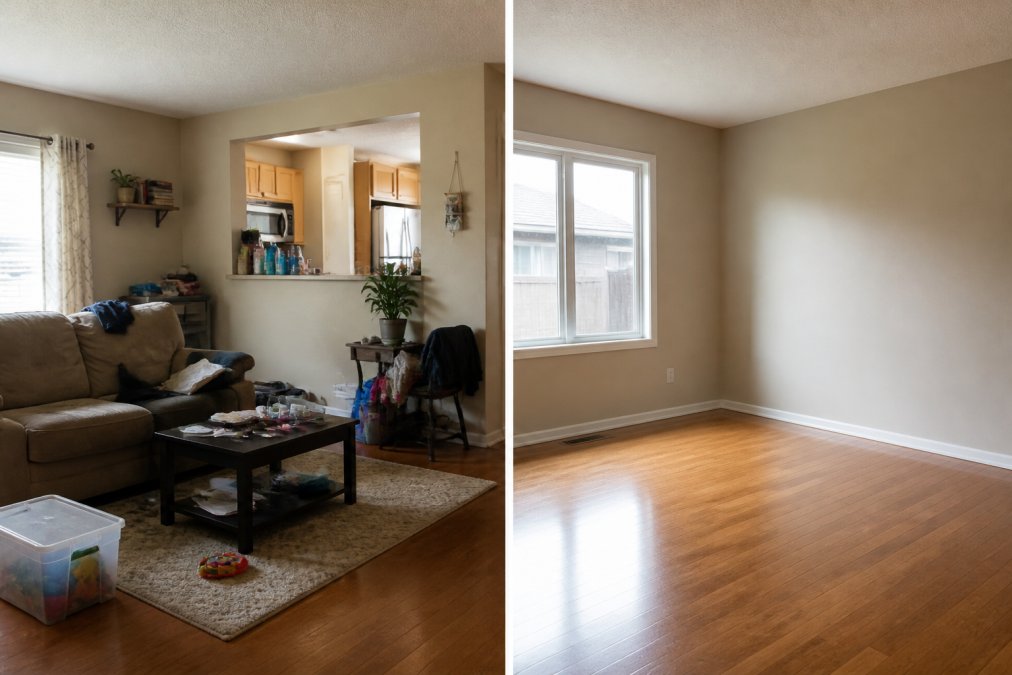
 comparison
Selling a House With Tenants vs Vacant: 2026 Guide
Table of Contents
- Selling a House With Tenants vs Vacant: Quick Comparison
- Landlord Rights When Selling Property: Leases, Entry, and Notice
- Selling With Tenants in Place: Pros, Cons, and Buyer Pool
- Selling Vacant: Costs, Timelines, and Hidden Risks
- Tenant Relocation Assistance: Cash-for-Keys and Notice Rules
- How to Get a Cash Offer for Rental Property
- Which Option Fits Your Situation?
- Frequently Asked Questions
Last Updated: September 10, 2026
Selling a House With Tenants vs Vacant: Quick Comparison
Selling a house with tenants keeps rental income flowing but narrows your buyer pool to investors. Selling vacant opens the door to owner-occupants and higher offers, but you absorb carrying costs every month the property sits empty. This guide from OneRoof Real Estate breaks down the real trade-offs so you can pick the path that fits your timeline and your wallet.
The decision hinges on three variables: your lease terms, your cash reserves, and how fast you need to close. Most sellers assume vacant always wins. That assumption costs them money more often than they realize.
| Factor | Selling With Tenants | Selling Vacant |
|---|---|---|
| Buyer pool | Investors only | Owner-occupants and investors |
| Time to sell | Often faster | Depends on market and condition |
| Monthly carrying costs | Offset by rent | You pay everything |
| Showings | Requires tenant cooperation | Full access, any time |
| Typical offer price | Investor pricing | Retail pricing |
| Legal complexity | Lease transfer, notice rules | Minimal |
The table tells the short version. The rest of this guide explains where each option breaks down.
Landlord Rights When Selling Property: Leases, Entry, and Notice
A lease survives a sale. When you sell an occupied rental, the new owner inherits your lease terms, your security deposit obligations, and your tenant's right to stay until the lease ends. This is the single most important fact in this entire decision, and it catches sellers off guard constantly.
Landlord rights when selling property vary by state, but the core principle holds: you cannot terminate a valid lease just because you sold the building. You can show the property with proper notice, typically 24 to 48 hours depending on your state's rules (peer-reviewed research). You cannot harass tenants into leaving early.
A common mistake is assuming a month-to-month tenant will move on request. They might. They might also dig in for the full notice period your state requires, which can stretch past your closing date.
Selling With Tenants in Place: Pros, Cons, and Buyer Pool
Selling with tenants in place works best for landlords who want income during the sale and don't need top dollar. You keep collecting rent, the property stays maintained, and you skip the cost of turning the unit. The trade-off is a smaller buyer pool and offers priced for investors, not families.

Pros:
- Rent offsets your mortgage and taxes during the listing period
- No vacancy costs, no staging expenses
- Investors with existing portfolios move fast on occupied units
- The lease transfers automatically, so you don't have to negotiate a new one
Cons:
- Owner-occupants, the buyers who pay the most, are eliminated
- Showings depend on tenant cooperation and notice windows
- Lease transfer obligations follow the property
- A tenant who stops paying mid-listing can kill your closing
Who Actually Buys Tenant-Occupied Homes
Real estate investors dominate this buyer pool. They care about cap rate, rent rolls, and whether the tenant pays on time. They do not care about your granite countertops. A real estate investor will often close faster than a retail buyer and skip inspection contingencies, but they will price the property as a distressed asset if the tenant situation looks messy.
There are three investor profiles you'll actually encounter:
- Buy-and-hold landlords, They want the existing lease and the existing tenant. They'll pay closest to retail if the rent is at or near market and the tenant has a clean payment history.
- Fix-and-flip buyers, They want the property vacant so they can renovate. They'll usually ask you to deliver it empty, which means you're back to negotiating a cash-for-keys deal.
- Institutional and fund buyers, They buy in bulk, want portfolios, and rarely pay retail on a single-family rental. They move fast but discount hard.
The Tax Forms That Trip Up Occupied Sellers
Two IRS forms show up in almost every occupied sale, and most sellers don't learn about them until closing:
- Form 1099-C (Cancellation of Debt), If you sell for less than you owe and the lender forgives the difference, the forgiven amount is generally taxable income. The lender files Form 1099-C with the IRS and sends you a copy. You may be able to exclude some or all of it under the insolvency exception, but you have to file the right form to claim it.
- Form 1098-C (Contributions of Motor Vehicles, Boats, and Airplanes), This one applies only if you donate the property, but it's worth knowing because some sellers in distress consider donation as an exit. The deduction is limited to the gross proceeds the charity receives from selling the property, not your estimate of its value.
For a normal occupied sale, the bigger tax question is capital gains. If you've owned and lived in the home for two of the last five years, you may qualify for the Section 121 exclusion, up to $250,000 of gain excluded for single filers and $500,000 for married filing jointly (irs.gov). If the property has been a pure rental, that exclusion doesn't apply, and you'll owe depreciation recapture at 25% on the depreciation you claimed (irs.gov). A CPA who works with rental owners is worth the fee here.
How Financing Works on an Occupied Rental
A conventional owner-occupant loan won't work on a tenant-occupied property, the buyer has to intend to live there. That leaves three financing paths:
- Investment property loans, Higher rates, larger down payments (often 20-25%), and stricter debt-service coverage ratios.
- Portfolio and DSCR loans, Qualify on the property's rent rather than the buyer's income. Popular with investors who already own several doors.
- Cash, No appraisal, no lender, no tenant-cooperation requirement for the appraisal inspection. This is why cash buyers can close on occupied units when financed buyers can't.
If your buyer needs financing, expect the lender to require a copy of the lease, a rent roll, and possibly an estoppel letter signed by the tenant confirming the lease terms and that no side agreements exist. Get that estoppel letter early, tenants sometimes sit on it for weeks.
Selling Vacant: Costs, Timelines, and Hidden Risks
Selling vacant maximizes your buyer pool and your offer ceiling, but the carrying costs add up quietly. An empty house still needs insurance, utilities, lawn care, and property taxes. Vacant property insurance often costs more than a standard homeowner policy because unoccupied homes face higher risk of vandalism and undetected damage.
Beyond the money, an empty house shows worse. Rooms echo. Dust settles. Buyers walk through faster and negotiate harder. Staging helps, but staging costs money, and every month on market erodes your net proceeds.
What Vacancy Really Costs Per Month
The monthly drag of a vacant home includes mortgage payments, taxes, insurance at the higher vacant rate, utilities, maintenance, and the opportunity cost of not collecting rent. Many sellers underestimate this figure because they only count the mortgage. Add it all up honestly before you decide vacancy is the cheaper path.
Here's the line-item list most sellers forget:
- Mortgage principal and interest, Unchanged, but now with no rent offsetting it
- Property taxes, Still due, still accruing
- Vacant property insurance, Typically 20-50% higher than an occupied policy, and some standard policies void coverage after 30-60 days of vacancy
- Utilities, You still need heat in winter to prevent pipe bursts and AC in summer to prevent mold
- Lawn and exterior care, HOA fines for tall grass add up fast
- Security, Either a monitoring service or periodic drive-bys to satisfy your insurer
- Opportunity cost, The rent you would have collected
A common pattern is a seller who budgets for the mortgage and taxes, then gets blindsided by a vacant-property insurance premium that doubles and an HOA fine for an unkempt yard. Build a 15-20% contingency into your vacancy budget for exactly this reason.
The Insurance Trap Nobody Warns You About
Standard homeowner policies typically require the home to be occupied. Once it's been empty past a set window, often 30 days, sometimes 60, the policy can be voided or the claim denied. If a pipe bursts in month three of an empty listing, you may find out the hard way that your coverage lapsed.
You have two options:
- Vacant property insurance, A standalone policy that covers an unoccupied home. Expect higher premiums and sometimes a requirement for weekly inspections.
- Vacancy permit endorsement, An add-on to your existing policy that extends coverage during a defined vacancy period. Cheaper than a standalone policy but time-limited.
Call your insurer the day the last tenant moves out. Don't wait until something happens.
How Vacancy Affects Your Timeline and Your Taxes
A vacant home typically shows better and photographs better, which can shorten days-on-market. But it also signals to buyers that you're motivated, which invites lowball offers. The net effect depends on your market, in a seller's market, vacancy is a non-issue; in a buyer's market, it's a negotiating lever the buyer will pull.
On taxes, vacancy doesn't change your capital gains treatment. What changes it is how long the property was your primary residence. If you moved out and rented it for years before selling, the Section 121 exclusion may be reduced or eliminated, and depreciation recapture applies to the rental years. If you moved out recently and the home sat empty, you may still qualify for the full exclusion, but you generally need to have lived there two of the last five years. Document your move-out date and your rental history; your CPA will need both.
Tenant Relocation Assistance: Cash-for-Keys and Notice Rules
Tenant relocation assistance is money you offer a tenant to move out early and voluntarily. Cash-for-keys agreements solve the biggest problem with occupied sales: the tenant who won't cooperate with showings or refuses to leave before closing.
The approach is straightforward. You offer a specific amount, a specific move-out date, and a clean release of the lease. The tenant accepts or declines. If they accept, you get a vacant property without an eviction, and vacant properties sell to a wider pool.
Notice rules still apply. Even with a cash-for-keys deal, you must follow your state's written notice requirements. Never pressure a tenant past what the law allows.
How to Get a Cash Offer for Rental Property
A cash offer for rental property removes the two biggest friction points in an occupied sale: financing contingencies and inspection negotiations. A direct cash buyer can purchase the property as-is, with the tenant still in place, and close on a timeline you choose.
OneRoof Real Estate buys rental properties in any condition, including units with problem tenants, unpaid balances, and deferred maintenance. We make all-cash offers within 24 hours, cover commissions and closing costs, and typically close in 7 days. You pick the closing date, and we handle the clean-out.
Here's a practical checklist if you're weighing a cash offer against a traditional listing:
- Request a written cash offer and compare it to your estimated net from a listing
- Calculate carrying costs for the months a listing would take
- Confirm whether the buyer will purchase with the tenant in place
- Review any repair or clean-out costs you'd avoid
- Check the closing timeline against your own deadline
- Read the contract for contingencies that could delay closing
For sellers dealing with problem tenants, pre-foreclosure, or inherited property, the speed of a cash sale often outweighs the gap between a cash offer and a retail listing price.
Which Option Fits Your Situation?
The right choice depends on your lease, your finances, and your deadline. If you have cooperative tenants and time to wait for a retail buyer, selling vacant after the lease ends usually nets the most. If your tenants are difficult, your property needs work, or you're facing a deadline, selling with tenants in place to a cash buyer is often the cleaner path.
Frequently Asked Questions
Does having tenants make it harder to sell a house?
It narrows the buyer pool rather than making the sale impossible. Owner-occupants who plan to move in usually need the property vacant, while real estate investors actively seek occupied rentals that already produce income. Selling a house with tenants can actually move faster when you market to investors, because the lease and rent history act as proof the property performs. The trade-off is price: investor offers typically come in below what a retail buyer would pay for a vacant home.
Can I sell my house if the tenant has a lease?
Yes. A lease transfers with the property, so the new owner steps into your landlord role and must honor the remaining term and rent amount. You cannot simply cancel the agreement because you decided to sell. Check your lease for early termination clauses, and review state and local rules on entry and notice before scheduling any showings. If you need the home empty for closing, you will have to negotiate a mutual agreement with the tenant.
Do I have to pay my tenants to move out early?
You are not legally required to pay relocation money in most situations, but offering tenant relocation assistance is often the cheapest way to get cooperation. A cash-for-keys agreement, where you pay a set amount in exchange for the tenant vacating by a specific date and leaving the unit clean, avoids eviction costs and court delays. Put the terms in writing, set a firm move-out date, and pay only after the keys are returned and the unit is inspected.
Is it better to wait for the lease to end before selling?
Waiting gives you a vacant, easier-to-show home, but it costs you carrying expenses the whole time: mortgage payments, insurance, taxes, utilities, and maintenance. Add the risk that the tenant damages the unit or stops paying before the lease expires. If your rental is in good condition and the remaining term is short, waiting can pay off. If you are dealing with problem tenants, repairs, or a deadline, a cash offer for rental property usually nets more than months of holding costs.
What are my rights as a landlord when selling a property?
You can sell at any time, but you generally cannot force a tenant out mid-lease without cause. Landlord rights when selling property include the ability to show the unit with proper written notice, typically 24 to 48 hours depending on local rules, and to transfer the lease and security deposit to the buyer at closing. You must follow your state's notice requirements for entry and for any non-renewal. Document everything in writing so the tenant cannot later claim the showings were disruptive or unlawful.
Selling a rental property with tenants in place can feel like a problem with no clean exit, especially when the lease, the tenant, and your deadline all pull in different directions. OneRoof Real Estate buys rental homes as-is, tenant and all, with fair all-cash offers within 24 hours, no repairs or clean-out required, and closing typically in about a week. Get started with OneRoof Real Estate and turn an unwanted rental into cash without the repairs, the showings, or the waiting.