 how-to
Selling a House in Probate Kansas: Step-by-Step Guide
Table of Contents
- Understanding the Probate Process in Kansas
- How Long Does Probate Take in Kansas
- Executor Duties for Selling Property in Kansas
- Kansas Probate Court Approval for Property Sale
- Selling a House in Probate Kansas: Step-by-Step Process
- Tax Implications and Heir Disputes When Selling Probate Property in Kansas
- Selling to a Cash Buyer During Probate: What to Know
- Conclusion
Last Updated: August 3, 2026
Selling a house in probate Kansas is one of the more legally precise real estate transactions you'll encounter, and getting a single step wrong can delay the estate settlement by months. This guide from OneRoof Real Estate walks you through every stage of the process, from confirming legal authority to closing the sale, with specific references to Kansas statutes and Sedgwick County procedures. Understanding the timeline and legal framework upfront is what separates a smooth closing from a prolonged legal battle.
Understanding the Probate Process in Kansas
Probate is the court-supervised process of settling a decedent's estate, paying outstanding debts, and distributing remaining assets to heirs or beneficiaries. In Kansas, this process is governed by the Kansas Probate Code under Title 59 of the Kansas Statutes Annotated. The Sedgwick County District Court handles probate filings for estates in the Wichita area, including properties in Derby, Andover, Haysville, and surrounding communities.
The process begins when a petition is filed with the probate court to admit a will to probate or open an intestate estate. Once the court appoints an executor or administrator and issues letters testamentary or letters of administration, the estate representative has the legal authority to manage and sell real property.
Testate vs. Intestate Estates: What Changes for Sellers
A testate estate is one where the decedent left a valid will; an intestate estate has no will. This distinction affects who holds authority to sell. In a testate estate, the will names an executor who, once confirmed by the court, can move forward with a property sale. In an intestate estate, the court appoints an administrator, often the surviving spouse or an heir at law. Either way, court oversight applies to real property sales in Kansas.
Kansas Small Estate Affidavits: When You Can Skip Full Probate
Kansas law provides a shortcut for smaller estates. If the total value of the decedent's personal property does not exceed the statutory threshold, heirs may use a small estate affidavit to transfer assets without opening a full probate case. Real property, however, generally cannot be transferred via affidavit alone. If the inherited house is the primary asset, full probate is almost always required to achieve title clearance.
How Long Does Probate Take in Kansas
Probate in Kansas typically takes between six months and eighteen months for a standard estate. Contested estates involving heir disputes, creditor litigation, or unclear title can run significantly longer.
The core timeline breaks down as follows:
- Filing the petition and scheduling the initial hearing: two to six weeks
- Court appointment of executor or administrator: at the initial hearing
- Notice to creditors and the creditor claim period: four months minimum under Kansas law
- Property appraisal and petition to sell: concurrent with the creditor period
- Court approval of the sale: two to eight weeks after filing the petition to sell
- Closing: typically within thirty days of court approval
The creditor claim period is the biggest fixed delay. Kansas requires the estate to publish notice to creditors and allow a statutory window for claims before distributing assets. This period cannot be shortened.
Executor Duties for Selling Property in Kansas
The executor of a Kansas estate carries a fiduciary duty to every beneficiary of the estate. Every decision made about the property, including the sale price, choice of buyer, and timing, must serve the estate's best interests, not the executor's personal convenience.
Letters Testamentary and Letters of Administration
Before an executor can take any action on real property, the probate court must issue letters testamentary for testate estates or letters of administration for intestate estates. These documents are the executor's legal proof of authority. Title companies, banks, and buyers will require certified copies before any transaction can proceed.
Obtaining letters typically happens at the first court hearing, within a few weeks of filing the initial petition. Executors managing an estate from out of state should request multiple certified copies immediately.
Fiduciary Duty: What Executors Can and Cannot Do
An executor can list the property, negotiate offers, accept a purchase agreement, and petition the court for approval to sell. An executor cannot sell below fair market value without court scrutiny, cannot favor one heir over another in the transaction, and cannot personally purchase the estate property without explicit court approval and full disclosure.
Even if all beneficiaries agree on a buyer and a price, Kansas probate court still requires formal approval before the sale closes.
Kansas Probate Court Approval for Property Sale
Court approval is not optional for most Kansas probate property sales. Under Kansas law, the executor must petition the court before transferring real property from the estate.
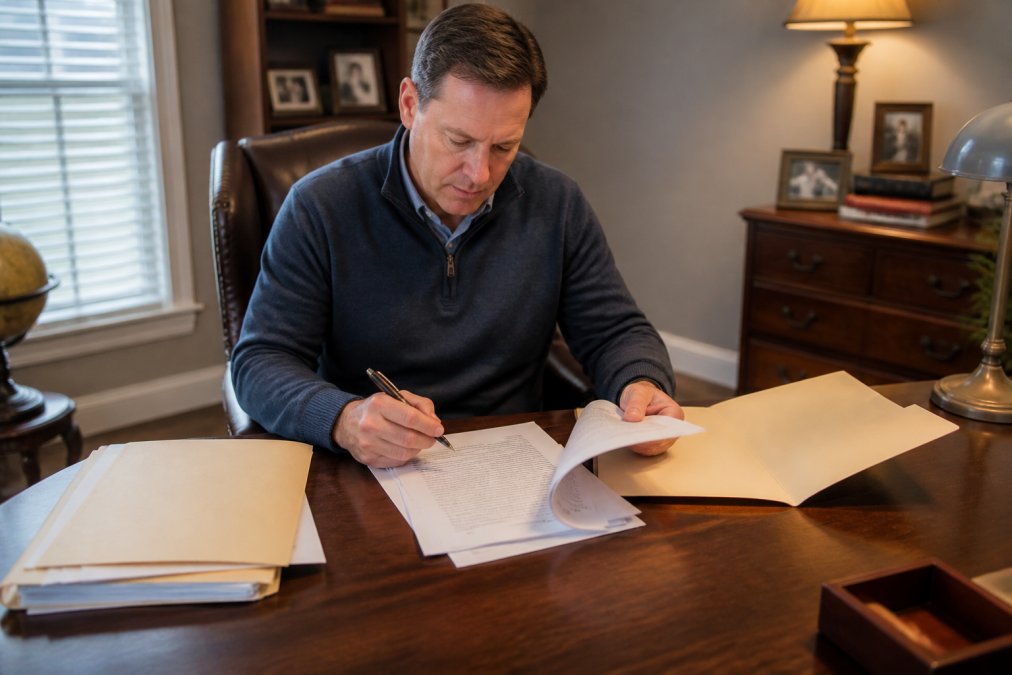
The court's role is to confirm that the proposed sale price reflects fair market value, that creditor claims will be addressed from the proceeds, and that the transaction serves the estate's beneficiaries.
Filing a Petition to Sell Under K.S.A. 59-2303 and 59-2305
Kansas Statutes Annotated sections 59-2303 and 59-2305 govern the executor's authority to sell real property. The petition to sell must include a description of the property, the proposed sale terms, the offered price, and a statement that the sale is necessary or beneficial to the estate.
Once filed, the court schedules a hearing. Interested parties, including heirs and creditors, receive notice and may object. If no objections arise and the court finds the sale appropriate, it issues an order confirming the sale. That order allows the title company to issue a clear title policy to the buyer.
Selling a House in Probate Kansas: Step-by-Step Process
Here is the practical sequence for selling a house in probate Kansas, from the moment the estate is opened to the day proceeds are distributed.
Step 1: Open the estate and obtain letters testamentary or letters of administration. File a petition with the Sedgwick County District Court. If there is a will, file it with the petition.
Step 2: Publish notice to creditors. Kansas law requires notice to be published in a local newspaper. The four-month creditor claim period begins at publication.
Step 3: Order a property appraisal. The court expects evidence of fair market value. A licensed Kansas appraiser should inspect the property and produce a written report.
Step 4: List or market the property. The executor can list with a real estate agent or negotiate directly with a cash buyer during the creditor period. A signed purchase agreement is needed before petitioning the court.
Step 5: File a petition to sell under K.S.A. 59-2303 and 59-2305. Include the purchase agreement, appraisal, and property description. The court will schedule a hearing.
Step 6: Attend the court hearing and obtain the order confirming sale. If no objections are filed, the judge issues the order. This is the green light for closing.
Step 7: Close the sale. The title company reviews the court order, pays creditor claims and closing costs from proceeds, and distributes the remainder to heirs.

Property Valuation and Appraisal Requirements
Courts expect the sale price to reflect fair market value. An appraisal by a licensed Kansas appraiser is the standard method of establishing that value. The appraisal should be conducted after the estate is opened and before the petition to sell is filed. Most courts want an appraisal dated within six months of the petition filing.
Paying Creditor Claims Before Distributing Proceeds
Creditor claims must be satisfied before heirs receive any distribution. Kansas law establishes a priority order: funeral expenses and estate administration costs come first, followed by secured debts, then unsecured creditor claims. Only after all valid claims are paid do the remaining proceeds flow to beneficiaries.
Executors who distribute proceeds to heirs before settling creditor claims can be held personally liable for the shortfall.
Checklist for Preparing the Home for Sale
Many probate properties in the Wichita area have been occupied for decades and reflect years of deferred maintenance. A few basic steps improve buyer interest and support the appraised value.
- Secure the property: change locks, confirm utilities are active
- Remove personal property: coordinate with heirs before discarding anything
- Address safety hazards: board broken windows, eliminate trip hazards
- Clean the interior: at minimum, remove debris and trash
- Document the condition: photograph every room before and after any work
- Obtain repair estimates: even if selling as-is, estimates help justify the price to the court
- Confirm property taxes are current: delinquent taxes affect title clearance
| Step | Who Is Responsible | When to Complete |
|---|---|---|
| Open estate, obtain letters | Executor / attorney | Immediately after death |
| Publish creditor notice | Executor / attorney | Within weeks of appointment |
| Order appraisal | Executor | During creditor period |
| Sign purchase agreement | Executor + buyer | Before petition to sell |
| File petition to sell | Executor / attorney | After purchase agreement |
| Court hearing and order | Judge | Weeks after petition filed |
| Close and distribute proceeds | Title company + executor | After court order issued |
Tax Implications and Heir Disputes When Selling Probate Property in Kansas
Step-Up in Basis, Capital Gains, and Inheritance Tax
Inherited property receives a step-up in basis to the fair market value at the date of the decedent's death. This is one of the most favorable tax treatments available to heirs. If a parent purchased a Wichita home decades ago for a fraction of its current value, heirs who sell shortly after inheriting it typically owe little or no federal capital gains tax, because their cost basis is the date-of-death value.
Kansas does not impose a state inheritance tax or a state estate tax, which is a meaningful advantage for Kansas estates. Federal estate tax applies only to very large estates, well above what most residential properties in Sedgwick, Harvey, Butler, or Sumner counties would trigger.
Resolving Disagreements Between Heirs Before Closing
Heir disputes are the single most common reason probate property sales stall. Disagreements usually fall into three categories: one heir wants to sell quickly while another wants to keep the property; heirs disagree on the listing price or buyer; or one heir is living in the property and resisting the sale.
The executor has legal authority to proceed with a sale that serves the estate's best interests, even over the objection of individual heirs. However, an objecting heir can file a formal objection with the probate court, which triggers a hearing and delays closing.
The practical fix is to get all heirs aligned before the property is listed. A single conversation facilitated by the estate attorney, where everyone understands the creditor obligations and the carrying costs of holding the property, resolves most disputes faster than any legal motion.
Selling to a Cash Buyer During Probate: What to Know
Selling a house in probate Kansas to a cash buyer is often the most practical path for out-of-state heirs managing a property they cannot easily maintain. Cash buyers do not require appraisals, inspections, or mortgage contingencies, which simplifies the purchase agreement and reduces the variables the court must review.
The process still requires court approval. A cash offer does not bypass the petition to sell requirement under K.S.A. 59-2303 and 59-2305. What it does eliminate is the risk of a buyer's financing falling through between the court hearing and closing.
OneRoof Real Estate buys probate properties in Wichita and across Sedgwick, Harvey, Butler, and Sumner counties in cash, with no repair requirements, no commissions, and no closing costs charged to the seller. The company has completed over 500 closings and is ranked #759 on the Inc. 5000 list of fastest-growing private companies in America. For executors managing a property from out of state, the ability to close in seven days once court approval is granted removes months of carrying costs, insurance premiums, and property tax accrual.
The as-is sale structure is particularly well-suited to probate properties. Many homes in the Wichita area that pass through probate have not been updated in years and would not qualify for conventional financing. A cash buyer accepts the property in its current condition, which means the executor does not need to coordinate repairs, contractor access, or inspections across state lines.
Frequently Asked Questions
Can an executor sell a house in probate without court approval in Kansas?
Generally, no. Under Kansas statutes K.S.A. 59-2303 and 59-2305, the executor or administrator typically must file a petition to sell real property and obtain court approval before closing. The probate court reviews the proposed sale to confirm it serves the estate's interests, satisfies creditor claims, and meets fair market value standards. Some estates with independent administration provisions may have more flexibility, but most Kansas probate sales require at least a formal court filing before the deed can transfer.
What happens if you sell property before probate is complete in Kansas?
Selling before probate is formally opened creates serious title clearance problems. Without letters testamentary or letters of administration, the seller has no confirmed legal authority to transfer the decedent's real property. A buyer cannot get clear title, and title insurance companies will refuse to insure the transaction. Creditors also retain the right to claim against estate assets, so proceeds distributed early can expose heirs to personal liability. The safest path is to open probate in Sedgwick County District Court first, then proceed with the sale under court supervision.
How long does probate take in Kansas, and how does that affect the sale timeline?
Kansas probate typically runs four to nine months for straightforward estates, though contested estates or those with significant creditor claims can take longer. The mandatory creditor claim period under Kansas law is four months from the date of the first published notice. The property sale cannot close and proceeds cannot be fully distributed until that window closes and claims are resolved. Executors managing an inherited property during this period should account for ongoing costs like property taxes, insurance, and utilities in Sedgwick or surrounding counties.
What are the tax implications for heirs who inherit and sell a Kansas home?
Heirs who inherit real property generally receive a stepped-up cost basis equal to the property's fair market value at the date of the decedent's death. This means if the home is sold shortly after inheriting it at or near that appraised value, capital gains tax exposure is often minimal. Kansas does not impose a state inheritance tax. However, if the property appreciates significantly before the heir sells, capital gains tax on the difference may apply. Heirs should consult a tax professional before closing to understand their specific federal and state obligations.
What is a Kansas small estate affidavit, and when does it apply to selling a house?
Kansas allows simplified estate settlement through a small estate affidavit when the total gross estate value falls below the statutory threshold set by Kansas law. However, real property generally cannot be transferred using a small estate affidavit alone; it is primarily used for personal property and financial accounts. If the decedent owned a home in Wichita or Sedgwick County, full probate administration is almost always required to transfer title legally, even if the overall estate is modest in size.
What common mistakes should executors avoid when selling probate property in Kansas?
The most common mistakes include failing to obtain court approval before accepting an offer, not getting a formal appraisal to establish fair market value, distributing sale proceeds to heirs before all creditor claims are paid, and allowing co-heirs to pressure a rushed sale without resolving ownership disputes first. Executors also frequently underestimate ongoing holding costs on the inherited property. In Kansas, breaching fiduciary duty can result in personal liability for the executor, so working with a probate attorney familiar with Sedgwick County District Court procedures is strongly advisable.
Managing a probate sale from out of state while coordinating with an attorney, multiple heirs, and a county court is genuinely difficult. OneRoof Real Estate works directly with executors and administrators on Kansas probate properties, closing in cash with no repairs, no commissions, and no fees charged to the estate. Reach out to the OneRoof Real Estate team at ict.cash to get a cash offer on the inherited property and a clear timeline for closing once court approval is in hand.
This article was written using GrandRanker