 how-to
Tax Delinquency Foreclosure Process: Kansas Guide
Table of Contents
- What Is Tax Delinquency Foreclosure?
- Kansas Property Tax Redemption Period: Your Window to Act
- The Tax Foreclosure Timeline: From Delinquency to Auction
- How to Stop Tax Foreclosure in Kansas: Your Recovery Options
- Selling a House With Back Taxes: What You Need to Know
- Common Pitfalls in the Tax Foreclosure Bidding Process
- Protecting Your Property: Steps to Take Immediately
- Conclusion
Last Updated: August 18, 2026
What Is Tax Delinquency Foreclosure?
Tax delinquency foreclosure is the legal process by which a government entity sells a property to recover unpaid property taxes. When a homeowner fails to pay real estate taxes, the county initiates a series of steps designed to collect the debt, and if the owner cannot pay, the property eventually goes to public auction.
This isn't a mortgage foreclosure. Your lender doesn't own the tax foreclosure process; the government does. Tax foreclosure moves faster and offers fewer opportunities to recover your property once it's in motion. The process typically unfolds in predictable stages: taxes become delinquent when unpaid by a specific deadline, the county sends notices and advertises the property, and eventually schedules a public auction. If someone bids and wins, that person becomes the new owner, and your equity is gone. Knowing the mechanics of tax delinquency foreclosure gives you concrete options to stop it.
The timeline varies by state, but Kansas has specific rules that compress the window for action. Knowing those rules, and where you stand in the process, is the difference between recovering your property and losing it.
Kansas Property Tax Redemption Period: Your Window to Act
The redemption period is your lifeline. It's the window between when the property sells at auction and when the new owner gets the deed. During this time, you can reclaim your property by paying off the tax debt plus costs and interest.
In Kansas, the redemption period lasts 18 months after the tax sale. This is longer than many states offer, which gives homeowners meaningful time to act. However, 18 months sounds like a lot until it's gone.
Here's what happens during redemption: The new owner (often called the certificate holder) has a lien on the property, but you still hold legal title. You can stop the foreclosure by paying the certificate holder the full amount owed: the original tax debt, plus the buyer's premium (typically 10-20% of the winning bid), plus interest, plus any costs the county incurred. The exact amount depends on what was bid at auction.
The redemption period doesn't mean you have time to think. It means you have a deadline to act. Contact a real estate attorney or a direct buyer like OneRoof Real Estate as soon as you know your property is delinquent. You'll need to understand exactly how much redemption will cost, and whether paying it makes financial sense given your property's actual value.
One critical detail: redemption rights belong to the owner of record at the time of the sale. If the property is in a trust, an LLC, or multiple names, redemption can get complicated.

The Tax Foreclosure Timeline: From Delinquency to Auction
Understanding the sequence of events gives you clarity on where your property stands and how much time you actually have left.
Year 1: Delinquency and Notice
Taxes become delinquent on the first day they're unpaid after the due date. Kansas law requires the county to mail a notice of delinquency, usually within a few months of the missed payment. This notice states how much is owed and what will happen if you don't pay. Many homeowners ignore this first notice, assuming they can catch up later. That assumption is costly. The notice is a legal document; it starts the clock on the foreclosure process.
Months 3-6: Additional Notices and Advertising
If you don't pay after the initial notice, the county publishes a notice of tax sale in a local newspaper. Kansas requires publication for at least four weeks before the sale date. The county also posts the notice on the courthouse door and sends a final notice to your address on file. This is where many owners first realize the situation is serious. If you're still hoping to avoid a sale, this is the moment to act.
Month 6-12: The Public Auction
The county schedules a public auction, typically on the courthouse steps or online. The property goes to the highest bidder. In Kansas, the opening bid is usually the amount of unpaid taxes plus costs. However, investors often bid significantly higher, especially for properties in good condition or desirable locations. Once the gavel falls, you have only the redemption period left to recover the property.
Months 12-30: The Redemption Period
Kansas gives you 18 months from the sale date to redeem. During this time, the certificate holder waits. The clock is running.
Month 30+: Title Transfer
When the redemption period expires without redemption, the county issues a deed to the certificate holder. That person now owns the property free and clear. Your equity, if there was any, is gone.
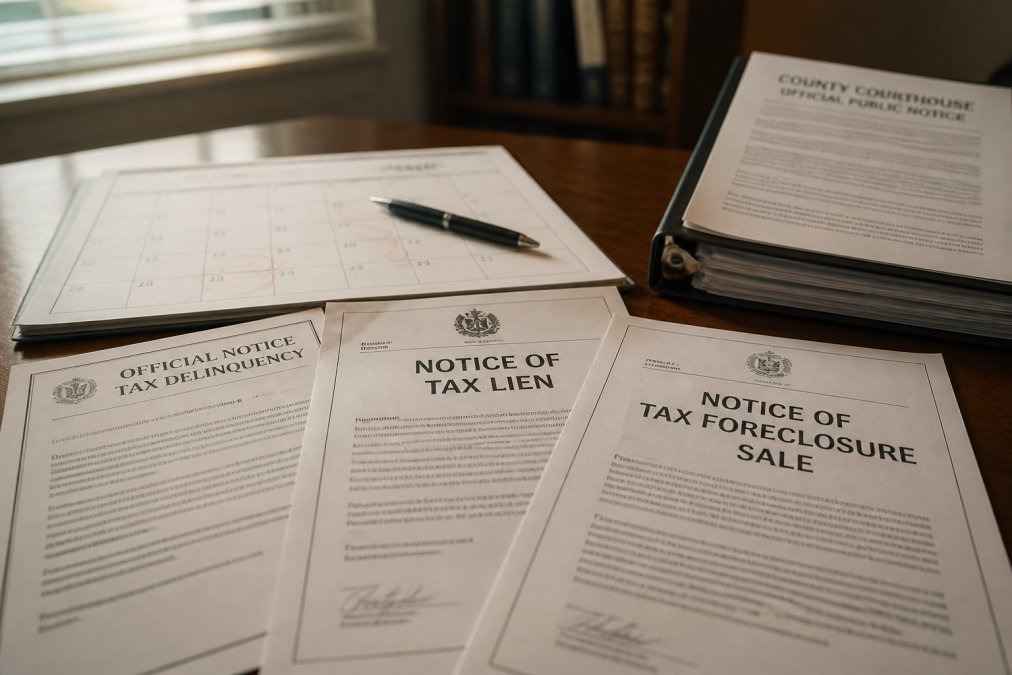
Notification and Advertising Requirements
Kansas law requires the county to:
- Send written notice to your last known address
- Publish notice in a newspaper of general circulation for at least four weeks
- Post notice on the courthouse door
- List the property in the county tax assessor's records
These are legal requirements. If the county fails to follow them, the sale can be challenged. However, by the time you discover a procedural error, the sale may already be complete. This is why working with an attorney early matters.
Public Auction Procedures
The property is offered to the highest bidder. Opening bids typically start at the amount of unpaid taxes plus costs. Bidders can be individual investors, companies, or other property owners. Once someone wins the auction, they receive a tax certificate. In Kansas, this certificate is proof of their right to the property, but they don't get the actual deed until the redemption period expires. If you redeem during those 18 months, the certificate holder is paid off and has no further claim.
Bidder Registration and Payment Terms
If you're bidding at a tax sale, you'll need to register with the county. Requirements typically include proof of identity, a valid payment method (cashier's check or electronic transfer), and proof of funds to cover the bid. Payment is usually due immediately or within 24 hours. You cannot use a mortgage to buy at a tax auction; you must have cash on hand.
How to Stop Tax Foreclosure in Kansas: Your Recovery Options
If your property is in tax delinquency foreclosure or heading toward it, you have concrete paths forward. The earlier you act, the more options you have.
Option 1: Pay the Delinquent Taxes
The simplest solution is to pay what you owe before the sale date. Contact the county tax assessor's office, get the exact amount due, and pay it. Once paid, the foreclosure stops, and your property is safe. This works if you have the cash and want to keep the property.
Option 2: Negotiate a Payment Plan
Some counties will work with you to set up a payment plan if you can't pay the full amount at once. This is discretionary, but it's worth asking. A payment plan buys you time and stops the foreclosure process.
Option 3: Redeem After the Sale
If the property sells at auction, you still have 18 months to redeem it. This means paying the certificate holder the full redemption amount: the bid price plus interest plus costs. This is more expensive than paying before the sale, but it's still an option if you have the funds.
Option 4: Sell the Property Quickly
If you can't pay the taxes and don't want to redeem, selling the property before the auction is your best move. A cash buyer like OneRoof Real Estate can close in days, giving you liquidity before the foreclosure completes. You won't get top dollar, but you'll avoid losing the property entirely and having a foreclosure on your record.
OneRoof Real Estate specializes in buying properties in any condition, including those facing tax foreclosure. We can close in as little as 7 days, which means you can exit the situation before the auction happens. We cover all costs and fees, so you walk away with cash in hand rather than a foreclosure judgment.
Option 5: Challenge the Foreclosure on Procedural Grounds
If the county failed to follow proper notification or advertising procedures, the sale may be void. This requires legal action and proof of the error. It's a narrow path, but it's available if the county cut corners.
Selling a House With Back Taxes: What You Need to Know
If you decide to sell rather than fight the foreclosure, understand what back taxes mean for the transaction.
A property with back taxes is harder to sell through traditional channels. Most buyers want clear title, and most lenders won't finance a property with a tax lien. This eliminates the retail market and leaves you with cash buyers or investors willing to accept the title as-is.
When you sell to a cash buyer, the buyer typically pays off the back taxes at closing and takes the property subject to any liens. You receive the sale price minus the taxes owed. OneRoof Real Estate handles back taxes as part of the closing process. We pay off the delinquent amount, clear the lien, and you receive your proceeds. We also handle any code violations, foundation issues, or other conditions that would prevent a traditional sale.
If you're inheriting a property with back taxes, the property has a tax lien, which means the heir (you) inherits the lien along with the property. You can pay it off, redeem it if it's already sold, or sell the property as-is to someone willing to take it on.
Common Pitfalls in the Tax Foreclosure Bidding Process
If you're considering buying a property at a tax sale, understand the traps that catch most first-time bidders.
Pitfall 1: Bidding Without Inspecting
Tax sale properties are sold as-is, sight unseen in many cases. You cannot inspect the interior before bidding. The house could have foundation damage, mold, code violations, or structural issues that would cost tens of thousands to fix. Smart bidders research the property beforehand using public records, drive-by inspections, and county assessments. They set a maximum bid that accounts for likely repairs.
Pitfall 2: Underestimating the Redemption Period
You win the auction, but the owner has 18 months to redeem. During that time, you own a certificate, not the property. You can't renovate it, rent it, or sell it. You're waiting. Plan for the 18-month wait as part of your investment timeline.
Pitfall 3: Overlooking Title Issues
A tax sale doesn't guarantee clear title. There may be other liens, federal tax liens, judgment liens, or mortgage liens that survive the sale. Title insurance is unavailable for tax sale purchases, so you're taking the risk yourself.
Pitfall 4: Ignoring Holding Costs
While you wait for the redemption period to expire, you're responsible for property taxes, insurance, and maintenance. These costs add up. Budget for these holding costs when deciding how much to bid.
Pitfall 5: Bidding Without Cash on Hand
You must pay immediately or within 24 hours. If you don't have the cash available, you can't bid. You need cash now.
Protecting Your Property: Steps to Take Immediately
If you know your property is delinquent or heading toward tax foreclosure, act now. Waiting guarantees you'll lose options.
Step 1: Contact the County Tax Assessor
Call the county tax assessor's office and get the exact amount owed. Ask about payment plans, penalties, and deadlines. Get everything in writing. This conversation clarifies your situation and opens the door to negotiation.
Step 2: Consult a Real Estate Attorney
A Kansas real estate attorney can review your options, explain your rights under state law, and represent you if you need to challenge the foreclosure. They can also help with redemption if the property has already sold.
Step 3: Explore Selling Quickly
If you can't pay the taxes and want to avoid a foreclosure on your record, selling to a cash buyer is the fastest exit. Contact OneRoof Real Estate or similar local buyers for a quote. You'll know your options within 24 hours.
Step 4: Document Everything
Keep copies of all notices, correspondence with the county, and any agreements you make. If you later need to challenge the foreclosure or prove you took action, documentation matters.
Step 5: Don't Ignore Notices
Every notice the county sends is a legal document. Ignoring it doesn't make the problem go away. It accelerates the timeline. Open every piece of mail from the county, and respond promptly.
Tax delinquency foreclosure in Kansas is a serious process, but it's not inevitable. The redemption period gives you 18 months to act after a sale. Even before the sale, you have options: pay the taxes, negotiate a plan, or sell the property. The common thread is speed. The earlier you move, the more control you have.
If you're facing this situation and need a fast, straightforward exit, OneRoof Real Estate can help. We buy properties in any condition, including those with back taxes, code violations, or title issues. We close in 7 days, cover all costs, and give you the liquidity to move forward. Get started with OneRoof Real Estate and recover your financial footing quickly.
Frequently Asked Questions
How long can you not pay property taxes before tax delinquency foreclosure starts in Kansas?
In Kansas, property taxes are typically due by December 20 each year. Once taxes become unpaid, the county assesses penalties and interest. The tax delinquency foreclosure process generally begins after taxes remain unpaid for an extended period, though the exact timeline depends on county procedures and whether a tax lien is filed first. Contact your county treasurer's office immediately if you miss a payment to understand your specific situation and explore payment arrangements before foreclosure proceedings begin.
What is the Kansas property tax redemption period, and how long do I have?
The Kansas property tax redemption period gives property owners a window to reclaim their property after a tax sale by paying back taxes, penalties, interest, and sale costs. The length of this redemption period varies depending on the type of sale and county procedures. During this time, the property owner of record retains certain rights and can prevent permanent loss of the property. Understanding your specific redemption timeline is critical, contact your county treasurer or consult a legal professional to confirm your exact redemption deadline and what amount you need to pay.
Can I stop a tax foreclosure sale once it has been scheduled?
Yes, you can stop a scheduled tax foreclosure sale by paying the full amount owed, back taxes, penalties, interest, fees, and costs, before the auction date. This must be paid in full to the county or through the proper legal channels. Additionally, if you have a valid legal defense or if the sale notice contains errors, you may be able to challenge the sale through the district court. Time is critical once a sale is advertised, so contact a real estate attorney or your county treasurer immediately if you want to explore your options for halting the sale.
What happens to my home equity during a tax foreclosure sale?
During a tax foreclosure sale, the property is sold at public auction to satisfy unpaid tax debt. If the sale price exceeds the total taxes, penalties, interest, and costs owed, the surplus typically goes to the property owner, though this depends on state law and whether other liens exist. However, if your property sells for less than what is owed or if other liens (like a mortgage or federal tax lien) take priority, you may lose equity or owe additional amounts. Understanding your property's lien priority and total debt is essential, consult a legal professional to review your specific situation.
This article was written using GrandRanker