 listicle
What Type of House Sells the Fastest? 2026 Data
Table of Contents
- What Buyers Want Now: The Data on Fast-Selling Homes
- Location and Micro-Market Demographics: More Than Just a Zip Code
- Move-In Ready vs Fixer-Upper: Which Sells Faster?
- The Average Days on Market for Homes by Condition
- Selling a House As-Is vs Renovated: Speed vs Profit
- Curb Appeal and Home Staging: The First Impression Effect
- How to Sell a House Fast for Cash When Time Is Critical
- Conclusion: Match Your Home to the Right Selling Strategy
- Frequently Asked Questions
Last Updated: September 8, 2026
What Buyers Want Now: The Data on Fast-Selling Homes
What type of house sells the fastest? The answer is nuanced: the strongest predictor of speed is how well a property matches the current demand profile of its specific market. Fast-moving properties share consistent traits: priced correctly from day one, genuinely move-in-ready or priced honestly for condition, and located where buyer demand outpaces supply.
A fast sale is deliberate positioning. Homes priced within a tight band of market valuation from the first week attract the most buyer demand and competitive bidding. Properties that start too high and chase the market down lose momentum.
Below, we break down the specific factors that determine sale speed, from micro-market demographics to the staging versus virtual staging debate.
Zillow's housing market research on fast-selling home features
Location and Micro-Market Demographics: More Than Just a Zip Code
Location operates at two levels: broad neighborhood appeal (school districts, commute times, amenities) and the micro-market, the specific demographic profile of buyers active in your immediate area right now. The latter is where many listings stall.
A single-family home in a family subdivision sells at a different speed than the same floor plan in an area of renters or empty-nesters. Knowing whether your buyer pool is first-time buyers needing financing, all-cash investors, or multigenerational families changes how you position the property.
The demographic shift that changes your speed calculus:
- Remote workers (the fastest-growing buyer segment). Since 2020, the share of fully remote workers has stabilized near 25% of the U.S. workforce, per the Bureau of Labor Statistics (bls.gov). These buyers are not anchored to a commute. They prioritize dedicated home office space, high-speed internet availability, and a quiet layout over proximity to a downtown core. A home with a converted den or a flex room that can serve as an office will outpace an otherwise identical home without that space, even if the latter is in a "better" school district. If your micro-market has a high concentration of tech or professional-service employers, this effect is amplified.
- Retirees and empty-nesters. This group is driving demand for single-story living, main-floor primary suites, and low-maintenance exteriors. In markets with a high share of residents over 60, a ranch-style home with a zero-step entry will sell faster than a two-story colonial with the same square footage. The National Association of Realtors' 2024 profile of buyers shows that 19% of all buyers are 60 or older, and that share rises in Sun Belt and suburban markets (nar.realtor).
- Multigenerational households. Nearly 20% of U.S. homebuyers now seek a home that can accommodate an aging parent or an adult child returning home, according to the same NAR data. A floor plan with a separate entrance, a basement suite, or a bedroom and full bath on the main level will attract this pool. If your home lacks that flexibility, a virtual staging render that shows a main-floor bedroom conversion can capture this buyer's attention before they ever step inside.
How to read your micro-market before you price:
- Pull the last 30 closed sales in your immediate radius (not your city). Look at who actually bought: first-time buyers using FHA loans, cash investors, or families trading up. The financing type is public record in most counties and tells you exactly who your buyer is.
- Check the average days on market for homes that sold in your price band. If homes under $300,000 are moving in 12 days but homes over $500,000 sit for 60, your pricing strategy must reflect that split.
- Talk to a local listing agent about showing feedback. The most common objection buyers raise, "no office," "too many stairs," "needs too much work", is the single best signal for what your micro-market lacks.
The mistake we see repeatedly is pricing on a city-wide median rather than micro-market reality. A comparative market analysis from a local agent tells you more about your true buyer pool than any national trend.
Move-In Ready vs Fixer-Upper: Which Sells Faster?
Move-in-ready homes sell faster than fixer-uppers in almost every market. The largest segment of today's buyer pool lacks the time, cash, or contractor relationships for renovations, so turnkey properties attract the widest audience.
A fixer-upper can sell quickly, but only to an investor or all-cash buyer who sees the equity underneath, a smaller pool that needs capital reserves beyond the purchase price.
| Home Condition | Primary Buyer Pool | Typical Speed Driver | Best Strategy |
|---|---|---|---|
| Move-in-ready | Families, professionals | Broad demand, emotional appeal | Price at market, highlight updates |
| Light fixer | First-time buyers, flippers | Price below median asking price | Price for the work required |
| Heavy fixer / as-is | Investors, cash buyers | Speed of closing, discount | Sell as-is, skip the renovation |
Condition determines your buyer pool, and your buyer pool determines your speed. A move-in-ready home in a desirable area can command a premium. A property with deferred maintenance will sit unless priced to reflect the renovation ROI a buyer must invest.
The Average Days on Market for Homes by Condition
Days on market is the clearest metric for sale speed and varies sharply by condition. Move-in-ready homes priced correctly routinely sell in a fraction of the time a comparable fixer-upper takes to find an investor buyer.
A common mistake is confusing a slow market with a bad property. A home can sit for weeks because the asking price does not match the condition. When a fixer-upper is listed at the same price as a renovated comparable, buyers choose the turnkey property every time.
If your home needs repairs, you have two honest paths: invest in the work and list as move-in-ready, or price for as-is value and target investors. Listing a damaged property at a premium is the most reliable way to extend your days on market.
Selling a House As-Is vs Renovated: Speed vs Profit
Selling as-is versus renovating comes down to speed versus profit. A full renovation can increase the sale price but requires months of holding costs, contractor management, and market risk. With time and capital, renovation can pay off; on a timeline, an as-is cash sale is often the only realistic option.
Selling as-is does not mean accepting a lowball offer. It means finding a buyer who values the property for its good bones, strong location, or functional layout. Direct-to-seller cash buyers purchase properties in any condition without requiring repairs, inspections, or cleaning.
For most distressed sellers, carrying costs through a renovation plus sale uncertainty often erase the profit advantage. When time is critical, the certainty of an all-cash offer with a guaranteed closing date outweighs the upside of a longer traditional sale.
Curb Appeal and Home Staging: The First Impression Effect
Curb appeal is the first filter a buyer applies. Fresh landscaping, a clean walkway, and a well-maintained exterior signal care and reduce fear of hidden problems. An overgrown yard and peeling paint suggest deferred maintenance, regardless of the interior.
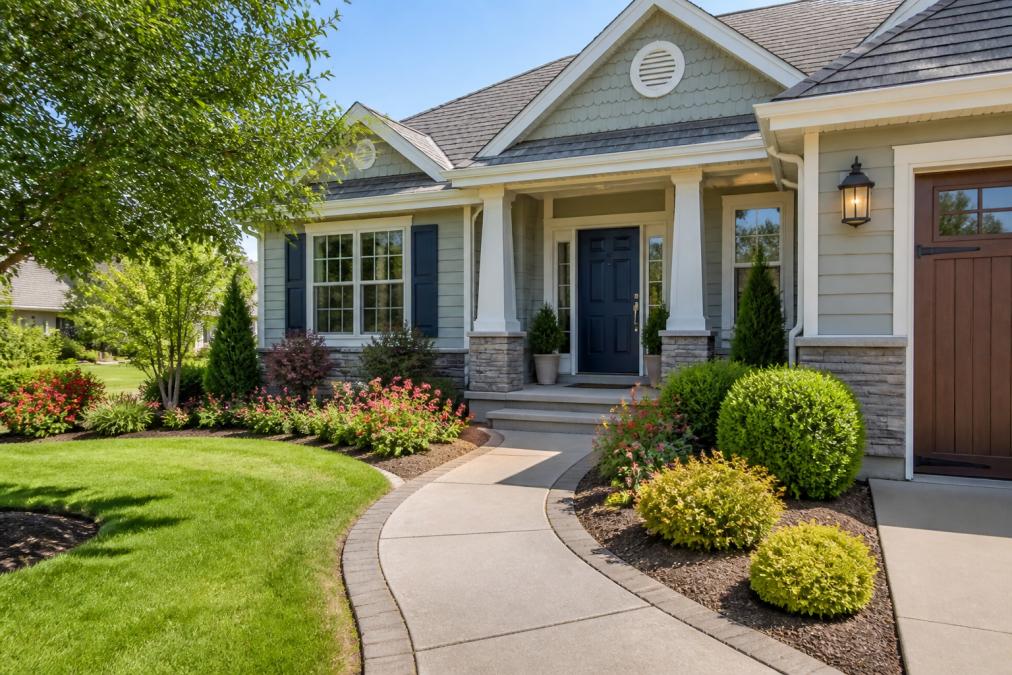
The measurable impact of curb appeal. NAR's 2023 Remodeling Impact Report found landscaping and exterior paint each recoup 100% of cost at resale. More important for speed: strong curb appeal generates more showing requests in the first week, and that traffic creates competitive bidding.
The staging versus virtual staging debate, with real numbers.
Physical staging places real furniture in a home to help buyers visualize the functional layout of each room. Virtual staging does the same thing digitally, at a fraction of the cost. Here is the honest cost-benefit breakdown:
| Staging Approach | Typical Cost (U.S. market) | What It Does | The Risk |
|---|---|---|---|
| Full physical staging (3-4 rooms) | $2,000 - $5,000 for the first month, then $300-$500 per month | Creates an emotional connection; buyers can sit, touch, and feel the space | High upfront cost; furniture may not fit the room's actual proportions |
| Partial physical staging (living room + primary suite) | $1,000 - $2,500 | Balances cost and impact; focuses on the two rooms buyers weigh most | Less comprehensive; secondary rooms may feel empty |
| Virtual staging (all rooms) | $50 - $150 per image | Shows potential in empty rooms at near-zero cost; ideal for online-first marketing | Buyers who arrive to find an empty room can feel misled, which damages trust and slows the sale |
| No staging (clean + decluttered) | $0 | Honest presentation; works best for as-is sales to investors | Can feel cold or uninviting to retail buyers; may extend days on market |
The data on staging's speed premium. The Real Estate Staging Association's 2023 report found staged homes spent an average of 23 days on market versus 42 for non-staged homes, a 45% reduction, and 82% of buyers' agents said staging made it easier to visualize the property as their future home.
The hybrid approach that works for most sellers. Address high-impact physical items first: fresh neutral paint, new or cleaned flooring, and a deep declutter. Then use virtual staging only to show potential in empty space, but be transparent, adding "Virtual staging shown; room is currently empty" to preserve trust.
Why online presentation often outweighs physical staging. Over 90% of buyers begin online, and the median buyer views 20 to 30 photos before scheduling a showing. Professional photography, a virtual tour, and a floor plan generate more showing requests than smartphone photos, regardless of whether furniture is real or digital.
How to Sell a House Fast for Cash When Time Is Critical
When time is the constraint, the traditional listing route may not be viable. A house needing extensive repairs, with code violations, or carrying an inherited estate often cannot qualify for traditional financing, making a direct cash buyer the most reliable path to a fast closing.
The process with a legitimate cash buyer is straightforward: request an offer, receive a fair as-is price, and choose your closing date. Without financing, the sale avoids appraisal delays and loan denials, the most common reasons traditional transactions fall through.
At OneRoof Real Estate, we buy houses in any condition as-is, with no repairs, fees, or commissions. Sellers receive a fair, all-cash offer within 24 hours, and closing typically happens in 7 days, on the seller's schedule. We also provide property clean-out services and access to local resources like movers and attorneys, which matters when you are managing an inherited property or a hoarder situation from out of state.
For homeowners facing pre-foreclosure, problem tenants, or divorce, speed is a necessity. A direct sale removes the uncertainty of showings, repair costs, and months of carrying costs.
Conclusion: Match Your Home to the Right Selling Strategy
The type of house that sells fastest is the one priced and positioned for its actual buyer pool. A move-in-ready home in a desirable micro-market attracts competitive bidding. A fixer-upper needs an investor who values its potential. Trying to sell a damaged property as turnkey is the surest way to extend your days on market.
If your home needs repairs, carries code violations, or you simply cannot wait months for a traditional sale, a direct cash sale is the pragmatic choice. OneRoof Real Estate purchases properties in any condition, covers all commissions and closing costs, and lets you choose the closing date.
Get started with OneRoof Real Estate and turn your property into cash on your timeline.
Frequently Asked Questions
What size house sells the fastest?
Homes around 1,800 to 2,400 square feet often see the most buyer demand because they appeal to both families and downsizers. However, size matters less than price per square foot compared to similar homes nearby. A correctly priced 3-bedroom home in a desirable school district will almost always sell faster than a larger home sitting at the top of the market.
Does the condition of a house affect how fast it sells?
Yes, condition directly impacts days on market. Move-in-ready homes attract more showings and offers because buyers can finance them easily. A fixer-upper narrows your buyer pool to cash investors or those willing to take on renovation loans, which slows the process. Selling a house as-is to a cash buyer removes that friction and can close in days instead of months.
What is the quickest a house can be sold?
A traditional listing with an agent typically takes 30 to 60 days to close after an offer is accepted. For the fastest possible sale, selling directly to a cash home buyer is the best route. Companies like OneRoof Real Estate can provide an all-cash offer within 24 hours and close in as little as 7 days, since they buy the property as-is and handle all the paperwork.
Does location impact the speed of a home sale?
Location is the single biggest factor. Homes near good schools, parks, and shopping centers see higher buyer demand and faster offers. But even a great location won't sell a poorly priced home. You need a comparative market analysis to set an asking price that matches what buyers in that specific micro-market are willing to pay right now.