 how-to
Selling a House With a Quitclaim Deed: 2026 Risks
Table of Contents
- What a Quitclaim Deed Actually Transfers (and What It Doesn't)
- Quitclaim Deed Risks for Seller: Liens, Taxes, and Title Defects
- Quitclaim Deed vs Warranty Deed: The Warranty You Give Up
- Why Buyers Resist Quitclaim Deeds and How It Affects Your Sale
- Title Insurance After Quitclaim Deed: What Lenders and Closing Companies Require
- How to Clear Title After a Quitclaim Deed
- A Seller's Checklist for Completing a Quitclaim Sale
- Frequently Asked Questions
Last Updated: October 17, 2026
What a Quitclaim Deed Actually Transfers (and What It Doesn't)
A quitclaim deed transfers whatever ownership interest the grantor has in a property, and nothing more. It makes no promise that the grantor actually owns the property or that the title is clear.
At OneRoof Real Estate, we buy houses in any condition, and we see quitclaim deeds used most often in family transfers, divorce settlements, and estate cleanups.
Here is the core distinction. A quitclaim deed conveys the grantor's interest "as is." If the grantor holds a full, clear title, the deed passes a full, clear title.
The Kansas statute on conveyance of real property treats a quitclaim as a valid conveyance, but validity is not the same as a guarantee. The deed is legal. The protection is what's missing.
So what are the risks of selling a house with a quitclaim deed in 2026?
Quitclaim Deed Risks for Seller: Liens, Taxes, and Title Defects
The biggest quitclaim deed risks for sellers start with what the deed does not clean up. A quitclaim deed does not remove liens, unpaid property taxes, mortgages, or judgments. Those encumbrances stay attached to the property.
A common mistake is assuming a quitclaim deed "wipes" a problem. It doesn't. It only moves the grantor's interest to the grantee.
Watch for these title defects before you sign anything:
- Unpaid property taxes that create a tax lien on the parcel
- An existing mortgage that still binds the property after transfer
- Judgment liens from creditors against the grantor
- HOA liens for unpaid dues or fines
- Chain of title gaps from a prior incomplete transfer
- Boundary or survey disputes that cloud ownership
Each one can stall a closing or kill a sale. A title search is the only reliable way to find them. Skipping it is the mistake we see most often.
Quitclaim Deed vs Warranty Deed: The Warranty You Give Up
The difference between a quitclaim deed and a warranty deed comes down to one word: warranty. A warranty deed contains promises from the seller about title. A quitclaim deed contains none.
With a warranty deed, the grantor guarantees clear title and agrees to defend it. If a title defect surfaces later, the buyer has legal recourse against the seller. That is a real, enforceable promise.
With a quitclaim deed, the grantor promises nothing beyond "whatever I have, I give you." No warranty of title. No defense against future claims. No legal recourse for the buyer if a defect appears.
Here is how the two compare:
| Feature | Quitclaim Deed | Warranty Deed |
|---|---|---|
| Promises clear title | No | Yes |
| Seller defends against claims | No | Yes |
| Buyer legal recourse | None | Yes |
| Typical use | Family, divorce, estate transfers | Standard property sale |
| Buyer comfort level | Low | High |
That gap explains most buyer resistance. When a buyer sees a quitclaim deed, they see risk they cannot recover from.
Why Buyers Resist Quitclaim Deeds and How It Affects Your Sale
Buyers resist quitclaim deeds because the deed offers them no protection. A buyer who accepts one takes on all title risk with no comeback. Most won't.
This is where marketability suffers. A property tied to a quitclaim deed is harder to sell, and it often sells for less. Lenders may refuse to finance it. Title companies may refuse to insure it. Cash buyers may discount their offer to absorb the risk.
Buyer reluctance is not irrational. It reflects a real gap in the deal.
The practical effect: your pool of buyers shrinks. Traditional buyers using a mortgage often fall out entirely. What's left is cash buyers who understand the risk and price it accordingly.
Title Insurance After Quitclaim Deed: What Lenders and Closing Companies Require
Title insurance after a quitclaim deed is where many deals quietly fall apart. Lenders and closing companies want clean, insurable title. A quitclaim deed raises questions they must answer before closing, and the answers determine whether your buyer can actually get a loan and a policy.
Here is the mechanism most sellers never see. A title company issues two documents before closing: a title commitment (a promise to insure, subject to stated requirements and exceptions) and, at closing, the owner's policy for the buyer plus a loan policy for the lender.
A quitclaim deed in the chain of title does not automatically kill insurability, but it forces the underwriter to verify that the grantor actually held the interest they conveyed.
What lenders and title companies typically require:
- A title search with no unresolved defects in the chain of title
- Proof that all liens, judgments, and property taxes are paid or addressed in the settlement statement
- A deed executed in the state's required format, properly notarized, and recorded with the county recorder
- Clear chain of title from the last recorded transfer, including every prior quitclaim
- Resolution of co-owner, marital, and heirship interests, every party with a recorded or statutory interest must sign or be released
- For a purchase-money loan, an owner's policy and loan policy issued by a licensed underwriter
Two practical patterns show up again and again. First, cash buyers can often close on a quitclaim because no lender is demanding a loan policy, but they will still want an owner's policy and will price the risk in. Second, mortgage buyers usually cannot close if the lender's underwriter will not insure over a defect, the loan simply does not fund. That is why the same property can sell to a cash buyer and fail with a financed buyer.
How to Clear Title After a Quitclaim Deed
Clearing title after a quitclaim deed means resolving every defect the title search found. The fix depends on the problem.
Start with a title search to see exactly what clouds the title. Then work the list:
- Pay off liens and taxes. Satisfy tax liens, judgment liens, and HOA debts, then get release documents.
- Resolve the mortgage. Pay it off, or get the lender's written consent to transfer.
- Fix chain of title gaps. Record a corrective deed or obtain a quiet title judgment.
- Clear co-owner and marital interests. Get every owner and spouse with an interest to sign.
- Settle boundary disputes. Use a survey and, if needed, a boundary line agreement.
A quiet title action is the heavy tool. It asks a court to settle ownership and clear the cloud. It takes time and legal fees, but it produces a clean title a buyer and lender will accept.
Get a real estate attorney involved when defects are complex. This is legal advice territory, not a DIY fix.
A Seller's Checklist for Completing a Quitclaim Sale
A clean quitclaim sale follows a set order, and the order matters more than the deed form. Work the list before you sign, not after.
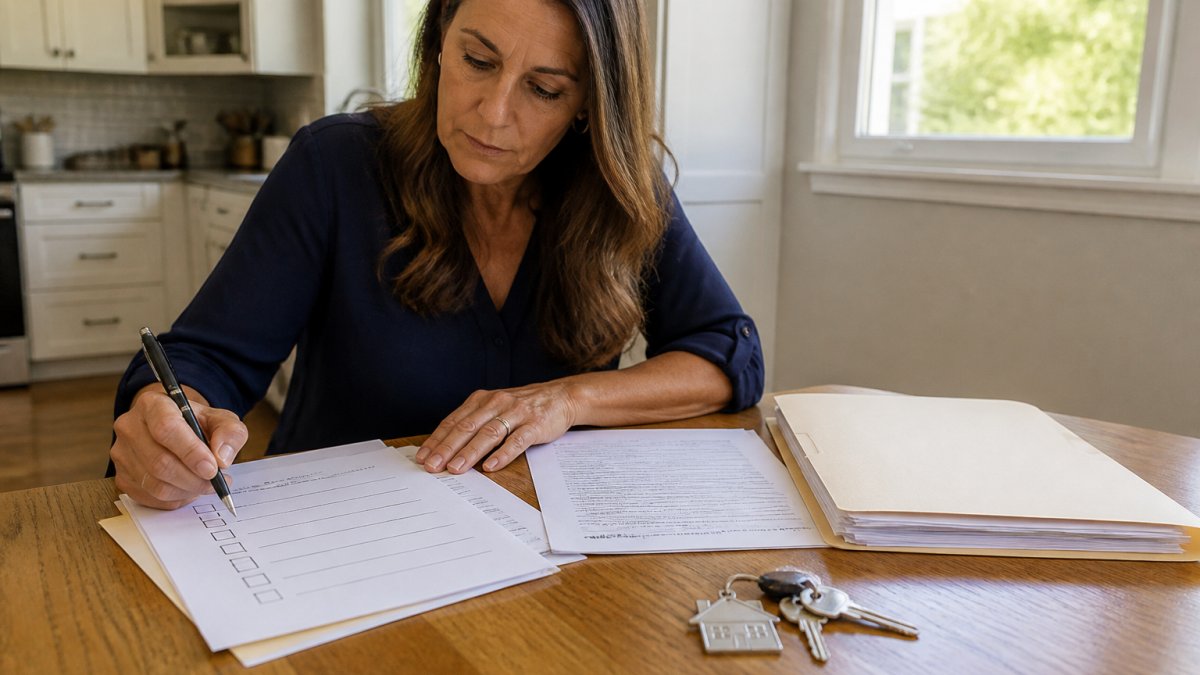
Phase 1, Verify before you promise.
- Order a title search and read the commitment, including Schedule B-I requirements and B-II exceptions
- Confirm every owner, spouse, and heir with an interest is identified, check the vesting deed and any prior quitclaim
- Decide which deed you will convey: a quitclaim passes only your interest, while a warranty or special warranty deed may be required by the buyer's lender or title company
- Ask the title company whether the prior quitclaim creates an insurability issue
Phase 2, Clear the title.
- Pay or resolve all liens, property taxes, judgments, and HOA debts, and collect release documents
- Get the mortgage lender's written approval to transfer, or plan to pay the loan off at closing
- Fix chain-of-title gaps with a corrective deed or, if needed, a quiet title action
- Obtain signatures from every co-owner and any spouse with a marital interest
Phase 3, Paper and close.
- Prepare the deed in the state's required format and confirm notary and witness rules
- Complete required seller disclosures and transfer-tax or exemption forms
- Record the deed with the county recorder and keep copies of every recorded document
- Confirm the buyer can obtain title insurance before you remove contingencies
The consequences most checklists omit. A quitclaim transfer can trigger a property-tax reassessment in states that reset assessed value on change of ownership, and it can interact with transfer taxes and recording fees. On the mortgage side, most residential loans contain a due-on-sale clause, so transferring title without lender consent can let the lender call the loan due. On taxes, your basis and any gain depend on your situation, a sale, a gift, or an estate transfer are treated differently. These are jurisdiction-specific and fact-specific; confirm them with a tax professional or real estate attorney before you record.
The 2026 freshness caveat. Recording fees, transfer-tax rates, disclosure forms, and title-underwriting guidelines change. Confirm current county recorder fees, your state's transfer-tax rate, and the title company's current requirements at the time of your transaction rather than relying on an older guide.
If the property has title problems you cannot clear, or repairs you do not want to make, a direct cash sale is the simpler path.
Frequently Asked Questions
Can you sell a house if you received it through a quitclaim deed?
Yes, but the deed you received only transferred whatever interest the previous owner held. Before listing, order a title search to confirm the chain of title is clean and that no liens, unpaid property taxes, or competing claims attach to the property. If the search turns up problems, resolve them first. Buyers and their lenders will run the same search, and unresolved defects stall closings or force price cuts.
Can a buyer get title insurance after a quitclaim deed?
Often yes, but it is not automatic. Title insurers review the chain of title and may exclude known defects, require a quiet title action, or decline coverage entirely. Lenders financing the purchase usually require a lender's policy, so a buyer relying on a mortgage may walk away if coverage is unavailable. Sellers can help by clearing liens and unpaid taxes before closing so the title company can issue a clean policy.
What is the difference between a quitclaim deed and a warranty deed?
A quitclaim deed transfers only the interest the grantor currently holds, with no promises about clear title. A warranty deed includes covenants that the grantor holds valid title and will defend the grantee against claims. Because a quitclaim deed offers no warranty, buyers and lenders treat it as higher risk. In a later resale, the seller typically delivers a warranty deed, so the deed used to acquire the property differs from the one used to sell it.
How do you fix a title problem caused by a quitclaim deed?
Start with a title search to identify the specific defect, such as a missing signature, an unresolved lien, or an heir who never conveyed their interest. Common fixes include recording a corrective deed, paying off liens or delinquent taxes, obtaining quitclaim deeds from missing co-owners or heirs, or filing a quiet title action in court. A real estate attorney can confirm which remedy applies under state law before you list the property.
Selling with a quitclaim deed is fast, but it shifts title risk onto the buyer, and buyers price that in. If liens, taxes, or co-owner issues make a clean sale hard, don't force it. OneRoof Real Estate buys houses in any condition with a fair cash offer within 24 hours, no repairs or fees, and a closing date you choose. Get started with OneRoof Real Estate and sell your home without the title headaches.