 comparison
Formal Probate vs Small Estate Affidavit in Kansas
Table of Contents
- Formal Probate vs Small Estate Affidavit in Kansas: The Core Difference
- Kansas Small Estate Affidavit Requirements and the $75,000 Threshold
- What the Kansas Probate Process Looks Like in Formal Administration
- Kansas Probate Timeline: What to Expect from Filing to Closing
- Inherited House Probate in Kansas: When Real Estate Forces the Decision
- Side-by-Side Comparison: Cost, Time, Court Involvement, and Risk
- Practical Scenarios: Choosing the Right Path for Your Kansas Estate
- Conclusion
- Frequently Asked Questions
Last Updated: October 12, 2026
Formal Probate vs Small Estate Affidavit in Kansas: The Core Difference
The main difference between formal probate and a small estate affidavit in Kansas is court involvement: formal probate is court-supervised, while a small estate affidavit is an out-of-court sworn statement that lets heirs collect certain assets when the estate is small enough to qualify.
Choosing between formal probate vs small estate affidavit in Kansas is often the first real decision an heir faces.
Below, we break down the $75,000 threshold, what counts toward it, when real estate forces formal probate, and how to choose.
Kansas Small Estate Affidavit Requirements and the $75,000 Threshold
Kansas allows a simplified transfer of assets when the probate estate is at or below a set cap. Kansas Legal Services reports that the Kansas Judicial Council raised the small-estate affidavit cap to $75,000, the figure most heirs should work from today.
To use the procedure, the estate generally must meet these conditions:
- The total value of probate assets falls under the $75,000 cap
- A set waiting period has passed since the date of death (typically six months, though this can vary by county and circumstance)
- The deceased person's estate has no open probate case
The official form comes from the Kansas Judicial Council small estates affidavit form, which notes the form itself cannot be resold or republished for compensation. The form must be signed under oath and typically notarized.
How Kansas Calculates the $75,000 Estate Value
The $75,000 figure applies to the probate estate, not everything the deceased owned, the most misunderstood part of the process.
Assets that pass outside probate are excluded from the count. That means you subtract:
- Jointly owned property with rights of survivorship
- Accounts with a named beneficiary designation (such as payable-on-death or transfer-on-death accounts)
- Life insurance proceeds paid to a named person
- Assets held in a living trust
What remains, the solely titled assets, is what counts.
The $75,000 threshold applies to the total probate estate, not each asset. You cannot split the estate into multiple affidavits; if total solely titled probate assets exceed $75,000, the affidavit is unavailable.
Personal Property vs Real Property Under the Affidavit
The affidavit works cleanly for personal property: bank accounts, vehicles, furniture, and similar items. The Kansas Department of Revenue publishes a separate form, Form TR-83b for transfer of certain personal property, for successors transferring specific personal property such as vehicles.
Real property is different. A small estate affidavit does not transfer Kansas real estate the way it handles a bank account.
Because the $75,000 threshold is calculated on the entire probate estate, including real property, a solely titled house can disqualify the estate from using the affidavit for any assets, even if personal property is well under the cap.
What Happens If an Institution Refuses the Affidavit
Even when an estate clearly qualifies, a bank, credit union, or title company may refuse the affidavit, more common than many heirs expect.
If an institution refuses, ask for the refusal in writing and a specific list of what it needs, often the issue is a missing document, not a legal defect.
The affidavit is powerful but not self-executing. If advocacy fails, formal probate may be the only way to complete the transfer.
What the Kansas Probate Process Looks Like in Formal Administration
Formal probate is court-supervised estate administration. A judge appoints a personal representative, admits a will (or applies intestate succession rules), and confirms the final distribution.
The core steps look like this:
- File a petition to open an estate in the district court
- Get a personal representative appointed and issued letters
- Notify creditors and publish notice to unknown creditors
- Inventory and value the estate assets
- Pay valid estate debts, taxes, and court costs
- Distribute what remains to heirs and beneficiaries
- Close the estate with a final accounting
The trade-off: court supervision protects heirs and creditors, but costs time and money, and every major step needs a judge's sign-off.
Kansas Probate Timeline: What to Expect from Filing to Closing
Formal probate in Kansas typically runs several months at minimum, and contested or complex estates can stretch past a year. The timeline is driven less by the court's calendar than by statutory waiting periods and creditor notice requirements.
The Kansas Judicial Council probate resources publish the forms and guidance that set much of this schedule. A simplified affidavit, by contrast, can clear in weeks because no judge is involved.
| Stage | Formal Probate | Small Estate Affidavit |
|---|---|---|
| Court involvement | Required throughout | None |
| Typical timeline | Several months to over a year | Weeks |
| Filing requirements | Petition, notices, inventory, accounting | Sworn affidavit, waiting period |
| Best for | Real property, larger or contested estates | Personal property under the cap |
Inherited House Probate in Kansas: When Real Estate Forces the Decision
An inherited house usually pushes a Kansas estate out of the affidavit lane and into formal probate. If the home was titled solely in the deceased person's name, a court must confirm the transfer before a buyer or lender will accept clear title.
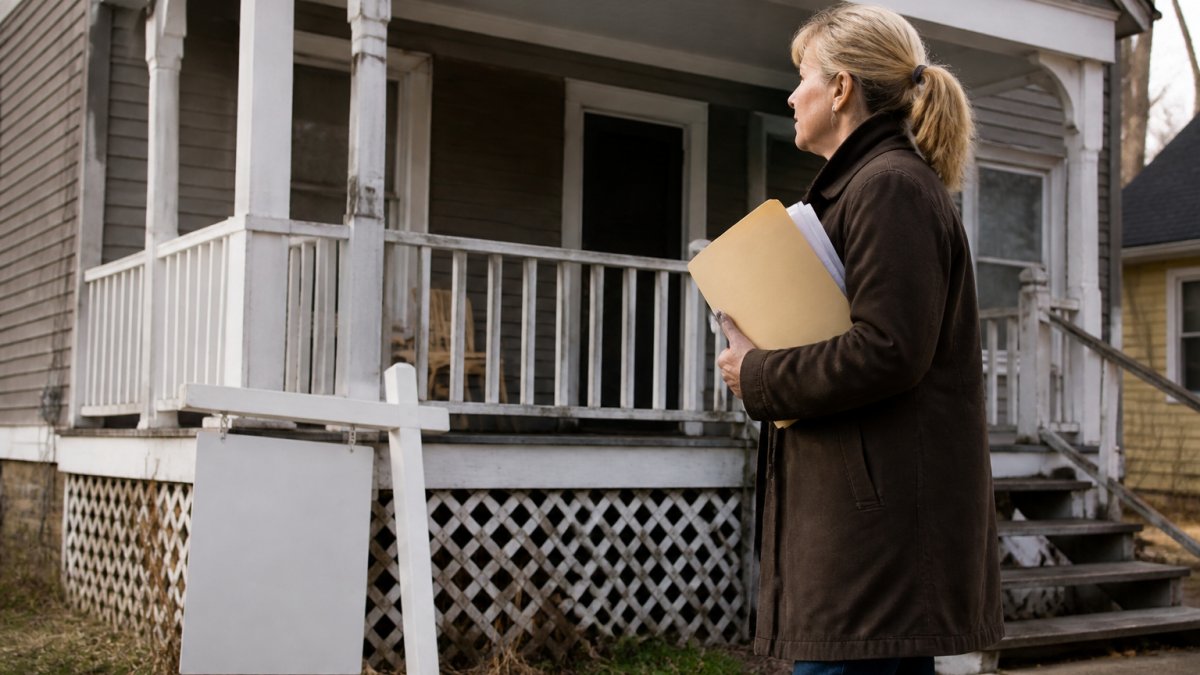
Out-of-state heirs feel this most. You cannot easily sell, refinance, or insure a house still titled to someone who has died. The estate must be opened, the personal representative appointed, and the property transferred before closing.
If the Estate Has Both Real Estate and Personal Property
Mixed estates are the most common and most misunderstood scenario. The affidavit can handle personal property while formal probate handles the house, but the two run on separate tracks.
A practical sequence many heirs follow:
- Confirm which assets are solely titled versus jointly owned
- Total the solely titled personal property against the $75,000 cap
- Use the affidavit for the personal property if it qualifies
- Open formal probate for the real property
- Coordinate the sale or transfer of the house through the personal representative
Side-by-Side Comparison: Cost, Time, Court Involvement, and Risk
The right path depends on four factors: cost, time, court involvement, and risk. The affidavit wins on speed and cost; formal probate wins on legal finality.
| Factor | Formal Probate | Small Estate Affidavit |
|---|---|---|
| Court oversight | Yes, judge-supervised | No |
| Cost | Filing fees, court costs, possible attorney fees | Low; primarily the form and any notary cost |
| Timeline | Months to over a year | Weeks |
| Handles real property | Yes | No, generally not for solely titled real estate |
| Best for | Houses, larger estates, disputes, unclear heirship | Personal property under the cap, no disputes |
| Main risk | Time and expense | Institutional refusal, later probate if assets were misjudged |
What most guides miss is liability. If an heir signs an affidavit, collects assets, and a creditor or another heir later challenges it, that heir can be personally on the hook. Formal probate shifts much of that risk to the court process.
Practical Scenarios: Choosing the Right Path for Your Kansas Estate
Real estates rarely fit neatly into a category. The decision often turns on a single asset or fact.
Scenario 1: Bank account and a car, no house. The estate is small and solely titled personal property is under the cap. You will need the Kansas Judicial Council affidavit form, a certified death certificate, and the Form TR-83b for the vehicle title transfer.
Scenario 2: A house in Wichita, titled only to the deceased. The house appraises for $145,000.
Scenario 4: Family disagreement over who inherits. Formal probate.
Scenario 7: Estate with debts exceeding assets. If the deceased owed more than the estate is worth, formal probate may be necessary to resolve creditor claims.
How to Confirm Which Path Applies to Your Situation
Before you sign anything:
- List every asset and how it was titled, checking for joint ownership, beneficiary designations, and transfer-on-death provisions.
- Total the solely titled assets. If under $75,000 with no solely titled real estate, the affidavit may be available.
- Check for debts. If debts exceed assets, formal probate may be needed to protect heirs from personal liability.
- Confirm the waiting period, generally six months from the date of death, though some institutions require longer.
- Contact the institution holding the asset and ask what it requires to release funds or transfer title.
- If real estate is involved, check the deed. A solely titled property with no transfer-on-death deed likely requires formal probate.
This is not legal advice, but it helps you ask the right questions and avoid common mistakes. If any step is unclear, a brief consultation with a Kansas probate attorney can save far more than it costs.
Conclusion
The hardest part of an inherited estate is rarely the paperwork. If you are holding an inherited house in the Wichita area and formal probate is the only path, you do not have to repair it, clean it out, or list it to move forward.
OneRoof Real Estate buys houses as-is, makes all-cash offers within 24 hours, covers commissions and closing costs, and lets you choose the closing date, with property clean-out services included.
SELL YOUR HOME!
Frequently Asked Questions
What is the difference between formal probate and a small estate affidavit in Kansas?
Formal probate is a court-supervised process where a judge appoints a personal representative to inventory assets, pay debts, and distribute what remains. A small estate affidavit under K.S.A. 59-1507b is a sworn statement that lets heirs collect qualifying personal property without opening a court estate, as long as the estate value stays under the $75,000 threshold. The affidavit does not transfer real estate and does not cut off creditor claims the way formal probate can.
Who qualifies to use a Kansas small estate affidavit?
Kansas small estate affidavit requirements center on the estate value and the type of property involved. The estate must be worth $75,000 or less after excluding liens and encumbrances, and the assets must be personal property that would otherwise go through probate. At least 180 days must have passed since the date of death, and no probate estate can be open. Heirs, beneficiaries, or the decedent's successor can sign the affidavit.
Does a small estate affidavit avoid probate in Kansas?
It avoids formal probate for the personal property it covers, but only for that property. The affidavit does not transfer real property, so an inherited house still requires a separate path such as a Kansas probate process or a transfer-on-death deed if one was recorded. If the estate holds a house plus other assets, you may need to open a formal estate for the real property while using the affidavit for personal items.
How long does probate take in Kansas?
The Kansas probate timeline depends on the estate's complexity and whether the will is contested. A straightforward estate with no disputes can close in six to nine months. Estates with creditor claims, unclear heirship, or family conflict often run 12 to 18 months or longer. The 180-day waiting period before a small estate affidavit can be used is shorter than most formal probate timelines, which is one reason heirs with modest personal-property estates choose it.
What happens if an estate has both a house and personal property in Kansas?
You generally cannot use the small estate affidavit alone. The affidavit covers personal property only, so the house must go through formal probate or another transfer method. Some families use the affidavit to collect bank accounts and vehicles while opening a formal estate for the real property. An attorney can confirm whether the combined value pushes the estate over the $75,000 threshold and forces full probate for everything.