 How-to
How to Find Reliable Derby Home Repair Contractors
Quick Summary
To find reliable home repair contractors in Derby, start with the City of Derby's active contractor list, then confirm the business is local and verify its license and insurance directly. Compare at least three detailed written quotes and sign a contract before any work begins.
- The City of Derby publishes an active contractor list that is a useful starting point.
- Shortlist three to five contractors whose trade matches your repair.
- Verify license numbers with the issuing authority and confirm insurance with the insurer.
- Request two or three references from similar past jobs and ask whether costs matched estimates.
- Collect at least three written quotes covering the same scope, materials, permits, and warranty.
Table of Contents
- Start With the Derby Licensed Contractor List
- Confirm Which Derby You Mean Before You Search
- Check Home Repair Contractor Reviews and References
- Verify License and Insurance Before Signing Anything
- How to Compare Home Repair Contractor Quotes
- Contractor Hiring Red Flags to Watch For
- Get Your Written Contract and Schedule Your First Visit
- Frequently Asked Questions
Start With the Derby Licensed Contractor List
Last Updated: November 17, 2026
Hiring a contractor for a home repair is one of the riskier decisions a homeowner makes, and the best place to start is a list of home repair contractors that the government already maintains. The City of Derby publishes an active contractor list. City of Derby active contractors list
Treat that list as a starting point, not a final answer. Being on it tells you a contractor appears in the city's records (Blog • Why Permits?). It does not tell you how the work was done, whether the company responds to complaints, or whether its coverage is current.
Before you call anyone, do three things with the list:
- Download or print the current version and note its date.
- Mark every contractor whose trade matches your repair, such as roofing, plumbing, electrical, or foundation work.
- Shortlist three to five names, since a larger pool becomes hard to compare.
A common mistake is treating the list as an endorsement. It is a record, so you still need to verify each name.
Confirm Which Derby You Mean Before You Search
Several places share the name Derby, so a generic search can return contractors who work hundreds of miles from your house. Confirm the city and county before you trust any result.
Check the contractor's business address and the service area listed on their website or license record. A company based in another state may still advertise to Derby, but a local office usually means faster response times for warranty work and emergency repairs.
Ask the contractor directly where their crews are based. A straightforward answer with a local street address is a good sign. Vague replies about "serving the whole region" deserve follow-up questions.
Check Home Repair Contractor Reviews and References
Reviews of home repair contractors are useful when you read them for patterns rather than star ratings. One angry review can come from a dispute that was never the contractor's fault, while a dozen complaints about missed deadlines point to a real problem.
Look at reviews on several platforms and focus on the details. Note whether reviewers mention the project type, the timeline, and how the contractor handled problems. Reviews that describe the same type of repair you need carry the most weight.
Ask for references as well. Request two or three past customers who had similar work done, and call them with specific questions:
- Did the final cost match the written estimate?
- Did the crew finish on the agreed schedule?
- How did the contractor respond when something went wrong?
- Would you hire them again?
Be cautious if a contractor cannot provide references or only offers names that do not answer the phone.
Verify License and Insurance Before Signing Anything
Licensing and insurance protect you if the work goes badly. A licensed contractor is accountable to a regulator, and insurance covers injuries and property damage on your site that would otherwise become your liability. The gap in most guides is that they stop at "ask for proof" without telling you who to call or what the paperwork should say. This section closes that gap.
Know which credentials apply to your project
Before you call anyone, confirm three things for your specific project:
- Whether the City of Derby requires a registration or permit for the type of repair you need (Building Inspections & Codes | Derby, KS).
- Whether the trade is state-licensed (electrical, plumbing, mechanical) and therefore has a state license number you can look up.
- Whether the contractor's registration or license class actually covers your scope, since a registration for one trade does not authorize another.
Verify the license yourself, not from a screenshot
Ask the contractor for their license or registration number and the name it is issued under, then check it with the issuing authority before you sign.
Confirm insurance limits, not just the existence of a policy
A certificate of insurance is a snapshot, and it can be cancelled the day after it is issued. Request a certificate that names the policyholder exactly as it appears on your contract, then call the insurer's number printed on the certificate to confirm the policy is active and the limits are adequate for your project. Ask specifically about:
- General liability insurance, which covers damage to your property or injuries to others caused by the work. Ask for the per-occurrence and aggregate limits and confirm they are high enough to cover the value of your repair.
- Workers' compensation, which covers the contractor's employees if they are hurt on your property. Without it, you may be responsible for their medical costs. Ask for the policy number and confirm it is current.
- Automobile liability, if the crew will park vehicles or equipment on your property.
Ask to be listed as an additional insured on the general liability policy for the duration of the job. This is a standard request for larger projects and gives you direct notice if the policy lapses.
Watch out: a contractor who says insurance is unnecessary for a small job, or who sends a certificate with a different company name than the one on your contract, is shifting that risk onto you. Walk away if the paperwork is missing or the insurer cannot confirm the policy.
Licensing and insurance checks cover the main risks, and the key items to confirm are summarised below.
| Credential | What to confirm | Why it matters |
|---|---|---|
| License or registration | Number checked with the issuing authority | Makes the contractor accountable to a regulator |
| General liability | Per-occurrence and aggregate limits | Covers property damage and injuries |
| Workers' compensation | Current policy number | Protects you from employee injury costs |
| Automobile liability | Needed if vehicles park on site | Covers vehicle-related incidents |
| Additional insured | You listed on general liability | Gives direct notice if the policy lapses |
How to Compare Home Repair Contractor Quotes
Collect at least three written quotes for the same scope of work. Comparing a low bid with a high bid rarely tells you much unless you know exactly what each one includes.
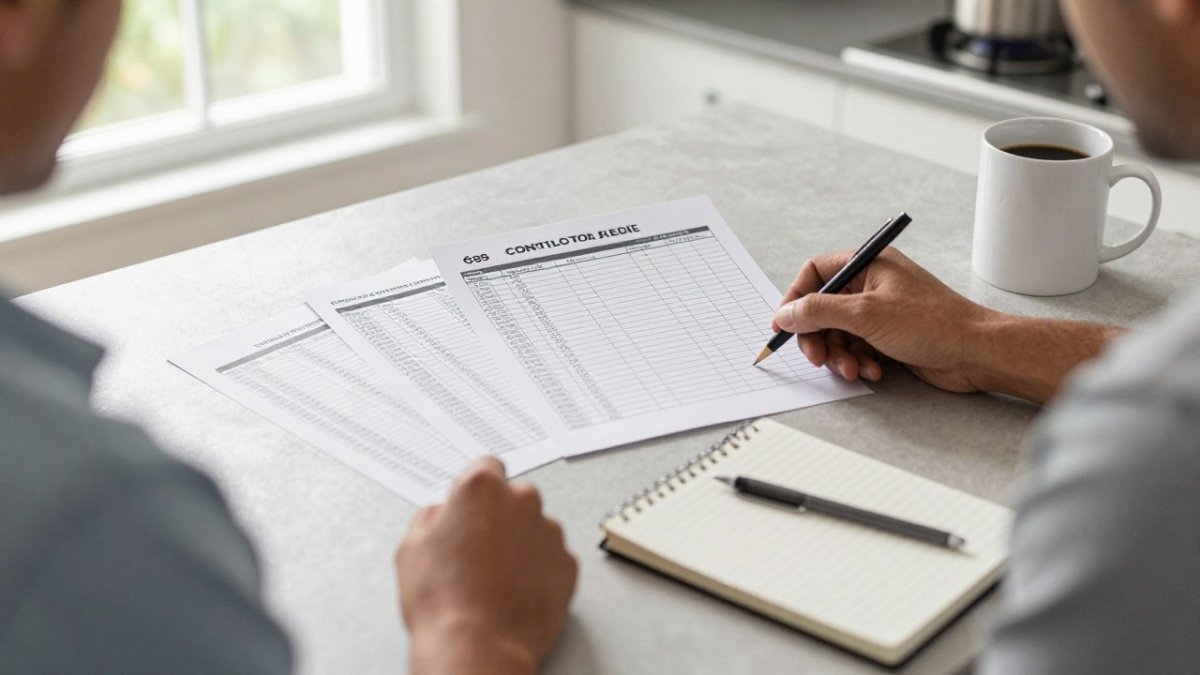
Make sure each quote covers the same items: materials by brand or grade, labor, permit fees, cleanup, the warranty period, and the payment schedule. A quote that omits permits or cleanup may look cheaper but cost more once those items are added.
Ask each contractor to explain any large difference. A very low price can mean they plan to use cheaper materials, skip steps, or add change orders later.
Here is a simple checklist to use when you compare:
- Same scope of work described in every quote
- Materials and their grades named
- Permits and inspections included or clearly excluded
- Warranty length stated for labor and materials
- Payment schedule with no large upfront deposit
- Start date and estimated completion date given
For most homeowners, a quote that is detailed and specific beats the lowest number on the page.
Contractor Hiring Red Flags to Watch For
Some warning signs appear again and again in complaints about home repair work. Learn them before you meet anyone, and know where to report them if something goes wrong, because most guides list the red flags but never tell you who to call. Establishing a clear dialogue about project expectations remains the most effective method for vetting home repair pros before they ever pick up a tool.
Red flags that should end the conversation
Be wary of a contractor who:
- Pressures you to sign today or offers a "discount" that expires immediately.
- Asks for full payment or a large deposit before any work starts.
- Has no physical business address or will only communicate by text.
- Asks you to pull permits in your own name for work they are supposed to handle.
- Offers to do the job without a written contract.
- Shows up unannounced and claims your roof or foundation needs urgent repairs.
- Cannot or will not provide a license or registration number you can verify.
- Gives a verbal estimate and refuses to put the scope in writing.
Where to report problems and how disputes get resolved
If a contractor takes your money and does not perform, or performs defective work, you have several local and state channels.
Keep a paper trail from the first conversation: the signed contract, every change order, receipts for payments, photos of the work in progress, and copies of the certificate of insurance. Dispute resolution almost always turns on what is in writing, and a contractor who knows you are documenting the job is less likely to cut corners.
Watch out: paying by cash or peer-to-peer app with no receipt makes it nearly impossible to prove what you paid if a dispute arises. Pay by check or card and keep the record.
Protect yourself before the first visit
Before you let anyone onto your property, confirm the contractor's registration or license number and insurance certificate, and ask for two or three references from jobs similar to yours. A contractor who hesitates on any of these is telling you something. The cost of a five-minute verification is far lower than the cost of a failed repair.
Get Your Written Contract and Schedule Your First Visit
Never start work without a written contract. It should list the scope of work, materials, total price, payment schedule, start and finish dates, warranty terms, and how change orders will be handled.
A change order is a written approval for any work beyond the original scope. Insist that every change be documented and priced before the crew performs it, or costs can climb quickly with no clear record of what was agreed.
Pay in stages tied to completed milestones rather than the full amount up front.
Once you have a signed contract, schedule a first visit to walk the site with the contractor. If you are dealing with foundation problems, you may first want to review how to identify foundation cracks in homes so you can describe the issue accurately when you compare quotes.
If you are weighing a repair against selling your property as-is, OneRoof Real Estate buys houses in any condition, offering fair, all-cash offers within 24 hours. Compare that option with the repair route before you commit.
Frequently Asked Questions
What is the best way to find a good contractor?
Start with referrals from neighbors and people you trust, then check the City of Derby's active contractor list to confirm each name holds a current license. Narrow your list to three to five firms, read recent reviews on several platforms, and call past customers directly. Ask each contractor for a written estimate, proof of insurance, and the names of two recent jobs similar to yours. A contractor who resists these requests is a good reason to move on.
What should a home repair contract include?
A written contract should list the full scope of work, materials and brands, start and completion dates, the total price, and a payment schedule tied to completed milestones rather than large upfront payments. It should name the contractor's license number and insurance carrier, explain how change orders are priced and approved in writing, and state the warranty terms. Keep a signed copy for your records and do not let work begin until both parties have signed it.
How can I verify a contractor's license and insurance?
Ask for the license number and confirm it with the issuing authority, then confirm it is active and matches the business name on your contract. For insurance, request a current certificate of insurance and call the carrier listed to confirm the policy is active and covers general liability and workers' compensation. Verify that the certificate names you as certificate holder when possible. Recheck coverage dates before work starts.
Should I get multiple quotes for a home repair?
Yes. Getting at least three written quotes shows you the realistic price range for your project and helps you spot an estimate that is unusually low or high. Give every contractor the same scope of work so the numbers are comparable. Compare materials, timelines, and warranty terms along with the bottom-line price, because a cheaper bid that leaves out key items often costs more once change orders arrive.