 how-to
Sell a House With Unrecorded Deed in Kansas: 2026 Guide
Table of Contents
- What an Unrecorded Deed Means for Selling Your House
- How to Record a Deed Before Selling a House
- Documents Needed to Prove Property Ownership
- How Long Does It Take to Resolve a Title Issue
- Selling Inherited Property With an Unrecorded Deed
- Your Fastest Path: Cash Offers and Unrecorded Deeds
- Frequently Asked Questions
Last Updated: October 15, 2026
What an Unrecorded Deed Means for Selling Your House
An unrecorded deed in Kansas is a property transfer document that exists but was never officially filed with the county register of deeds.
This is urgent: title insurers will not insure a property with an unrecorded deed, buyers cannot get financing, and even cash buyers hesitate.
Recording the deed before listing is the cleanest path forward.
How to Record a Deed Before Selling a House
Recording your deed typically takes 2-4 weeks if everything is in order. The goal is to get it officially filed with the county register of deeds so title searches show you as the legal owner.
Step 1: Locate the Original Deed
Find the physical deed document. Check these places first:
- Safe deposit boxes at your bank
- Home filing cabinets or drawers
- Papers from the person who gave you the property
If the original is lost, request a certified copy from the previous owner or their estate. If that's impossible, an attorney can reconstruct the document, slower and costlier, but still faster than selling without recording anything.
Step 2: Verify the Deed's Legal Validity
Before submitting to the county, confirm the deed meets Kansas requirements. A valid deed must include:
- The grantor's name (person transferring the property)
- The grantee's name (person receiving the property)
- A legal description of the property
If the deed is missing a notarized signature or has unclear legal descriptions, contact an attorney. Kansas law is strict, and a defective deed will be rejected or cause problems later.
If your deed lacks a notary seal, either have it notarized now (if the original grantor is available) or have an attorney file an affidavit explaining the situation.
Step 3: Submit to the County Register of Deeds
Once verified, submit the deed to the register of deeds office in the county where the property is located. In Kansas, this is straightforward:
- Prepare the original deed (or certified copy)
- Complete the recording cover sheet (the register provides a template)
- Pay the recording fee (typically $15-$25 per page, depending on the county)
- Submit in person, by mail, or through the county's online portal if available
After submission, the register stamps the document with a recording number and date, your proof the deed is official. Request certified copies for your records and for buyers.
Documents Needed to Prove Property Ownership
When selling a house with an unrecorded deed in Kansas, gather documents to prove your legal claim.
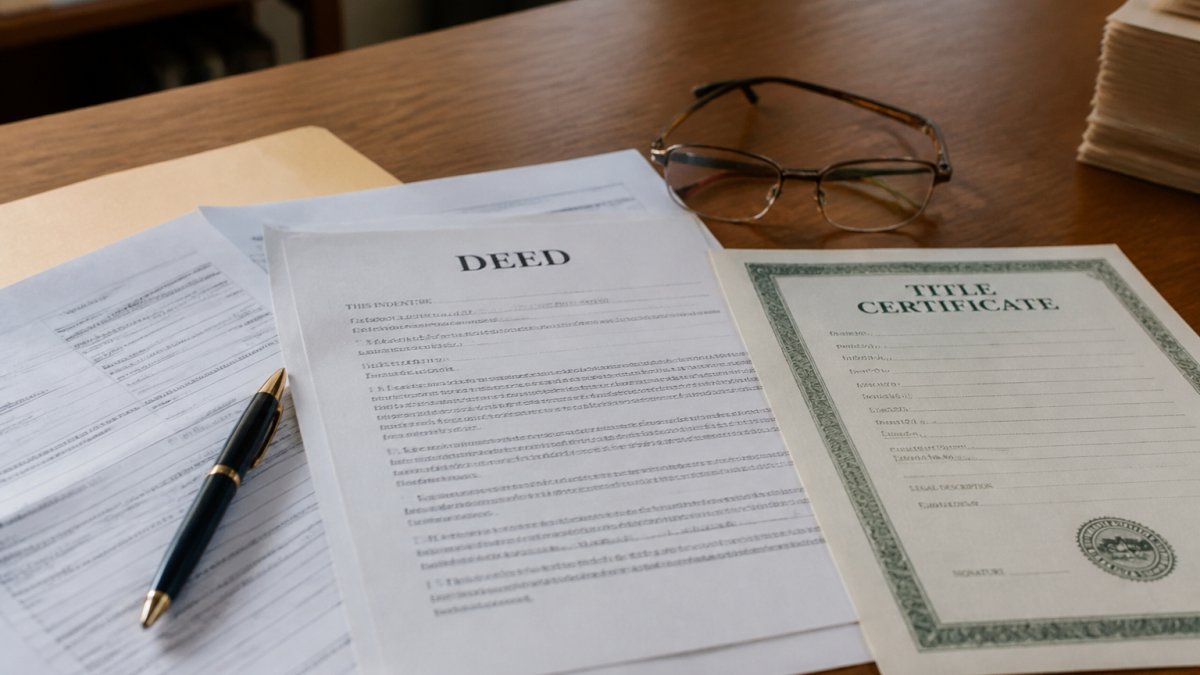
Start with the recorded deed.
Next, gather the chain of ownership documents, every deed showing how the property passed from owner to owner.
If the property was inherited, collect:
- The original owner's will or trust document
- Probate court records (if the estate went through probate)
- Any affidavits of heirship filed with the court
For divorce or settlement transfers, gather the divorce decree and property settlement agreement.
Tax records matter too.
How Long Does It Take to Resolve a Title Issue
The timeline depends on how complicated the unrecorded deed situation is, but the number that matters is dollars, not weeks. Every month a title problem sits unresolved, you keep paying taxes, insurance, utilities, and maintenance on a house you cannot sell. That carrying cost should drive your decision about whether to fix the title yourself or hand the problem to a buyer who can absorb it.
The Three Complexity Tiers (and What Each Costs)
Tier 1, Clean deed, just unfiled. The deed is complete, signed, notarized, and the chain of ownership is intact.
Tier 2, Minor defect. The deed is missing a notary seal, has a typo in the legal description, or names a grantor who has since died.
Tier 3, Broken chain or contested heirs. Gaps in the chain of title, missing probate, disagreeing heirs, or a prior owner whose signature cannot be obtained.
A Step-by-Step Way to Estimate Your Own Timeline
Rather than guessing your tier, walk through these five questions in order. Each "no" pushes you toward the next tier.
- Do you physically have the deed (or a certified copy)? If no, add 1-3 weeks to locate or reconstruct it.
- Is the grantor's signature notarized? If no, add 2-3 weeks for an affidavit or re-signature.
- Does the legal description match the county's records exactly? If no, add 1-2 weeks for a corrected deed.
- Can you trace every transfer back at least 30 years with recorded documents? If no, add 3-8 weeks for affidavits of heirship or a quiet title filing.
- Are all living heirs willing to sign? If no, assume Tier 3 and budget for litigation.
Add the weeks from each "no" to a baseline of 3 weeks for recording and title. That gives you a realistic listing date, not a best-case one.
The Cost-of-Delay Calculation
Here is the calculation most sellers skip. Take your monthly carrying cost (taxes ÷ 12 + insurance ÷ 12 + utilities + any HOA dues + lawn or maintenance) and multiply it by the number of months your title fix will take.
| Scenario | Months to clear | Monthly carry | Total carry cost | Legal/recording cost | All-in cost of delay |
|---|---|---|---|---|---|
| Tier 1 | 1 | $500 | $500 | ~$100 | ~$600 |
| Tier 2 | 1.5 | $500 | $750 | ~$600 | ~$1,350 |
| Tier 3 (uncontested) | 4 | $500 | $2,000 | ~$2,500 | ~$4,500 |
| Tier 3 (contested) | 8 | $500 | $4,000 | ~$6,000 | ~$10,000 |
Those numbers are illustrative, but the pattern holds: the longer the title takes, the more the fix costs, and the cost compounds because you cannot sell, rent, or refinance in the meantime.
When to Start
The biggest mistake sellers make is waiting until they have a buyer to start fixing the title. A buyer under contract creates a deadline, and deadlines push sellers into expensive shortcuts, rush attorney fees, lowball offers, or losing the deal entirely. Start the recording or curative process the day you decide to sell, not the day you accept an offer.
Selling Inherited Property With an Unrecorded Deed
Inherited properties with unrecorded deeds are common, especially when the original owner died without updating paperwork. The solution depends on whether the estate went through probate.
Probate and Title Transfer
If the property went through probate, the court issued letters testamentary or letters of administration, giving you legal authority to act on the deceased owner's behalf.
The deceased owner's name is on the original unrecorded deed.
If probate was never opened, you may need to open it now just to clear the title. Ask an attorney whether a simplified probate or small-estate affidavit applies.
Multiple Heirs and Deed Recording
If multiple heirs inherited the property, all must agree to the sale and all names must appear on the recorded deed.
When recording a deed with multiple heirs, include all names, and all heirs must sign the sales contract and closing documents.
If heirs are scattered or one is uncooperative, options are limited. A partition action can force a sale and divide proceeds, but it is expensive and slow.
Your Fastest Path: Cash Offers and Unrecorded Deeds
A cash offer is not automatically the right answer. The honest way to decide is to run three scenarios side by side, repair and list, sell as-is, and accept a cash offer, and compare net proceeds after every cost.
The Net-Proceeds Formula
Net proceeds = sale price − selling costs − title and legal costs − repair costs − carrying costs during the transaction.
Selling costs on a traditional listing typically include agent commissions (5%-6% of sale price), seller-paid closing costs (1%-3% for title insurance, transfer fees, and prorated taxes), and any buyer concessions.
A cash offer usually strips out agent commissions and most closing costs, but the headline price is lower. The question is whether the avoided costs offset that lower price.
Three Scenarios, Same House
Assume a house with a $200,000 fair market value in good condition, but with a roof at the end of its life, an aging HVAC system, and a title needing a Tier 3 fix. Carrying costs are $500 per month.
Scenario A, Repair, clear title, list on the open market.
- Roof replacement: $9,000-$15,000
- HVAC replacement: $6,000-$12,000
- Title curative (quiet title, uncontested): ~$2,500
Scenario B, Sell as-is on the open market.
- No repairs, but buyers discount heavily for known defects and the title cloud.
- Realistic as-is price: $165,000-$180,000
- Agent commissions and closing costs: ~$12,000-$14,000
Scenario C, Cash offer.
- No repairs, no commissions, no seller closing costs in most cases.
- Cash buyers typically price at a discount to as-is market value, commonly 70%-85% of fair market value depending on condition and title complexity.
- On a $200,000 FMV with title issues, a realistic cash offer might land around $140,000-$160,000.
How Cash Buyers Handle the Unrecorded Deed
A cash buyer does not need you to record the deed first. The buyer's title company runs the search, identifies the defect, and works with you and your attorney to cure it during escrow. In practice:
- The buyer orders title immediately after the purchase agreement is signed.
- The title company issues a curative requirements letter listing exactly what must be filed.
- You sign the curative documents (affidavits, corrected deeds, heirship documents) as part of closing.
This is the key difference from a traditional sale: there, you must clear the title before you can even list. In a cash sale, the title work happens in parallel with closing, and you never front the cost.
When a Cash Offer Is the Wrong Choice
Be skeptical of any buyer who will not put the comparison in writing. A cash offer is the wrong choice when:
- You have the cash and time to complete repairs and a Tier 1 or Tier 2 title fix.
- The house is in a strong market where as-is listings still attract multiple offers.
- The title defect is minor and a local attorney quotes a fixed fee under $1,000.
In those cases, clearing the title and listing traditionally will usually net more. The cash offer is a tool for speed and certainty, not a universal answer.
What to Ask Any Cash Buyer
Before you sign anything, ask for these in writing:
- The full offer price and how it was calculated.
- Whether there are any deductions for title curative, repairs, or closing costs.
- The expected closing timeline and what could delay it.
- Whether the buyer will provide proof of funds.
- Whether the buyer's title company has handled unrecorded deeds before.
A legitimate cash buyer will answer all five without hesitation. If they will not, the offer is not worth comparing.
Frequently Asked Questions
Can a title company close on a house with an unrecorded deed?
Yes, but with conditions. Title companies can close on properties with unrecorded deeds if the deed is valid, you can prove ownership through other documentation, and the title company receives a title commitment or insurance exception for the unrecorded instrument. Many title companies require the deed to be recorded before closing to clear the title completely. The process adds time and may require legal review. Cash buyers often have more flexibility with unrecorded deeds than traditional lenders.
How long does it take to resolve an unrecorded deed before closing?
Recording an unrecorded deed typically takes 1 to 3 weeks, depending on your county recorder's office backlog. If the deed requires corrections or notarization, add 3 to 7 days. If probate is involved (common with inherited property), the process extends to 4 to 12 weeks. Title searches and legal review can add another 1 to 2 weeks. Total resolution time usually ranges from 2 to 16 weeks. Cash buyers may close faster by accepting title insurance exceptions for unrecorded deeds.
What documents are needed to prove ownership when a deed is unrecorded?
You'll need the original unrecorded deed, a government-issued photo ID, property tax records showing your name as owner, utility bills in your name for the property, insurance policies, any loan documents or mortgage payoff statements, and a title search report. If the property is inherited, include the will, probate court orders, and death certificate. A notarized affidavit of ownership may also be required. Your county register of deeds or a title company can provide a specific checklist for your situation.
Can I sell my house if it needs repairs and has an unrecorded deed?
Yes. The unrecorded deed and property condition are separate issues. You can sell a house needing repairs with an unrecorded deed, but you'll face two obstacles: resolving the title issue before closing and managing buyer expectations about the property's condition. Traditional buyers and lenders are less willing to accept both problems. Cash buyers, however, routinely purchase properties in any condition with title complications, often closing within 7 days without requiring repairs, inspections, or deed recording beforehand.