 comparison
Repair Foundation Before Selling: Pros and Cons
Table of Contents
- The Foundation Repair Decision: What's at Stake
- Cost of Foundation Repair for Home Sale
- Pros of Repairing Foundation Before Selling
- Cons of Repairing Foundation Before Selling
- Disclosing Foundation Problems to Buyers
- As-Is Home Buyers for Foundation Damage
- Making Your Decision: Repair or Sell As-Is
- Frequently Asked Questions
Last Updated: September 28, 2026
The Foundation Repair Decision: What's at Stake
When selling a home with foundation issues, you face a critical choice: invest thousands in repairs before listing, or sell as-is and accept a lower offer. This decision affects your bottom line, timeline, and stress level. At OneRoof Real Estate, we've helped hundreds of sellers navigate this dilemma, and the answer varies by situation.
Foundation problems affect structural integrity, buyer confidence, appraisals, and financing approval. Repair costs are substantial, and there's no guarantee you'll recover that investment. Understanding the pros and cons of foundation repair before selling helps you make a choice aligned with your actual circumstances.
The foundation repair decision hinges on three factors: damage severity, timeline, and financial position. A small crack differs from settlement affecting the entire structure. A six-month timeline differs from a 30-day close. Liquid cash differs from needing to finance repairs.
Cost of Foundation Repair for Home Sale
Foundation repair costs vary by soil type, damage severity, and foundation system. Understanding typical price ranges and local factors helps you estimate whether repair makes financial sense.
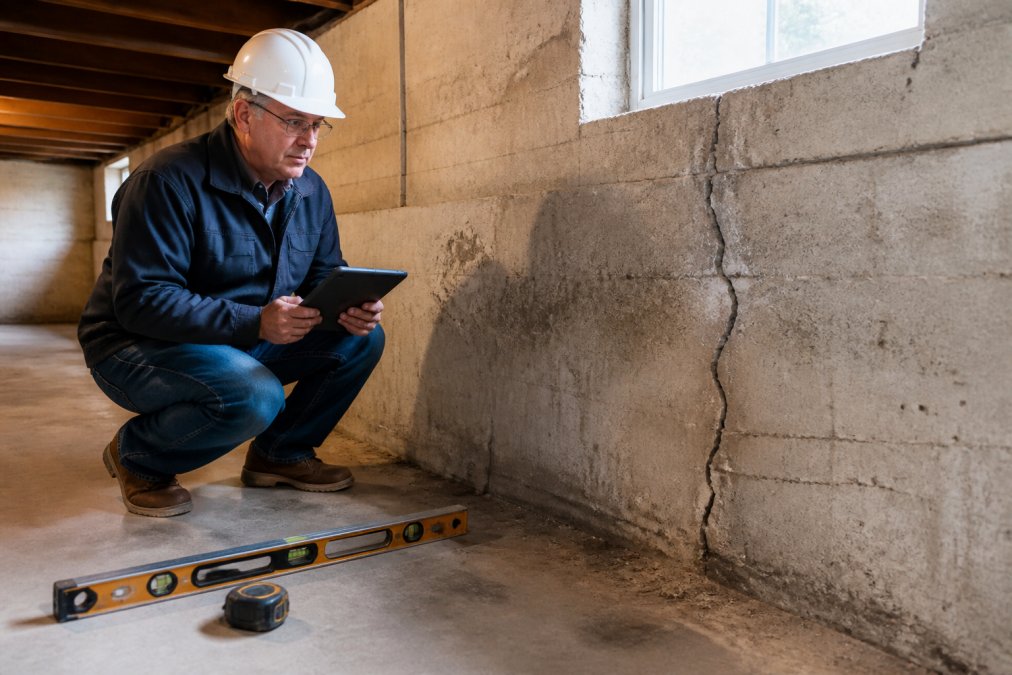
Typical repair cost ranges:
- Crack injection or epoxy sealing: $500-$2,500 for minor horizontal or vertical cracks
- Slab jacking or mud jacking: $1,500-$5,000 to lift and stabilize settled concrete slabs
- Helical piers or steel push piers: $10,000-$30,000+ per pier, often requiring multiple piers for significant settlement
- Underpinning (full foundation stabilization): $15,000-$50,000+ depending on foundation length and depth
- Basement wall repair or bowing wall correction: $5,000-$25,000 depending on wall length and severity
- Drainage and waterproofing: $3,000-$15,000 for interior or exterior systems
Why local soil conditions matter here:
The structural engineer assessment:
Before any repair estimate, you need a structural engineer's evaluation ($400-$1,200). The engineer identifies the root cause (settlement, heaving, water intrusion, or structural failure), assesses whether damage is active or stable, and recommends the repair method. This report is required by most lenders before mortgage approval.
Timeline and permit costs:
Major repairs require building permits and inspections, adding $200-$500 and 1-2 weeks. Helical pier installation or underpinning may require excavation permits, adding another week. Plan for 2-6 weeks for major repairs.
The hidden cost: carrying costs during repair:
While repairs are underway, your home typically cannot be shown. Mortgage, taxes, insurance, and utilities continue. A 4-week repair on a $300,000 home with a $1,500 monthly mortgage means $6,000 in carrying costs before listing. This should factor into your repair-versus-sell-as-is decision.
Pros of Repairing Foundation Before Selling
Foundation repair before selling opens access to traditional financing for your buyers. Most conventional and FHA lenders require a stable foundation. If you repair before selling, you eliminate this financing obstacle.
A repaired foundation broadens your buyer pool. Owner-occupants, the majority of home buyers, typically need financing and want assurance the foundation is stable. A documented, professionally repaired foundation appeals to more buyers than one with disclosed damage.
Selling a home with disclosed foundation issues often triggers renegotiation. Buyers know repairs are expensive and will use the problem to reduce the offer. You might list at $300,000 but receive offers at $270,000 or lower. If repair costs are lower than the discount you'd accept, repairing first makes financial sense.
A transferable warranty on structural repairs adds value. It reassures buyers the work was done to professional standards and provides recourse if problems recur.
Cons of Repairing Foundation Before Selling
The upfront cost is the obvious drawback. You're spending thousands before listing. If the sale falls through or takes longer than expected, you've absorbed that cost with no return. If you're stretched financially or facing time pressure, this is a real burden.
Repair timelines create delays. Major foundation work can take weeks, especially with permits or inspections. Every week unrepaired is a week unlisted. For sellers needing quick closes, inherited property, divorce, pre-foreclosure, job relocation, repair delays are a serious problem.
There's no guarantee of full return on investment. You might spend $25,000 on stabilization and find the repair only increases value by $15,000. Foundation damage carries a stigma, buyers know the home had problems, even if fixed, and may shy away or demand a discount.
The disclosure requirement means you can't hide foundation issues even after repair. You must disclose that problems existed and were repaired. This disclosure can deter some buyers who worry about repair quality, recurrence, or prefer homes with no foundation history.
Disclosing Foundation Problems to Buyers
If you sell without repairing, disclosure is mandatory. Most states require sellers to disclose known material defects, including foundation damage. Failing to disclose creates legal liability. The disclosure form typically asks explicitly about foundation, structural, and water damage.
Your disclosure should be specific. Describe what you know: "Visible cracks in basement wall, east side, approximately 12 feet long, horizontal orientation. Crack has not widened in past two years." Include any reports or inspections done.
Disclosure happens early in the transaction. Buyers typically have 5-10 days to inspect and decide whether to proceed, request repairs, or withdraw. Foundation disclosure almost always triggers a professional home inspection.
The inspection report becomes a negotiation tool. If the inspector documents foundation damage, the buyer will likely request that you repair it as a condition of sale, request a credit toward repairs, or ask for a price reduction. Disclosure without repair puts you in a reactive position where the buyer dictates the next move. Proactive assessment of these structural concerns often reveals that modern methods like trenchless sewer repair offer a less intrusive path to restoring property value before the negotiation process begins.
As-Is Home Buyers for Foundation Damage
One alternative to repairing is selling to an as-is cash buyer. These buyers purchase homes in any condition, foundation damage, structural issues, code violations, or any other problem, without requiring repairs. They handle all closing costs and commissions, and they close quickly, typically in 7 days.
OneRoof Real Estate specializes in this type of transaction. We buy homes with foundation issues across multiple states, including the Wichita area. You get a fair all-cash offer within 24 hours, no inspections required, and no repairs demanded. The process is straightforward: you contact us, we evaluate the property, we make an offer, and if you accept, we close on your timeline.
The trade-off is price. An as-is cash buyer will offer less than a traditional buyer would pay for a fully repaired home. They're accounting for repair costs, holding costs, and the risk that foundation damage is more extensive than visible. But the offer is fast, certain, and doesn't require you to invest in repairs or wait months for a traditional sale to close.
This path makes sense if you're selling an inherited property from out of state, facing foreclosure, dealing with a difficult tenant situation, or simply need liquidity without the burden of repair and listing. You avoid the uncertainty of whether repairs will generate a return, and you avoid the timeline delays.
Making Your Decision: Repair or Sell As-Is
The right choice depends on your specific situation, but the decision is ultimately financial: Will the repair cost be recovered in the sale price, or will you lose money by repairing? Working through a concrete example clarifies the math.
The ROI calculation:
Let's say your home would sell for $300,000 in perfect condition. A structural engineer identifies foundation settlement affecting 40 feet of the perimeter and recommends helical pier installation.
Scenario A: Repair before selling
- Repair cost: $28,000
- Carrying costs during 4-week repair (mortgage, taxes, insurance, utilities): $6,000
- Total out-of-pocket: $34,000
- Expected sale price after repair: $295,000 (foundation repaired, but disclosure of past damage may suppress price slightly)
- Net proceeds after repair investment: $261,000
Scenario B: Sell as-is to a cash buyer
- All-cash offer accounting for foundation damage: $265,000
- No repair cost, no carrying costs, no listing delays
- Net proceeds: $265,000
- Close in 7 days
But the math changes if damage is minor:
Scenario A: Repair before selling
- Repair cost: $2,500
- Carrying costs during 1-week repair: $1,500
- Total out-of-pocket: $4,000
- Expected sale price after repair: $298,000 (minor damage, professional repair, minimal stigma)
- Net proceeds after repair investment: $294,000
Scenario B: Sell as-is
- All-cash offer accounting for minor cracking: $280,000
- No repair cost
- Net proceeds: $280,000
The three-question framework:
The disclosure reality:
A fourth consideration: buyer pool access:
The decision framework in practice:
Frequently Asked Questions
Is it a good idea to repair foundation damage before selling a home?
Repairing foundation damage before selling depends on your timeline and financial situation. If you plan to list on the open market and attract conventional buyers, repairs can increase buyer confidence and prevent inspection contingencies from derailing the sale. However, repairs require significant upfront capital with no guarantee of full ROI. As-is home buyers will purchase your property with foundation issues intact, often closing in 7 days without repairs or inspections. Calculate your local repair costs against the time and money you'd invest in traditional listing to determine which approach makes sense for your situation.
What are the mandatory disclosures for foundation issues when selling a home?
Most states require sellers to disclose known structural defects, including foundation problems, on the property disclosure form before closing. Failure to disclose can result in legal liability after the sale. The specific requirements vary by jurisdiction, so check with a real estate attorney in your area. Disclosure doesn't prevent you from selling, but it does inform buyers upfront and can affect negotiation leverage. Some buyers will walk away; others will request repair credits or price reductions. Selling to as-is home buyers eliminates this disclosure burden entirely since they accept the property in its current condition.
Do foundation repairs increase a home's resale value enough to justify the cost?
Foundation repairs typically don't return dollar-for-dollar on investment. The ROI depends on local soil conditions, repair scope, and buyer pool. In some markets, a transferable warranty from a reputable contractor can improve buyer confidence and justify higher listing prices. However, if you're facing high repair costs and a tight timeline, selling as-is to a cash buyer may preserve more of your equity by avoiding the months-long traditional listing process and associated carrying costs.
Can I sell my house as-is if it has foundation damage?
Yes. As-is home buyers purchase properties with foundation damage, structural issues, and other defects without requiring repairs, inspections, or cleaning. These buyers close quickly, typically in 7 days, and cover all closing costs and commissions. This option eliminates the financial risk of expensive repairs and the uncertainty of whether buyers will accept a repaired foundation. It's especially useful if you're dealing with an inherited property, pre-foreclosure situation, or simply need to sell fast without the burden of repairs or traditional market exposure.