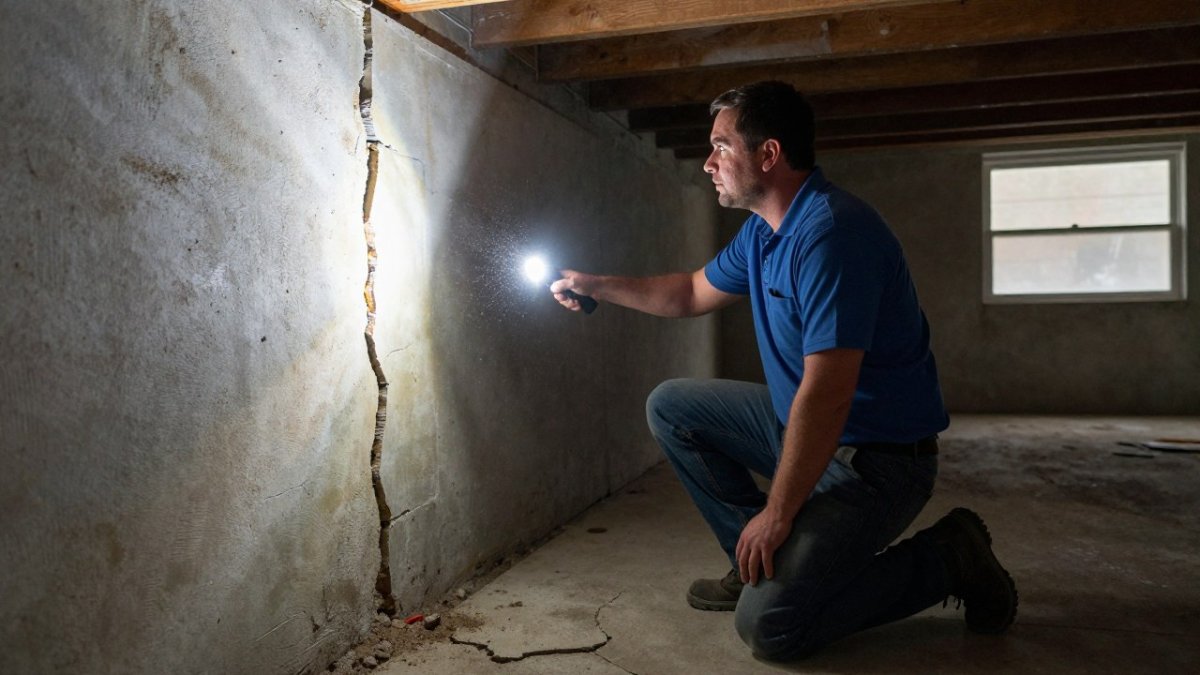
 Listicle
What Foundation Problems Are Common in Wichita Homes?
Quick Summary
Common foundation problems in Wichita homes include cracks in foundation walls and brick, sloping or bouncy floors, and water-related damage. Much of this comes from expansive clay soil that swells when wet and shrinks when dry, putting repeated stress on footings and slabs.
- Wichita sits on expansive clay that swells when wet and shrinks when dry.
- Stair-step cracks in brick mortar often follow the pattern of differential settlement.
- Cracks wider than a few millimeters or growing over time deserve a professional look.
- Marble or ball rolling steadily toward one spot may mean the floor is out of level.
- Keep gutters clear, extend downspouts several feet from the foundation, and grade soil away from the house.
Table of Contents
- Why Wichita Homes Are Prone to Foundation Trouble
- How Expansive Clay Soil Moves Under a House
- Common Foundation Problems in Wichita Homes
- Telling Cosmetic Cracks From Structural Warning Signs
- Drainage, Gutters, and Plumbing as Hidden Causes
- What Foundation Repair Typically Costs and What Affects the Price
- Selling a House With Foundation Problems: Your Options
- When to Call a Foundation Professional This Week
- Frequently Asked Questions
Last Updated: November 13, 2026
Foundation problems are among the most expensive issues a Wichita homeowner can face, and they often start small. A hairline crack in a basement wall or a door that suddenly sticks can signal movement underneath the house. Understanding the most common foundation problems in Wichita homes helps you tell routine wear from a situation that needs prompt attention.
OneRoof Real Estate buys houses in any condition, including homes with foundation damage. This guide explains what causes them locally, what to look for, and what your options are.
Why Wichita Homes Are Prone to Foundation Trouble
Wichita sits on soils that respond strongly to moisture. Many local foundations rest on clay that swells when wet and shrinks when dry. That repeated movement puts stress on concrete slabs and footings over time.
Older homes add another layer of risk. Houses built decades ago may have shallow footings, older masonry, or drainage systems that no longer work well. Because the problems develop slowly, many owners do not notice them until damage is visible.
How Expansive Clay Soil Moves Under a House
Expansive clay is the single biggest driver of foundation movement in this region, and the mechanism is worth understanding because it explains why symptoms appear and disappear with the weather. Clay minerals absorb water into their structure and swell in volume; when they dry, they shrink and pull away from whatever sits on them. A foundation built on that clay is therefore sitting on a material that changes size several times a year.
The cycle has two phases. During wet periods, spring rains, sustained irrigation, a broken sprinkler head, the clay under and around the footing swells and pushes upward. During drought and the dry stretches of summer, it contracts, and the soil pulls away from the foundation, sometimes leaving visible gaps at the perimeter. The movement is rarely uniform: a downspout that dumps water at one corner keeps that soil saturated while the opposite corner bakes in the sun, so one part of the house heaves while another settles. That differential movement, not total movement, is what cracks brick, racks door frames, and slopes floors.
The foundation type changes how the movement shows up. A slab-on-grade home tends to telegraph movement through interior drywall cracks, sloping floors, and cracks at the slab edge; a post-tension slab may resist cracking longer but can still tilt. A crawl-space home often shows movement first in pier and beam supports, bouncy floors, and doors that rack out of square, and the open crawl space lets moisture swings reach the framing directly. A basement home concentrates the evidence in the basement walls, horizontal cracks from soil pressure, stair-step cracks in block, and water seeping at the cove joint, because the wall is holding back the same clay that is swelling outside it.
Water management is the lever a homeowner actually controls. Gutters that overflow, downspouts that discharge within a foot of the wall, and soil graded toward the house all keep the clay beside the footing wetter than the clay under it, which amplifies differential movement. A slow plumbing leak under a slab does the same thing invisibly. The practical takeaway is that the wet-dry swing, not the clay alone, drives the damage, and reducing the swing at the perimeter is the cheapest prevention available.
Watch out: a single dry summer or wet spring does not prove a foundation is failing, and a crack that appears after a drought is not automatically structural; the pattern over multiple seasons and the presence of accompanying symptoms are what matter.
Common Foundation Problems in Wichita Homes
Most foundation issues show up as a few recurring signs. Spotting them early makes a real difference in repair scope.
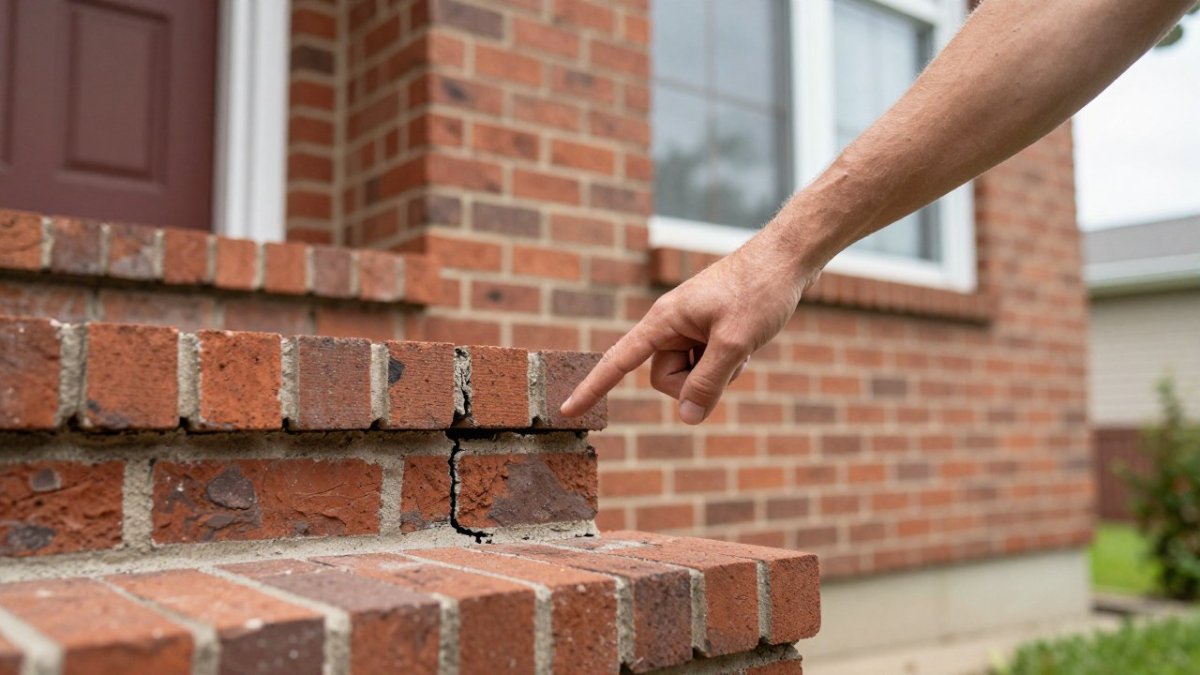
Cracks in Foundation Walls and Brick
Cracks are the most visible sign of foundation movement. Stair-step cracks in brick mortar joints often follow the pattern of differential settlement. Vertical cracks in poured concrete walls can indicate pressure or shifting. Horizontal cracks in basement walls deserve close attention, because they can signal soil pressure pushing inward. Because dangerous horizontal foundation cracks can reflect increasing pressure against a basement wall, their direction and any signs of widening or bowing help indicate how urgently the movement needs attention.
Walk the exterior perimeter and look for cracks wider than a few millimeters, cracks that have grown over time, or cracks where one side sits higher than the other. Learn how to identify foundation cracks yourself with a step-by-step guide to telling the warning signs apart.
Uneven, Sloping, and Bouncy Floors
Floors that slope toward one side, feel soft or bouncy, or show gaps near baseboards may indicate a settling or heaving slab. Set a marble or small ball on the floor in several rooms. If it rolls steadily toward one spot, the floor may be out of level.
Bouncy floors over a crawl space can point to rotting joists or a failing support beam. These issues often require a professional evaluation rather than a DIY fix.
The most common foundation problems in Wichita homes show up in a few recurring signs, summarised below.
| Problem | Where it shows | Warning sign |
|---|---|---|
| Cracks in foundation walls and brick | Exterior perimeter, basement walls | Cracks wider than a few millimeters, growing over time |
| Stair-step cracks in brick mortar | Brick mortar joints | Pattern follows differential settlement |
| Horizontal cracks in basement walls | Basement walls | Can signal soil pressure pushing inward |
| Sloping or uneven floors | Interior floors | Marble or ball rolls steadily toward one spot |
| Bouncy floors | Over a crawl space | Can point to rotting joists or failing support beam |
Telling Cosmetic Cracks From Structural Warning Signs
Not every crack means a failing foundation. Hairline cracks in drywall or plaster often come from normal drying and seasonal humidity changes. Cosmetic cracks are typically thin, do not grow, and do not line up with doors or windows.
Structural warning signs look different. They tend to be wider, growing, or accompanied by other symptoms like sticking doors, gaps around window frames, or a visibly leaning wall. Keep a dated photo log of any crack you find. Measure its width with a ruler or a crack gauge and recheck it every few months. A crack that changes is worth a professional look.
Drainage, Gutters, and Plumbing as Hidden Causes
Water is often the trigger behind foundation trouble, even when the problem appears structural. Gutters that dump water at the foundation, poorly graded soil that slopes toward the house, and downspouts without extensions can all saturate the soil beside a footing.
Leaking plumbing under a slab is another hidden cause. A slow leak can soften the soil and create voids that the slab settles into. If you notice unexplained damp spots, a rising water bill, or warm spots on a concrete floor, have the plumbing checked.
Keep gutters clear, extend downspouts several feet from the foundation, and make sure soil slopes away from the house. These steps cost little and help reduce the moisture swings that drive clay movement.
What Foundation Repair Typically Costs and What Affects the Price
Foundation repair pricing is genuinely variable, but the variation follows a few identifiable drivers, and understanding them lets you compare estimates instead of just comparing totals. The main drivers are the repair method, the linear feet or number of piers involved, the foundation type, access to the work area, and whether interior finishes or plumbing must be disturbed.
Repair methods fall into rough tiers.
Because scope depends on a site evaluation, the only reliable number is a written estimate after an inspection. Ask each contractor to itemize: how many piers or straps, what depth, what warranty, and what is excluded. A low total that covers only part of the movement is not comparable to a higher total that addresses the whole perimeter. Get at least two written estimates and ask each contractor to explain what the other proposed and why their approach differs, the answers are often more informative than the prices.
Independent evaluation is worth the cost when the numbers are large or the diagnoses disagree. A licensed professional engineer can review the contractor's findings and recommend a scope without selling the repair, which is useful when one estimate calls for full perimeter underpinning and another calls for crack sealing. Ask whether the inspection includes elevation measurements and a written report you can keep.
Watch out: a free estimate is a sales visit, not an independent diagnosis, and a contractor who recommends the most expensive method without elevation data or a written scope is worth a second opinion before you sign.
Selling a House With Foundation Problems: Your Options
If you own a home with foundation damage and want to sell, you have several paths. Repairing the foundation before listing requires upfront money and time. Some sellers complete repairs, while others choose to sell as-is. Compare the costs and returns of repairing before you sell to decide which approach makes sense for your home.
Sellers should also understand their disclosure obligations before listing. Review Kansas foundation repair disclosure requirements to learn what must be disclosed and when. Review the rules for what must be disclosed about past or known foundation repairs and any defects you are aware of. A clear written disclosure protects you from later disputes.
Selling as-is is another option. OneRoof Real Estate purchases homes in any condition, including those with foundation issues, without requiring repairs or cleaning. Sellers choose their closing date, and we cover commissions, closing costs, and fees. This route suits owners who want to avoid repair expenses and a traditional listing timeline. If you would rather not pay for repairs at all, you can see how selling without fixing the foundation works.
When to Call a Foundation Professional This Week
Call a foundation professional promptly if you see any of the following: cracks that are widening, doors or windows that suddenly stick or will not close, a floor that feels noticeably out of level, water entering the basement after rain, or a wall that appears to bow or lean.
A licensed foundation specialist can measure movement, identify the cause, and recommend a repair plan. Early evaluation often means simpler and less expensive repairs. Waiting can allow damage to spread to framing, drywall, and mechanical systems.
If you are unsure where your home stands, start with a professional assessment. Once you understand the problem, you can decide whether to repair, sell as-is through OneRoof Real Estate, or pursue another route. Contact us to talk through your situation and your options.
Frequently Asked Questions
Is it common for houses to have foundation issues?
Yes. Many homes in the Wichita area show some foundation movement at some point, largely because the region has expansive clay soil that swells when wet and shrinks when dry. Minor movement is often harmless, but cracks, sticking doors, and sloping floors are signals worth checking. A licensed foundation inspector can tell you whether what you are seeing is cosmetic or a sign of ongoing structural movement that needs attention.
Do foundation cracks always indicate structural failure?
No. Hairline cracks in concrete or stucco are often caused by normal curing or small seasonal shifts. Warning signs include cracks wider than about one-quarter inch, stair-step cracks in brick or block, vertical cracks that keep growing, and cracks paired with doors or windows that no longer close. Those patterns deserve a professional evaluation before you assume the damage is only cosmetic.
How much does foundation repair typically cost?
The most reliable way to plan is to get written estimates from at least two licensed contractors who inspect the property in person. Ask each contractor to explain what is causing the problem, not just what fix they recommend.
Can you sell a house with foundation issues?
Yes. Homes with foundation problems can be sold traditionally with disclosure and price adjustments, or sold as-is to a cash buyer who accepts the property in its current condition. Traditional buyers often need financing, and many lenders have requirements about foundation condition, which can slow or stop a sale.