 How-to
What Signs of Foundation Failure Should You Check Before Listing?
Last Updated: November 14, 2026
Quick Summary
Signs of foundation failure to check before listing include cracks wider than 1/8 inch, diagonal or stair-step crack patterns, doors and windows that stick or won't latch, and floors that slope or sag. Check these room by room inside and around the exterior, then measure and monitor any crack monthly. Call a structural engineer when a crack is wider than 1/8 inch, is growing, or doors and windows no longer close.
- Walk the house room by room with a flashlight, tape measure, level, marble, and camera, and build a dated record.
- Hairline cracks under 1/16 inch are likely settling, while cracks wider than 1/8 inch suggest a foundation problem.
- Mark each crack at its widest point, measure it, photograph it with a ruler, and recheck monthly.
- Never let a foundation repair contractor diagnose and quote the repair in the same visit; get an independent engineer first.
- Selling options are repairing before listing, disclosing and negotiating, or selling as-is to a cash buyer.
Table of Contents
- Why Foundation Failure Matters Before You List Your Home
- The Room-by-Room Checklist for Signs of Foundation Failure
- Foundation Problems vs Settling: How to Tell the Difference
- What Early Signs of Foundation Problems Pictures Reveal
- How to Measure and Monitor Cracks Before Listing
- Foundation Inspection Before Selling a House: When to Call a Structural Engineer
- Selling a House With Foundation Issues: Your Options
- Get a Cash Offer on Your Wichita Home, Foundation Issues and All
- Frequently Asked Questions
Why Foundation Failure Matters Before You List Your Home
Foundation failure is the movement or breakdown of a home's structural base that shows up as cracks, sticking doors, and uneven floors. For sellers, it is the single issue most likely to stall a deal or cut the price. At OneRoof Real Estate, we have bought almost 300 houses in the Wichita area.
Here is the uncomfortable part most guides skip: buyers and their inspectors look for signs of foundation failure long before you sign a listing agreement. If you find them first, you control the conversation. That early check can turn signs of a sinking foundation into a clear issue to address before buyers raise it during negotiations.
The stakes are real. A failed foundation inspection can complicate a sale, and a visible crack can trigger repair demands during negotiation. Below, we walk through a room-by-room checklist, show you how to tell settling from real damage, and explain when to call a structural engineer before you list.
The Room-by-Room Checklist for Signs of Foundation Failure
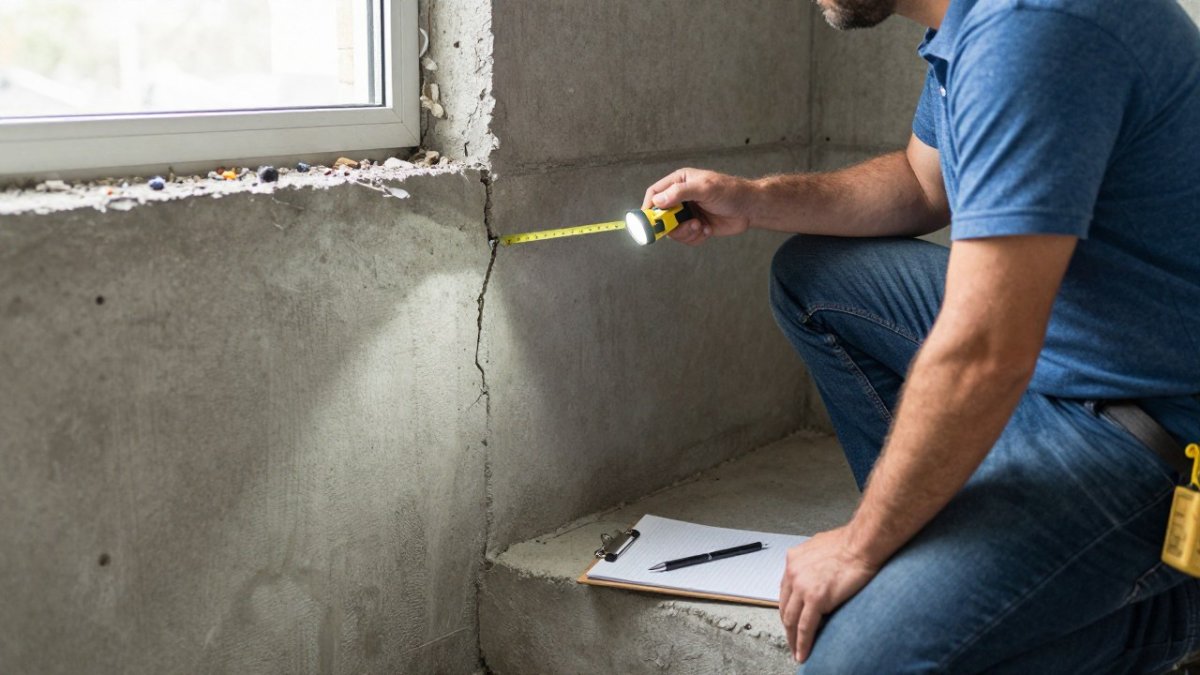
A room-by-room walk-through is the fastest way to catch foundation problems before a buyer does. Set aside about an hour, carry a flashlight, tape measure, small level, marble, and notepad or phone for photos, and work through the house in the same order every time. The goal is not to diagnose anything but to build a dated record you can hand to an inspector, an engineer, or a buyer.
Interior Signs: Cracks, Sticking Doors, and Uneven Floors
Start at the lowest level you can safely access and work upward. In each room, check walls, ceilings, floors, doors, and windows in that order so nothing gets skipped.
Walls and ceilings. Scan each wall corner to corner with the flashlight held at a low angle, which makes shadows reveal cracks that flat light hides.
Doors and windows. Open and close every door and window.
Floors. Set the marble on the floor in several spots and watch which way it rolls. Walk the perimeter and listen for squeaks or feel for bounce that changes abruptly.
Trim and gaps. Look at the joint where baseboard meets floor and where crown molding meets ceiling.
Photo prompts. For every finding, take one wide shot showing the room and one close-up with the tape measure or a coin beside the feature.
Photograph every crack with a ruler in frame so you have a record to refer to later. For a deeper walkthrough of which cracks matter, see our guide on how to identify foundation cracks in homes.
Exterior Signs: Brick, Masonry, Drainage, and Gaps
Outside, walk the perimeter in one direction and check the same features at each corner so you can compare one side of the house to another.
Brick and masonry. Look for stair-step cracks that zigzag through mortar joints, especially near corners and above windows.
Chimney and tall elements. Step back and sight the chimney line against the sky or a straight edge.
Gaps and separation. Look where siding meets the foundation, where brick veneer meets window and door frames, and where two walls join. Measure any gap and note whether it is uniform or opens wider at one end.
Drainage and moisture. Check that gutters are clear and downspouts discharge well away from the wall.
Foundation wall itself. Where the foundation is visible, look for horizontal cracks, which can indicate lateral pressure from soil or water, and for any bowing or bulging.
Water is the most common driver of soil movement around a home. Poor drainage softens soil on one side and lets the foundation settle unevenly.
Foundation Problems vs Settling: How to Tell the Difference
Settling is normal, minor, and usually cosmetic. Foundation problems are active, worsening, and structural.
Most new homes settle slightly in the first few years as backfill consolidates and soil adjusts to the structure's weight, producing hairline cracks and small gaps that do not change. Real foundation damage looks different:
| What You See | Likely Settling | Likely Foundation Problem |
|---|---|---|
| Crack width | Hairline, under 1/16 inch | Wider than 1/8 inch |
| Crack direction | Vertical, small | Diagonal or stair-step |
| Doors and windows | Work normally | Stick, jam, or won't latch |
| Floors | Level | Sloping or sagging |
| Change over time | Static | Widening or spreading |
| Number of symptoms | One isolated item | Several in the same area |
Why width matters. A hairline crack in drywall or plaster is often just shrinkage or minor movement.
Why pattern matters. Vertical cracks tend to follow shrinkage or minor settlement.
Why change matters. A static crack that has looked the same for years is a different animal from one that has widened since last season.
Why clusters matter. One sticking door in an older home may just be humidity.
What drives movement. Soil conditions are the usual mechanism. Expansive clay soils swell when wet and shrink when dry, pushing and pulling on the foundation.
What a visual check cannot tell you. A homeowner walk-through cannot measure foundation movement, confirm soil conditions, or determine whether a crack affects structural safety.
A common mistake is assuming every crack is cosmetic. For local soil conditions and how they drive settling, our guide on foundation settling in Wichita soil explains the causes.
What Early Signs of Foundation Problems Pictures Reveal
Photos of early signs of foundation problems reveal patterns the naked eye misses. A photo taken from the same spot each month shows whether a crack is growing.
When you review your own photos, look for:
- Widening. Compare the crack against a coin or ruler placed beside it.
- Direction changes. A crack that turns from vertical to diagonal is active.
- New cracks nearby. Fresh cracks around the same corner suggest spreading movement.
- Water staining. Dark streaks or efflorescence point to moisture intrusion.
- Mold or damp patches. These often appear where water enters near the foundation.
Take photos in consistent light and from the same angle. Store them with the date. If you later sell as-is or disclose, that photo record shows you acted in good faith.
How to Measure and Monitor Cracks Before Listing
Measuring and monitoring cracks turns guesswork into a record. Use this simple process:
- Mark the crack. Draw a short pencil line across the crack at its widest point.
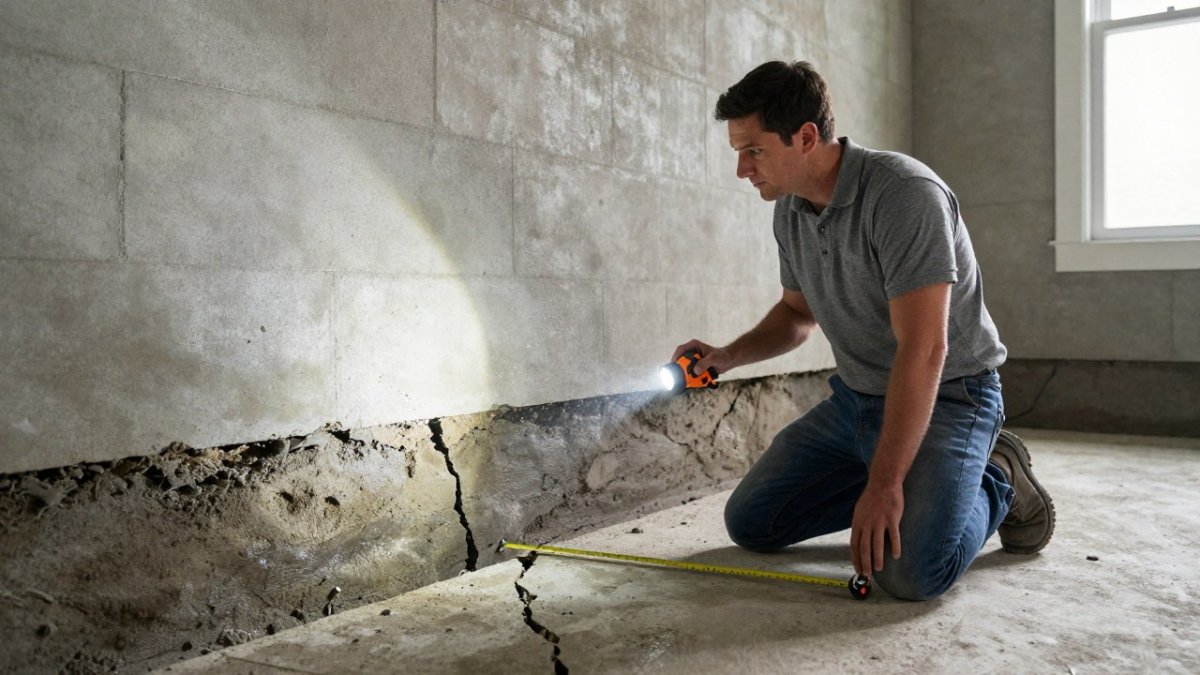
- Measure the width. Use a crack gauge or a tape measure. Record the number.
- Photograph it. Include a ruler or coin in the frame.
- Date the photo. Note the date and location.
- Recheck monthly. Repeat the measurement at the same spot.
- Log the change. Note any widening, lengthening, or new cracks.
Watch out: a crack that grows wider than 1/8 inch in a few months, or one that appears suddenly, is a signal to stop monitoring and call a professional. Monitoring is for observation, not diagnosis.
Foundation Inspection Before Selling a House: When to Call a Structural Engineer
Call a structural engineer when a crack is wider than 1/8 inch, when doors or windows no longer close, when a floor slopes visibly, or when a crack is growing. A foundation inspection before selling a house gives you a written opinion you can hand to buyers.
A structural engineer can evaluate the home and issue a written report on whether repair is needed.
Not sure who to hire? Our guide on how to find reputable structural engineers covers vetting criteria, red flags, and the questions to ask before you sign an engagement.
Watch out: never let a foundation repair contractor diagnose your home and quote the repair in the same visit. Get an independent engineer's opinion first.
Selling a House With Foundation Issues: Your Options
Selling a house with foundation issues comes down to three paths: repair first, disclose and negotiate, or sell as-is to a cash buyer. Each has trade-offs.
- Repair, then list. You pay for the fix and may recover part of it in the sale. This takes time and upfront money.
- Disclose and negotiate. You list as-is and expect buyers to discount. Sellers are generally expected to disclose known material defects, so hiding damage is not a sound option (Consumer Guide: Seller Disclosures).
- Sell as-is to a cash buyer. You skip repairs and inspections, close on your timeline, and accept a lower offer in exchange for speed and certainty.
If you plan to negotiate, our guide on how to negotiate home price after foundation inspection walks through repair credits and counteroffers.
Get a Cash Offer on Your Wichita Home, Foundation Issues and All
A cash offer lets you sell without repairs, inspections, or cleaning. At OneRoof Real Estate, we buy houses in any condition, foundation issues included, and have bought almost 300 houses in the Wichita area.
Here is how it works. You request an offer, and we review the property. We make a fair, all-cash offer within 24 hours. You pick the closing date, and we typically close in 7 days. We cover all commissions, closing costs, and fees, and we provide property clean-out services.
You do not need to fix the foundation or clean out the house. We buy as-is, so a failed inspection or a cracked wall does not stop the sale. If you are weighing a listing against a direct sale, get a cash offer on your home and compare it to your other options.
Selling a home with foundation concerns is stressful. Get started with OneRoof Real Estate and close on your schedule, foundation issues and all.
Frequently Asked Questions
What are the signs that a house foundation is failing?
Watch for stair-step cracks in brick or masonry, horizontal cracks in foundation walls, doors and windows that stick or no longer latch, uneven or sloping floors, gaps around frames and trim, and dampness or water intrusion near the foundation. A single hairline crack is often cosmetic, but several symptoms appearing together point to foundation movement that a structural engineer should evaluate before you list.
Should you get a foundation inspection before listing your home?
A foundation inspection before selling a house is worth it when you have found more than one warning sign, when cracks are wider than a quarter inch, or when a prior buyer inspection flagged movement. A structural engineer's report gives you a documented baseline, lets you price the home honestly, and reduces the chance a buyer's inspection derails the sale later. If your home shows no symptoms, a standard pre-listing walkthrough may be enough.
Can you sell a house without repairing foundation problems?
Yes. Selling a house with foundation issues is legal and common, but disclosure rules apply and financed buyers may need a repair estimate before the sale closes. Cash buyers purchase as-is, which skips the repair, the inspection contingency, and the wait. The tradeoff is a lower offer that reflects the repair risk. Compare a cash offer against a repaired listing price minus repair costs and holding time before you decide.
How can you tell the difference between foundation problems and normal settling?
Normal settling shows up as small, stable hairline cracks, usually near corners or above door frames, that do not grow. Foundation problems vs settling comes down to movement: cracks that widen over weeks, doors that stop closing, floors that slope more than a slight amount, or cracks paired with moisture. Measure and date each crack, check again in 30 days, and call a structural engineer if anything has changed.